The Spiritual Awakening Nobody Warns You About When You Become a Mother
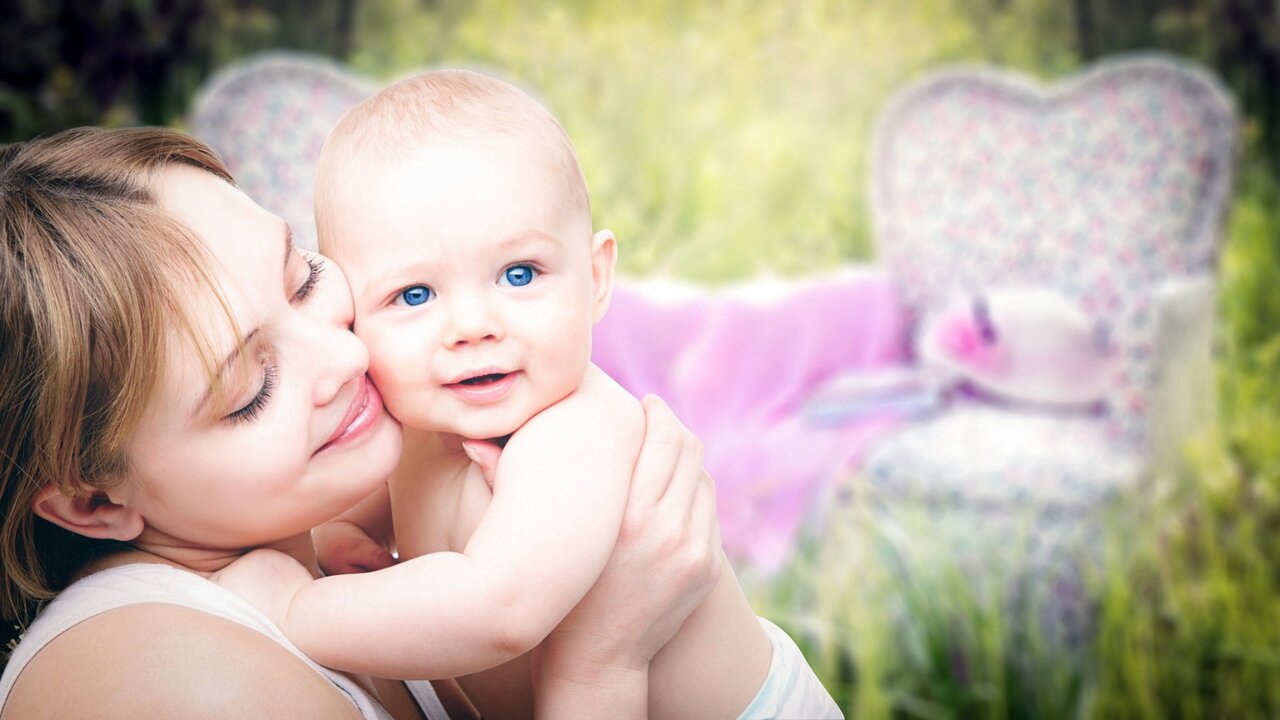
There is a version of yourself that exists before motherhood, and a version that exists after. The transition between the two is not gentle. It is not the soft, glowing metamorphosis you see in maternity photo shoots. It is a full spiritual dismantling. A stripping down to the most raw, essential version of who you are, followed by the slow and sacred work of rebuilding yourself around a love so vast it rewrites everything you thought you knew about your own heart.
I spent my pregnancy preparing for a baby. What I was not prepared for was the spiritual reckoning that came with her. The way motherhood cracked me open and forced me to confront every belief I held about my own worth, my capacity to surrender, and what it truly means to trust something bigger than myself.
These are the spiritual lessons that arrived uninvited in those first trembling weeks. They changed me in ways no book or birth class ever could.
Motherhood as a Spiritual Initiation
In many ancient traditions, becoming a mother is recognized as a rite of passage, not merely a biological event. The concept of matrescence, a term coined by anthropologist Dana Raphael, describes the psychological and identity shift that occurs when a woman becomes a mother. It is as significant as adolescence, and just as disorienting.
What struck me most about those early days was how much they mirrored every description of spiritual awakening I had ever read. The ego dissolution. The loss of control. The inability to maintain the carefully constructed identity I had spent decades building. Motherhood did not just change my schedule or my body. It dismantled my sense of self and invited me to discover who I was underneath all the roles I had been performing.
Your brain literally rewires itself after birth. Neuroscience confirms that new mothers experience structural brain changes in regions tied to empathy, emotional processing, and threat detection. This is not just biology. It is your entire operating system being upgraded without your permission, and it can feel like losing your mind when really you are gaining a deeper one.
If you are in the thick of this right now and nothing feels familiar, not your body, not your thoughts, not even your reflection, know that you are not falling apart. You are being initiated. And initiations, by their very nature, are supposed to feel destabilizing.
Did becoming a mother feel like a spiritual awakening to you?
Drop a comment below and tell us about the moment everything shifted inside you.
Surrender Is the First Lesson (and the Hardest)
I am a planner by nature. Lists, timelines, contingency plans for my contingency plans. I walked into motherhood with a color-coded binder and the quiet confidence that preparation could shield me from chaos.
My daughter had other ideas.
She did not follow the feeding schedule. She did not sleep when the books said she should. She did not care about my plans, my expectations, or my desperate need for predictability. And in that beautiful destruction of everything I thought I could control, I learned the most important spiritual lesson of my life: surrender is not giving up. It is giving over.
We talk about surrender in spiritual circles like it is this serene, meditative act. Candlelit rooms and deep breaths and choosing to let go. Nobody tells you that real surrender often looks like sobbing on the bathroom floor at four in the morning because your baby has been crying for three hours and nothing you do is working. It looks like releasing your white-knuckle grip on the way things “should” be and opening your hands to what actually is.
This is the practice. Not the pretty, Instagram version of mindfulness. The real, gritty, unglamorous version where you choose presence over perfection, over and over again, in the moments when it costs you the most.
What Surrender Actually Looks Like
It looks like feeding your baby formula when breastfeeding is destroying you, and refusing to let guilt rewrite that decision as failure. It looks like accepting help when every fiber of your being insists you should be able to do this alone. It looks like letting your partner find their own way with the baby, even when their way is different from yours.
Surrender in motherhood is a daily spiritual practice. Some days you will do it gracefully. Most days you will do it messily. Both count.
The Death of Your Old Identity Is Sacred Ground
Here is something the baby showers and congratulations cards do not make room for: grief. Specifically, the grief that comes with losing the person you were before.
I mourned my old self in those early weeks. The woman who could leave the house in under five minutes. Who slept through the night without a monitor glowing on the nightstand. Who had the mental bandwidth to think about things beyond feeding schedules and diaper counts. I loved my baby fiercely, and I also missed myself. Both things were true at the same time.
In spiritual traditions, this kind of death and rebirth is considered sacred. The old self must dissolve so that the new self can emerge. But we rarely honor this process in new mothers. Instead, we rush them toward “bouncing back,” as if the goal is to pretend the transformation never happened.
You do not need to bounce back. You need to move forward as the new version of yourself that is being born alongside your baby. And that requires the same compassion and patience you would give to any being in the middle of becoming.
Finding this helpful?
Share this article with a friend who might need it right now.
Your Intuition Is Louder Than You Think
Everyone will have opinions about your baby. Your mother, your mother-in-law, your pediatrician, the stranger at the grocery store, the algorithm curating your social media feed. The noise is relentless, and in the fog of sleep deprivation and hormonal upheaval, it is easy to lose your own voice in the chorus.
But here is what I discovered: motherhood amplifies intuition in ways I had never experienced before. That gut feeling, the one that whispers something is off before you can articulate why, becomes louder and more insistent after you have a baby. Research on intuition suggests this is not mystical thinking. It is your brain processing vast amounts of subtle information below the level of conscious awareness, then sending you the signal as a feeling rather than a thought.
I learned to trust that signal. When something felt wrong despite reassurances, I investigated. When a particular piece of advice made my stomach clench even though it came from an expert, I paused. When my body told me my baby needed something specific, even when the books disagreed, I listened.
This does not mean ignoring medical guidance or dismissing evidence. It means recognizing that you are gathering data about your specific child every single moment you spend with them. Your intuition is informed by thousands of micro-observations that no fifteen-minute pediatrician visit can replicate. Learning to trust your gut is one of the most powerful spiritual skills motherhood can teach you.
Self-Love in Motherhood Is a Radical Act
We live in a culture that glorifies maternal sacrifice. The more a mother gives of herself, the more “good” she is perceived to be. Sleep, personal time, physical recovery, creative expression, friendships: all of these are treated as acceptable casualties of devoted motherhood.
I bought into this for a while. I wore my exhaustion like a badge. I felt guilty for wanting fifteen minutes alone. I dismissed my own needs as selfish because my baby’s needs felt so much more urgent and legitimate.
Then I hit a wall. Not gradually, but suddenly. One afternoon I stood in my kitchen, unwashed and unfed, holding a crying baby, and realized I could not remember the last time I had done a single kind thing for myself. Not one. And the woman I was becoming in that neglect was not the mother I wanted my daughter to grow up watching.
Self-love in motherhood is not bubble baths and face masks, though those are fine if they restore you. It is the deep, sometimes uncomfortable work of believing that your needs still matter. That you are worthy of care, not just capable of giving it. That pouring from an empty cup is not devotion. It is depletion.
It is saying no to visitors when you need rest. It is asking your partner to take a night feeding so you can sleep. It is allowing yourself to feel anxiety without judging yourself for it. It is seeking professional help when the darkness feels heavier than baby blues should.
You Are Not Just Growing a Child. You Are Growing Yourself.
Months into motherhood, I had a quiet revelation. I was sitting on the floor watching my daughter grab her toes for the first time, delighted by her own body, and it hit me: she was not the only one learning how to be in this world. I was relearning it alongside her.
Motherhood had stripped away every performance, every mask, every carefully maintained illusion of having it all together. What remained was something more honest. A woman who had been cracked open by love and was slowly, imperfectly, putting herself back together in a truer shape.
The spiritual journey of motherhood is not about achieving some enlightened state of calm. It is about meeting yourself in the chaos. It is about discovering that you are stronger than you knew, softer than you expected, and more resilient than the voice of doubt in your head wants you to believe.
You will find your rhythm. Not the one you planned, not the one you see on someone else’s highlight reel, but the one that belongs uniquely to you and your child. It will emerge from the mess, the tears, the laughter, the four a.m. feeds where the whole world is quiet and it is just the two of you breathing in the dark.
Trust the process. Trust yourself. You were made for this. Even on the days when it does not feel that way. Especially on those days.
We Want to Hear From You!
Tell us in the comments which lesson resonated most with you, or share the spiritual truth motherhood taught you that nobody warned you about.
Read This From Other Perspectives
Explore this topic through different lenses