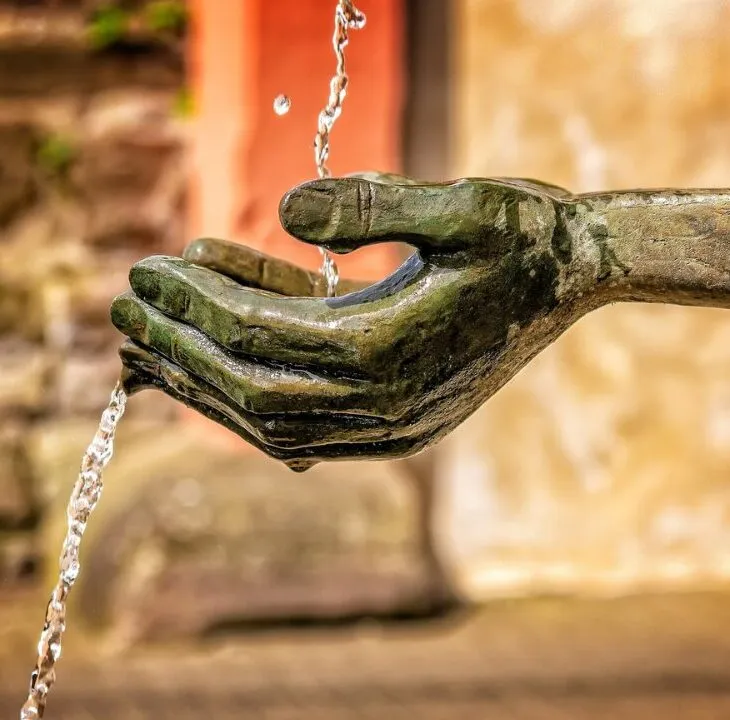
Prayer as a Daily Spirituality Practice: Rediscovering the Power of Honest Conversation with the Universe

When was the last time you got truly quiet, closed your eyes, and let yourself speak honestly to something greater than yourself? Not a rehearsed recitation or a desperate plea, but a real, raw, open conversation with the Universe?
For many of us, the word “prayer” carries weight that has nothing to do with peace. If you grew up in a strict religious household, prayer might remind you of guilt, obligation, and endless repetitions meant to earn forgiveness for so-called sins. For others, prayer feels like a last resort, something you turn to only when every other option has failed.
“If you let me get this job, I promise I’ll volunteer every weekend.”
“If you just fix this situation, I swear I’ll be a better person.”
But what if prayer was never meant to be transactional? What if it was never about convincing the Universe to give you what you want, and instead about opening yourself up to receive what it already has in store for you?
Redefining Prayer: From Obligation to Liberation
At its core, prayer is a spiritual reset. It is an act of surrender that pulls you out of the noise of daily life and places you in direct contact with something bigger than your to-do list, your anxiety, and your self-doubt. When you pray, you are not performing a ritual. You are choosing, consciously, to shift your perspective.
Research supports this. A study published in the Journal of Holistic Nursing found that individuals who engaged in regular prayer reported lower levels of anxiety, greater emotional resilience, and a stronger sense of inner peace. Prayer, it turns out, is not just spiritual comfort. It has measurable effects on mental and emotional well-being.
By aligning your thoughts with a higher perspective, prayer enables you to rise above life’s obstacles and get a glimpse of the meaning and purpose behind your current circumstances. When things fall apart, all you need to do is ask God (or whomever or whatever connects to you) to shift your perception. Slowly, the missing pieces of the puzzle start to reveal themselves. You begin to see that even the painful chapters are part of a greater story. And in that seeing, you find guidance on how to move forward.
Prayer also has a collective dimension. When you pray, you are participating in something that connects you to every other person who has ever paused to reach beyond themselves. In this way, prayer shifts not just your own consciousness but contributes to a broader, shared awakening. It reminds us of our inherent connectedness with each other and the Source of all life.
Has your relationship with prayer changed over the years?
Drop a comment below and let us know how prayer has shown up differently in your life.
Sometimes Life Brings Us to Our Knees So We Can Learn to Pray
There is a reason so many spiritual traditions speak of being “brought to your knees.” It is not punishment. It is redirection. When everything you thought you could control slips through your fingers, something beautiful happens: you finally stop trying to do it all alone.
When I started including prayer as part of my daily spirituality practice, the changes were not dramatic at first. They were quiet. I noticed I was less anxious. I had more clarity about decisions that used to paralyze me. A deep, steady peace began to move through every corner of my life, not the kind that depends on circumstances, but the kind that holds you even when circumstances are falling apart.
When the world tried to define me by my past mistakes, prayer reminded me who I really was. When I began to doubt my worth and look for validation in other people’s opinions, a few honest moments in the presence of something greater showed me that everything I needed was already inside me. According to Psychology Today, regular spiritual practices like prayer can help rewire thought patterns, reducing the grip of negative self-talk and increasing feelings of self-worth.
It was as though a massive weight lifted off my shoulders when I realized I did not have to navigate this life alone. There was a never-ending source of strength and Divine guidance available to me in every single moment. All I had to do was ask.
How to Actually Pray (When You Do Not Know Where to Start)
So if we are not reciting scripture or bargaining with God, how exactly are we supposed to pray?
First, ask yourself: who does it feel right to pray to? Is it God? The Universe? Your Higher Self? A guardian angel or ancestor? There is no wrong answer here. The point is connection, not doctrine.
Then carve out a moment in your day that feels sacred. It does not have to be formal. It could be as simple as standing in the shower at the end of a long day and having a conversation with God about what happened. What went well? What is weighing on you? What are you grateful for?
The beauty of prayer is that it meets you where you are. You do not need a church, a prayer mat, or a special time of day. As Anne Lamott once wrote: “Churches are great for prayer, but so are mountains and cars and showers and dance floors.”
Finding this helpful?
Share this article with a friend who might need it right now.
Three Steps to Make Your Prayer Practice Meaningful
If you feel stuck on what to say, or if the silence feels awkward at first, these three steps will help you settle in and get the most from your practice.
1. Start with Gratitude
Begin by giving thanks. Not for some abstract idea of “blessings,” but for the specific, tangible things in your life right now. A roof over your head. A meal on the table. The people who love you, even imperfectly. Then let yourself expand outward: the freedom to pursue what lights you up, the privilege of being alive in a time of extraordinary possibility, the breath currently filling your lungs.
Gratitude does something powerful to the brain. Research from the Greater Good Science Center at UC Berkeley has shown that practicing gratitude rewires neural pathways, increasing well-being and reducing stress. When you begin your prayer with gratitude, you are not just being polite. You are literally shifting your neurochemistry toward peace.
As Eckhart Tolle said: “If the only prayer you ever said was ‘Thank you,’ that would be enough.”
2. Lay It All Out
Tell the Universe what is going on. Give an honest rundown of the current state of your life: the good, the difficult, and the messy. Do not filter yourself. Do not try to sound spiritual or composed. Just be real.
Sometimes, simply saying things out loud sparks insights you did not have before. You might hear yourself voice a fear you did not know you were carrying, or a desire you had been too afraid to name. Go into detail. Ask the big questions: “Who do I need to forgive?” “What do I need to release in order to move forward?” “Where am I holding myself back?”
Do not worry about taking up too much time or coming across as needy. Time does not exist in the metaphysical realm, and the Universe is not keeping score. It wants to hear your challenges, your fears, your hopes, your dreams. All of it. Repeat your prayer daily and stay alert for the answers. They tend to arrive in unexpected forms: a book that falls open to the right page, a conversation that shifts your thinking, an opportunity that appears out of nowhere.
3. Surrender and Release
The most powerful prayer you will ever say is four simple words: “Your will be done.”
When you surrender your carefully laid plans to the Universe and say, “Okay, now you take it from here,” you are not giving up. You are not adopting a passive, whatever-happens-happens approach to your life. You are aligning your desires with the deeper calling placed on your heart. You are choosing trust over control.
So often, we get caught up in what we think we should be doing, or what our parents, friends, or society expects of us, that we drown out the quiet murmurs of our own soul as it tries to guide us toward our true purpose. Surrender is the act of turning down the volume on external noise so you can finally hear the voice within.
As children of the Universe, we are already wired for growth and fulfillment (in the same way a tiny acorn already holds the blueprint for a massive oak tree, and an embryo already carries everything it needs to become a fully formed life). All we have to do is get out of our own way and keep following that still, small voice. One of my favourite prayers captures this perfectly: “Use me, Lord, that I might know the joy of being used by you.”
Expanding Your Prayer Practice Beyond Yourself
Once prayer becomes a natural part of your rhythm, you will likely feel drawn to expand it beyond your own life. Pray for safety, for protection, for clarity in a particular situation. Pray for peace in places that are hurting. Pray for the alleviation of suffering in communities you will never visit but whose struggles weigh on your heart.
You can also multiply the power of your practice by including others. When you wake up in the morning, say a prayer with your partner. Ask for protection over their life, favour over their circumstances, and pray that your relationship grows stronger through the trials you face together. If you have children, find a prayer that resonates with your family and teach it to them. Start at the dinner table or together before bed. You will be amazed at how quickly their young minds are shaped by repeating such life-affirming words.
And if all else fails, just talk. God, the Creator, the Divine (however you name it) is not angry with you. That presence does not want to punish you for anything you have done. It simply wants to be part of your life: to comfort you, guide you, and help you become the happiest, most whole version of yourself.
Start Where You Are
Wherever you are right now, no matter how long it has been or how much resistance you feel, this is your invitation to open up the lines of communication. You do not need to be in a church. You do not need to have the right words. You do not even need to believe with certainty that someone is listening. Just begin. Speak honestly. Listen quietly. And trust that something is always, always listening back.
Prayer is not about perfection. It is about presence. And the most beautiful thing about it is that it is available to you in every moment, no appointment necessary, no prerequisites required. Just you, your truth, and the infinite silence that holds it all.
We Want to Hear From You!
Tell us in the comments which tip resonated most with you.
Frequently Asked Questions
Do I need to be religious to pray?
Not at all. Prayer is simply the act of communicating with something greater than yourself. Whether you call it God, the Universe, your Higher Self, or Source energy, prayer is available to everyone regardless of religious background. Many people who consider themselves spiritual but not religious find deep value in a regular prayer practice.
What is the best time of day to pray?
There is no single “best” time. The ideal moment is whenever you can be present and undistracted. Some people prefer mornings to set an intention for the day, while others find evening prayer helps them process and release the day’s stress. The most important thing is consistency, not timing.
How long should a prayer last?
A prayer can last thirty seconds or thirty minutes. There is no minimum or maximum. What matters is sincerity, not duration. A brief, heartfelt “thank you” can be more powerful than a lengthy recitation that feels hollow. Start with whatever feels natural and let your practice evolve over time.
Can prayer actually reduce anxiety and stress?
Yes. Multiple studies have shown that prayer and similar contemplative practices activate the parasympathetic nervous system, which calms the body’s stress response. Regular prayer has been linked to lower cortisol levels, reduced anxiety, and improved emotional regulation. The meditative aspects of prayer share many of the same neurological benefits as mindfulness meditation.
What if I do not feel anything when I pray?
That is completely normal, especially in the beginning. Prayer is a practice, and like any practice, it deepens over time. You may not feel a dramatic spiritual experience every time you pray. Sometimes the effects are subtle: a slight easing of tension, a moment of clarity later in the day, or a growing sense of peace over weeks and months. Trust the process and keep showing up.
Is it okay to pray for specific things I want?
Absolutely. There is nothing wrong with expressing your desires in prayer. The key is to hold those desires loosely, pairing them with a willingness to accept whatever outcome serves your highest good. Praying for what you want while also surrendering to what the Universe has planned creates a powerful balance between intention and trust.