Four Sentences That Saved My Life When I Wanted to Give Up
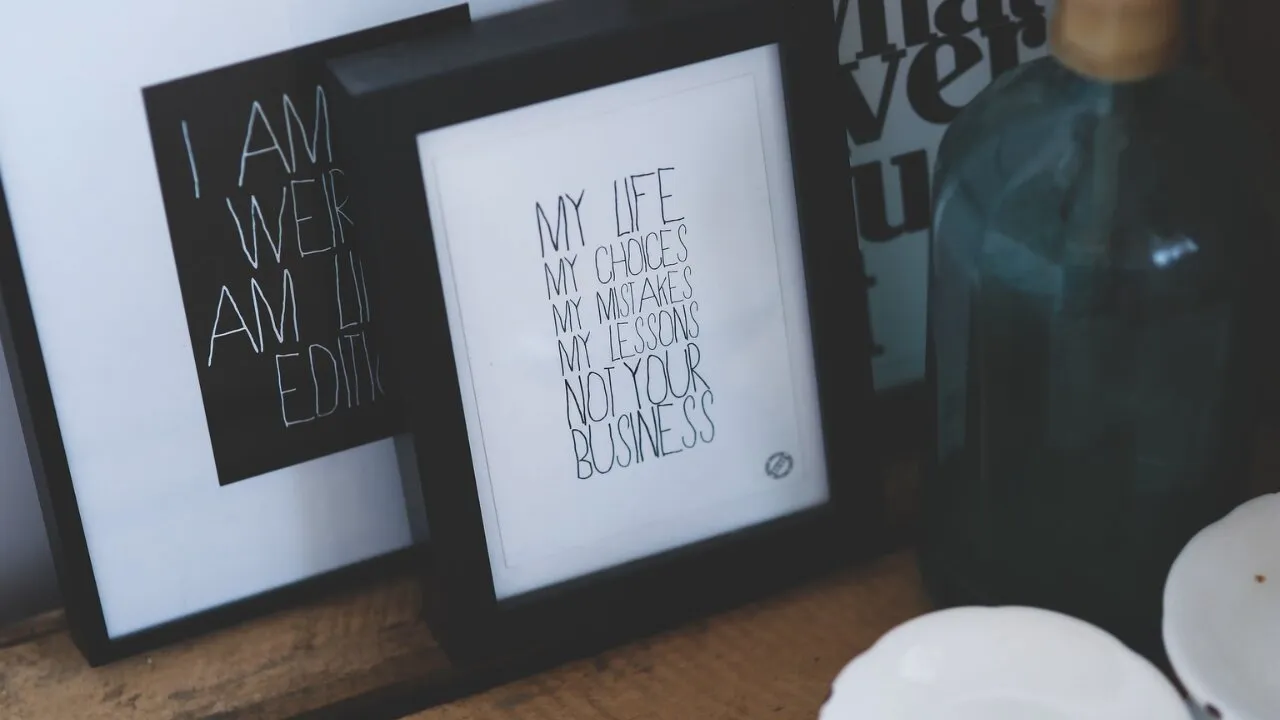
Words have a way of pulling us back from the edge
Listen closely, busy lady. I want you to know that every tear you have shed matters, and every laugh that has escaped your lips matters just as much. We all walk separate paths filled with heartache and unexpected joy, and what heals one person may not heal another. Try not to measure your pain or your journey against someone else’s highlight reel. How you feel is exactly how you feel, and that alone makes it valid.
As I continue to fall more in love with myself and this messy, beautiful life, I have come to understand that words have been essential to my survival. Four sentences, all spoken at separate times by different people, became anchors that held me in place when everything else was falling apart.
I was once a Southern California, summa cum laude, driven, beautiful graduate with the world ahead of me. Two years later, I started having flashbacks to the abuse I suffered as a child. I was wrapped in so much pain and denial that I ended up hospitalized for suicidal thoughts. It has been three years of hard, deliberate work since then, and I am now married, with a turtle and a puppy, living in Northern California.
Life takes you places, both inwardly and outwardly, that you never expect to be. And sometimes the thing that keeps you moving forward is a single sentence spoken at exactly the right moment.
1. “Never say never”
The first phrase I want to share with you is one that many people dismiss as a cliche or even an annoyance. It is often tossed around casually, used as a rebuttal to someone’s important stance. But for me, it was lifesaving.
When I was hospitalized the first time, I met a man named Darrell. He was this tall, fifty-year-old African American man, and for days, he healed by my side. A psychiatric hospital is a frightening place, and he kept me safe and protected. He had admitted himself for two months to heal from deep depression. He needed everything locked away so he could finally take time for himself.
He was kind to the other patients, watched football, and became my voluntary guardian the minute I walked through those doors. For two weeks, I struggled. I told him I never thought I would not want to live. I never thought I could hurt so much, both inside and physically. I was terrified that I could never get better.
But he reminded me to never say never.
As I began wrestling with that idea, something shifted. I could start to drop some of the impossible standards I held myself to. I was able to see just a sliver of what I had lived through and recognize how horrific it truly was. It opened a small doorway into accepting what had happened to me as a child. It also loosened the grip of despair, the fear that I might never heal.
Research in cognitive behavioral therapy shows that absolute language (words like “never,” “always,” “impossible”) reinforces rigid thinking patterns that deepen depression and anxiety. When Darrell challenged my “nevers,” he was unknowingly helping me practice cognitive flexibility, one of the most important skills in mental health recovery.
It was very small, but it started an opening in me to make allowances for our humanity. Sometimes life is unpredictable and, therefore, so are we. I still catch myself saying, “I will never do that,” and then I laugh, because I truly cannot know unless I am in that situation.
It has made me more comfortable with the unknown. Although there is a lot of pain, there is also a lot of beauty. This is why I pledge to love myself no matter what, because I am always learning new facets of who I am. Never say never, because keeping those doors open allows you to become anything and everything you did not know was possible. You find much deeper compassion for why hurt people hurt people. Self-judgment is relentless. Let yourself off the pedestal, busy lady.
Have you ever caught yourself saying “never” about something, only to find life had other plans?
Drop a comment below and tell us about the moment that surprised you most.
2. “Wanting to die is part of the process”
I share the next sentence with you delicately, because this is a topic that desperately needs to be discussed among us. Three years ago, I was hospitalized four times in two months for suicidal thoughts. I was re-traumatized by my hospitalizations and terrified to attempt anything, fail, and then be admitted again. For a while, the fear of failing and being hospitalized was what kept me alive.
Finally, I called a friend from college who had been down this path and who could truly relate. I will never forget staring out the window at a glum winter night when she breathed a little more life into me with her words. She said, “Raech, wanting to die is part of the process.”
I had heard variations of it before, maybe, but she said it as someone who had survived herself. She then said words that can only carry weight when spoken by someone who has truly been there. “Why don’t you commit to trying six months to a year more of healing and re-evaluate where you are, because suicide is always an option.”
Most people are shocked that those words saved my life, but being reminded that I did not have to make it all end right now was a profound relief.
It was also a relief to know I could always have a way out. So, one shaky day after another, I woke up. My horrible, ugly desire to die was suddenly no longer selfish or sinful or weak. This pain was a normalized part of healing.
According to the National Alliance on Mental Illness, one of the most harmful barriers to recovery is the shame and stigma surrounding suicidal ideation. When we treat these feelings as moral failures rather than symptoms of profound suffering, we push people further into isolation. My friend did the opposite. She met me exactly where I was.
I started reading books about the healing process and talking about it openly with everyone I could. Most people have known some shade of that darkness at some point in their lives. The reason some slip through the cracks is the immense shame they feel. Platitudes about how things happen for a reason or that God never gives you more than you can handle are, quite literally, killing us.
We endure things we really do not have to, because we forget we have options. I do not know how to change the world, ladies, but I know how to talk about it now. I talk about it with empathy and honesty, more casually, not to diminish the seriousness of it, but to strip away the taboo and the judgment.
Because my friend was brave and honest with me, I am here. It has been two and a half years. I am healthy and alive. She gave me permission to feel all those ugly, scary things and vowed to love me and not judge me no matter my choice. She gave me strength to keep saving myself.
Finding this helpful?
Share this article with a friend who might need it right now. Sometimes a single conversation can change everything.
3. “I am still okay, even when I don’t feel okay”
In college, a guest speaker in my counseling theories class told us, “It’s okay to not be okay.” That ripped my world apart in the best way and caused me to start allowing myself to feel. But years later, I have been able to transform it into something deeper: “I am still okay, even when I don’t feel okay.”
There is an important distinction here. The first version gives you permission to feel. The second version reminds you that your feelings, no matter how overwhelming, do not define your core self. You can be in pain and still be whole. You can be struggling and still be worthy.
Life spirals out of control more often than we would like to admit. I have learned a great deal about how fragile and resilient the human mind is over these years. I know that I am the only one with myself twenty-four hours a day, seven days a week, and I have lived through hell. Even when I was in the hospitals, I shared laughter and art with other patients and the staff. We forget our bright spots when the darkness is heavy.
So if everything is stripped away and I sit alone with nothing to my name but my name, I still know I am okay. I am here. That knowing lives somewhere deeper than emotion, deeper than circumstance. It is the bedrock that does not move even when everything on the surface is chaos.
Harvard Health research on neuroplasticity has shown that the brain can physically rewire itself through repeated practice of new thought patterns. Every time I told myself “I am still okay,” I was building a new neural pathway, one that now fires automatically when the old darkness tries to visit.
4. “I can experience the same depths of joy in which I have felt pain, sometimes more”
I have been saying this for a while, and I believe it with every fiber of my being. I have known deep pain, pain I never expected to feel or even knew existed. But along the way, I have also known extraordinary joy.
For every time I have crawled across the floor crying, clinging to my journal because the flashbacks and nightmares would not stop, I have also stood barefoot on a stage sharing my poetry. For every night I thought I could not survive, I have stood under a waterfall that I climbed up cliffs to reach.
I have felt the despair of betrayal, and I have also felt the ground supporting me while beautiful, terrible words poured from my pen and my mouth, healing me as I told my story. I have truly felt the cold water of the waterfall running over my body, electrifying the realization that I am alive.
This is the sentence that transformed my relationship with pain entirely. Instead of seeing suffering as something to escape or endure, I began to understand it as a measure of my capacity. The same depth that allows me to feel crushing sorrow is the same depth that allows me to feel breathtaking joy. One does not exist without the other.
It was not just sentences that saved me. It was also myself. It was the decision, made over and over again on the hardest mornings, to get up. To try. To stay.
Returning to yourself, over and over again
If there is one thing I have learned through all of this, it is that healing is not a straight line. It is not a destination you arrive at and never leave. It is a practice. A returning. You will lose yourself, and you will find yourself, and you will lose yourself again. That is not failure. That is being human.
Above all and no matter what, return to yourself over and over again. Support and hold yourself through every step of life. Be real. Be radical. Be raw.
And if you are in that dark place right now, please know: it is not weakness. It is not forever. And you are not alone in it.
If you or someone you know is struggling with suicidal thoughts, please reach out to the 988 Suicide and Crisis Lifeline by calling or texting 988. Help is available around the clock.
We Want to Hear From You!
Which of these four sentences resonated most with your own journey? Tell us in the comments below. Your story might be the thing another woman needs to read today.