Embracing Change: What a Year of Personal Growth Really Looks Like

With the turn of each lunar cycle, many of us find ourselves reflecting on the year behind us. What changed? What stayed the same? And perhaps most importantly, what did we learn about ourselves in the process?
For me, the most powerful lesson was deceptively simple: life is dynamic, and change is inevitable.
That might sound like something you would find embroidered on a throw pillow, but when you have spent most of your adult life resisting change at every turn, truly internalizing this truth feels like a revolution. Change has always been unsettling for me. Not in a dramatic, theatrical way, but in a quiet, stomach-churning way that made me cling to routines, plans, and people as though they were life rafts in open water.
Why We Resist Change (Even When We Know Better)
Over the years, my friendships, my music taste, my values, and my own sense of identity have completely metamorphosed, multiple times. While my evolution away from Nickelback toward the timeless brilliance of the Jezabels is cause for celebration, most changes have not felt so welcome.
Progress was confused with disloyalty. Choices I had once felt so sure, so confident, so committed about suddenly became less important. And that scared me, because I believed that changing my mind meant I had been wrong all along.
According to research published in the American Psychological Association, our resistance to change is deeply rooted in our psychological wiring. Humans are creatures of habit, and our brains are designed to seek predictability. When the familiar is disrupted, our stress response activates, even if the change is ultimately positive.
This is why a promotion can feel just as anxiety-inducing as a layoff, or why moving to your dream city can bring tears instead of joy. Our nervous systems do not distinguish between “good” and “bad” change. They simply register: this is different, and different is dangerous.
Have you ever felt guilty for outgrowing something you once loved?
Drop a comment below and let us know how you handled that shift. You might be surprised how many women share the same experience.
The Illusion of Control
As humans, we crave control. In this chaotic, unpredictable world, we are constantly trying to fight against the mess, to take charge, to create some kind of structure. Whether we use relationships, vigorous fitness regimes, careers, or ten-year life plans, it is all an attempt to order the chaos and rein in the unknown.
We want to be sovereign of our own lives.
Personally, I have always liked to have a plan. The idea of some looming, mysterious future was never exciting. Instead, it riddled me with anxiety. These plans seemed to be more for the benefit of my current self, a form of control. Whether they actually worked out was less relevant, especially since they almost never did.
A fascinating Psychology Today article on letting go of control explains that our need for certainty is often a response to deeper fears, particularly the fear of being vulnerable. When we plan obsessively, we are not really preparing for the future. We are trying to soothe ourselves in the present.
It is this need for control that makes us so opposed to growth. Many times I have found myself clutching the familiar, not ready to let go, only to exacerbate the problem or accelerate the very change I was trying to prevent.
To paraphrase Oscar Wilde: “We never know when the curtain has fallen. We always want a sixth act.”
This tendency is really damaging. Our lives, relationships, and personalities are not immutable. They will reshape whether we fight it or not. Being threatened by change only causes unnecessary anxiety and prevents you from experiencing new, and usually positive, things.
When Change Involves Other People
Change becomes especially difficult when it does not only impact us but involves other people too. What if finding our own adventures comes at the cost of leaving someone behind? How do we balance commitment and independence? Is it even possible for the two to coexist?
It is equally hard when you watch someone you care about changing or desiring new experiences while you are completely content with the way things are. Suddenly, relationships, lifestyles, promises, and futures that once felt so set and resilient no longer are.
If you have ever struggled with this tension between letting go of relationships that no longer serve you and holding on out of loyalty, you know how painful this space can be. It is a kind of grief that does not get talked about enough.
While these transitions can be rough, we have to expect and allow ourselves, and others, to undergo these growth spurts. In the words of one of my favorite writers and actors, Ethan Hawke: “If you really love somebody you want them to grow, but you don’t get to define how that happens. They do.”
To assume otherwise is really quite arrogant and selfish.
Why should somebody else fit into your plan, your wants, your safety net? It is okay to have expectations of people, and it is okay to be disappointed. But you cannot control, mold, or contort someone to line up with what you want and who you want them to be for you.
Finding this helpful?
Share this article with a friend who might need it right now.
Respecting Each Person’s Individual Journey
Ultimately, everyone is equally real, and their claim on life is just as intense as yours. People are first and foremost individuals before they are your friend, mom, dad, sibling, teacher, or partner. That needs to be respected.
So often we rely on other people as a form of consistency, someone to cling to when it feels like the floor is constantly sliding beneath us. But trying to find stability through a relationship will not change the unpredictable nature of the world. It will just make it harder when things do not go to plan.
Perhaps it is better to learn to be adaptable and to trust in our own competency to deal with change, rather than expecting someone else to remain loyally stagnant. Research from UC Berkeley’s Greater Good Science Center supports this idea, showing that psychological resilience is not a fixed trait but a skill we can actively develop through mindfulness, self-compassion, and reframing how we think about adversity.
Building that inner resilience is closely connected to practicing self-compassion in our daily lives, especially during times of upheaval.
Giving Yourself Permission to Evolve
We also cannot be too tough on ourselves when we change our own mind, our beliefs, or our perspective on the world.
A year ago, I was convinced I was going to stay in the same city. I was set on what my job title would read. I thought no one would ever disappoint me. My values were completely different, and my expectations of people were extremely rigid.
Since then, I have experienced emotions I did not even know existed. I have traveled to parts of the world I never thought I would reach. I have found myself capable of things I am both proud and ashamed of.
My attitudes have completely developed, and that is a great thing. It means the past year has not been wasted. It means I have interacted with people, places, and ideas that have changed my view, and that I have allowed myself to be open-minded enough to grow. I have been humble enough to let life surprise me.
This kind of personal evolution is what it means to truly invest in finding your purpose when everything feels uncertain. Growth does not happen on a straight line. It spirals, backtracks, and sometimes looks nothing like what you imagined.
Practical Ways to Embrace Change
If you are someone who struggles with change (and most of us are), here are a few approaches that have genuinely helped me:
- Name the fear. When you feel resistance rising, ask yourself what you are actually afraid of. Often it is not the change itself but the loss of something familiar.
- Start small. You do not have to overhaul your entire life. Change your morning routine. Try a different route to work. Say yes to an invitation you would normally decline.
- Let go of the timeline. Growth does not follow a schedule. Stop measuring yourself against where you “should” be by now.
- Talk about it. Sharing your fears with someone you trust can dissolve their power. You will almost certainly find that you are not alone in what you are feeling.
- Celebrate the discomfort. If something feels unfamiliar and slightly scary, that is usually a sign you are expanding, not failing.
Living on a Bigger Spectrum
While change can be daunting, and sometimes it may seem easier to take comfort in routine, humans have always adapted, evolved, and strived for more. That restlessness is not a flaw. It is a feature.
I think being open to change allows you to live on a bigger spectrum and be exposed to experiences, feelings, and ideas that help you relate and empathize with a wider range of people. Seeking control may seem like the easier or initial response, but doing so restrains others and ourselves.
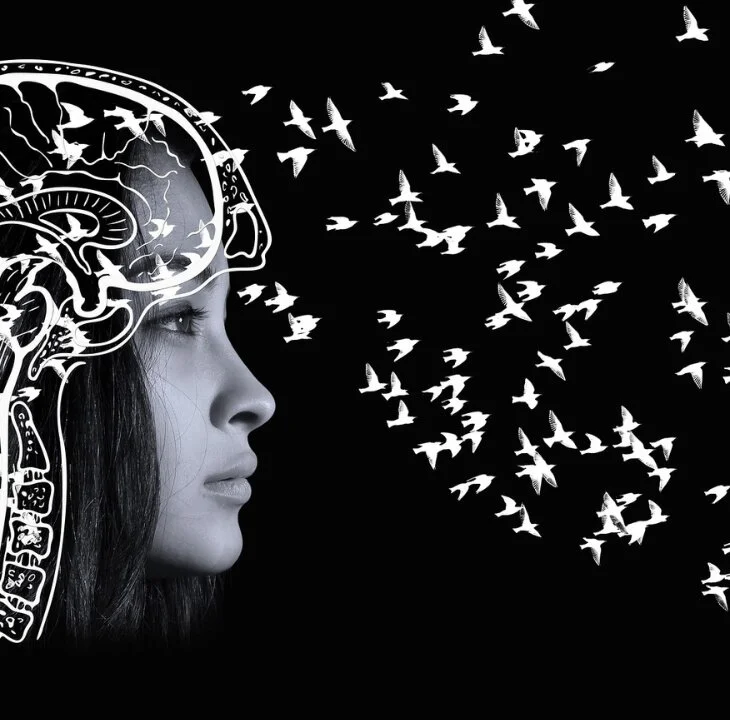
So this year, I am going to leave the roost. I am going to accept and seek change, even if I ruffle a few feathers along the way.
Because the truth is, the woman I am becoming has never existed before. And she deserves the chance to see what is out there.
We Want to Hear From You!
Change is beautiful, but it can also be scary. How are you planning to “leave the roost” this year? Tell us in the comments which part of this piece resonated most with you.