Why Cooking Together Might Be the Most Underrated Form of Intimacy in Your Relationship
There is something about standing side by side in a kitchen, hands busy, music playing softly in the background, that strips away the noise of a relationship and brings you back to each other. Not the version of you that argues about whose turn it is to take out the trash. Not the version that scrolls through your phone during dinner. The real, unguarded version of you that first made your partner fall in love.
If someone had told me five years ago that one of the most powerful tools for emotional connection in a relationship was a jar of chia seeds and a shared cutting board, I would have laughed. But the research backs it up, and more importantly, I have watched it transform the way couples relate to each other over and over again.
We talk a lot about communication, quality time, and physical touch when it comes to keeping relationships strong. But preparing food together is where all three of those things converge in the most natural, low-pressure way possible. And if you have been feeling like you and your partner are running on autopilot lately, this might be exactly the reset you need.
The Science Behind Why Shared Meals Build Stronger Bonds
Before you dismiss this as just another “date night idea,” let me give you the science. A study published in the Journal of Health and Social Behavior found that couples who regularly share meals report significantly higher levels of relationship satisfaction and emotional closeness. The act of preparing and eating food together creates what researchers call “commensality,” a shared experience that reinforces social bonds and builds trust.
Think about it. When you cook with someone, you have to coordinate. You have to communicate. You have to be patient when they chop the mango unevenly or forget to shake the mason jar every thirty seconds. These small moments of cooperation mirror the exact skills that keep long-term relationships healthy. You are practicing teamwork, compromise, and presence without the weight of a “relationship talk” hanging over you.
The Gottman Institute, whose research has shaped much of what we understand about lasting partnerships, emphasizes that turning toward your partner in small, everyday moments is more predictive of relationship success than grand romantic gestures. Passing the cinnamon. Tasting something together and making eye contact. Laughing when the blender lid flies off. These are the micro-moments that build the foundation of a relationship that lasts.
When was the last time you and your partner made something together in the kitchen?
Drop a comment below and let us know. We are genuinely curious whether cooking together is part of your relationship or something you have been meaning to try.
Why Simple Recipes Work Better Than Elaborate Ones for Connection
Here is where most couples go wrong. They decide to “cook together” and immediately pull up some elaborate three-course meal that requires seventeen ingredients and four hours of prep. By the halfway mark, someone is stressed, someone is frustrated, and the kitchen looks like a war zone. That is not connection. That is a project management exercise with emotional consequences.
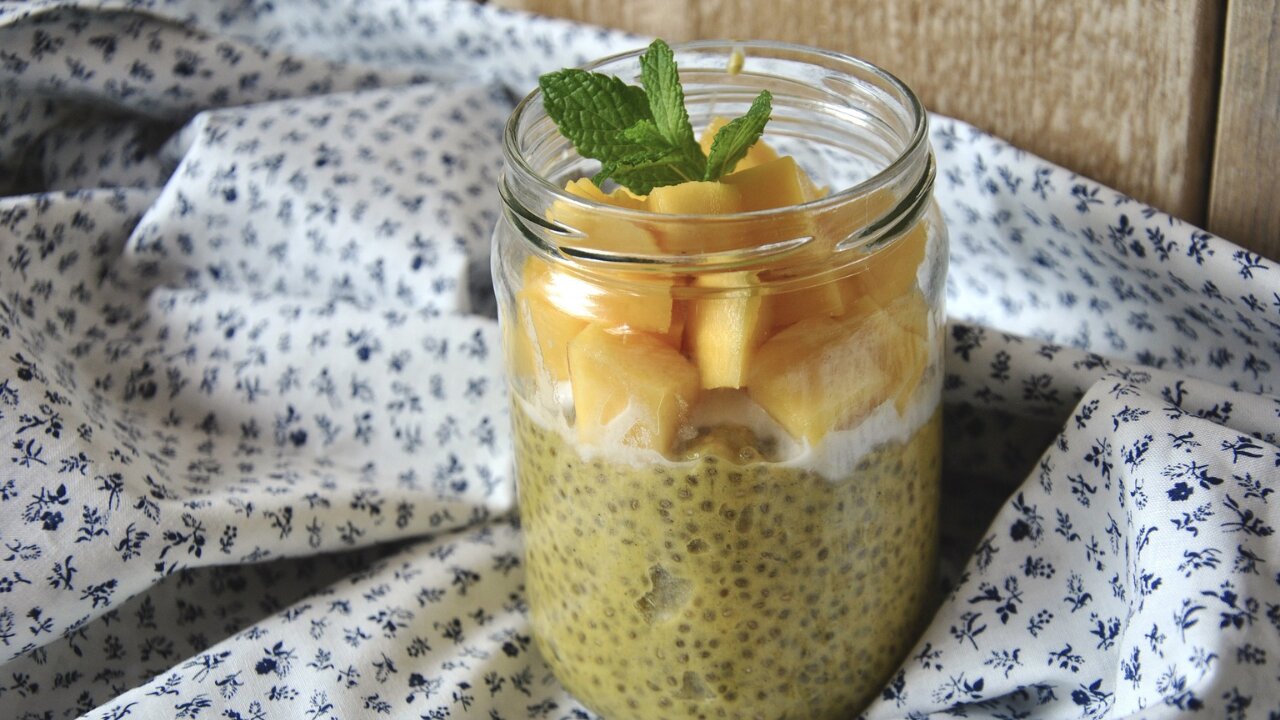
The recipes that actually bring couples closer are the simple ones. Something like an overnight chia pudding with fresh mango, where you spend ten minutes preparing it together in the evening and then wake up to something beautiful the next morning. There is a metaphor in that if you are willing to see it. The best things in a relationship are rarely the ones that demand the most effort. They are the ones that require consistency, a little patience, and the willingness to show up for something small.
When you and your partner stand at the counter mixing chia seeds into cashew milk, sprinkling in a pinch of cinnamon, you are not just making breakfast. You are creating a ritual. And rituals, according to relationship therapists, are one of the strongest predictors of long-term relationship satisfaction. They create a sense of “us” that goes beyond words.
The Overnight Factor: Anticipation as a Bonding Tool
There is something uniquely intimate about preparing food that you will not eat until the next morning. You are making a small investment in your shared future. You are saying, without words, “I am thinking about tomorrow with you.” In a world where so much of modern dating and even long-term relationships operate on instant gratification, the act of waiting for something together is quietly revolutionary.
Anticipation activates the same neural pathways as excitement and desire. When you put that jar in the fridge and say “this is going to be amazing in the morning,” you are building a small, shared sense of looking forward to something. It sounds simple because it is. But simplicity is not the same as insignificance. If you have been reading our thoughts on what to do when you feel like you are drifting apart, you know that reconnection rarely requires a grand gesture. It requires intentional, repeated small ones.
Food as a Love Language Nobody Talks About
Gary Chapman’s five love languages have dominated relationship conversations for decades, and for good reason. But I have always felt that food deserves its own category. Preparing food for someone or with someone touches on almost every love language at once. It is an act of service. It involves quality time. When you hand your partner a spoonful to taste, there is physical touch and a kind of wordless communication. And if you are someone whose love language is receiving gifts, a beautifully layered chia pudding topped with fresh mango cream and a sprig of mint is a gift that says “I paid attention to what you enjoy.”
The problem is that most of us have turned food into a chore rather than a connection point. We order delivery separately. We eat at different times. We scroll through our phones at the dinner table. And then we wonder why we feel emotionally distant from the person sitting three feet away from us.
If your relationship has been feeling transactional lately (whose turn to cook, whose turn to clean, who forgot to buy groceries), cooking together resets the dynamic. It turns a solo obligation into a shared experience. And shared experiences are the currency of emotional intimacy.
Finding this helpful?
Share this article with a friend who might need it right now. Sometimes the simplest advice is the kind that shifts everything.
How to Actually Start a Cooking Ritual With Your Partner
I am not going to give you a rigid five-step plan because that defeats the purpose. The whole point is to create something that feels organic, not like another task on your shared to-do list. But I will tell you what works based on what I have seen and experienced.
Pick One Recipe, One Night a Week
Start absurdly small. One recipe. One evening. Something that takes less than fifteen minutes of active effort. An overnight chia pudding is perfect for this because the actual work is minimal. You mix, you shake, you refrigerate, and then you have a reason to sit down together in the morning and enjoy something you made as a team. If mornings are chaotic in your household, this is also an excuse to wake up ten minutes earlier, before the rush, and have a quiet moment together.
Let Go of Perfection
If your partner puts in too much cinnamon or forgets the salt, let it go. This is not a cooking competition. This is an exercise in being together without criticism, without correction, without trying to optimize each other. If you have been struggling with patterns of nagging or criticism in your relationship, the kitchen is actually a beautiful place to practice breaking that cycle. Bite your tongue when they do something differently than you would. Smile instead. You might be surprised how that energy carries into the rest of your relationship.
Make It Sensory
Put on music you both love. Light a candle if that is your thing. Taste things together. Let your hands brush when you are both reaching for the same jar. The goal is to engage as many senses as possible because sensory-rich experiences create stronger memories. And stronger shared memories are what make a relationship feel solid when the inevitable hard seasons come.
Talk, But Not About Logistics
The kitchen is not the place to discuss bills, schedules, or that thing their mother said last weekend. Use this time to ask questions you used to ask when you were first getting to know each other. “What is something you have been thinking about a lot lately?” “If you could wake up anywhere tomorrow, where would it be?” You would be amazed at how a simple change of context (standing at a counter instead of sitting on the couch) can unlock conversations you did not know you needed to have.
When Cooking Together Reveals Deeper Relationship Patterns
Here is the part nobody warns you about. Cooking together can also shine a light on dynamics in your relationship that need attention. Who takes control? Who steps back? Who gets impatient? Who cleans as they go and who leaves a trail of chaos?
These patterns in the kitchen are often mirror images of patterns in your relationship. A body of research from the American Psychological Association confirms that how couples handle small collaborative tasks is highly predictive of how they handle larger conflicts. If one partner dominates in the kitchen and the other quietly withdraws, that same dynamic is likely showing up in your communication, your decision-making, and your emotional connection.
This is not meant to make you anxious about making breakfast together. It is meant to make you curious. Pay attention. Notice the patterns without judgment. And if what you notice concerns you, let that be the starting point of a deeper conversation, not an accusation.
The Morning After: Why Enjoying What You Made Together Matters
Do not skip the eating part. I know that sounds obvious, but so many couples put effort into preparing something and then consume it separately, standing at the counter, half-distracted. Sit down. Even if it is just for ten minutes. Look at what you made. Taste it. Talk about it. “This mango cream turned out better than I expected” is a sentence that carries more relational weight than you think, because underneath it is “we did something good together.”
That feeling of shared accomplishment, even over something as simple as a chia pudding with fresh fruit, builds what therapists call “positive sentiment override.” It is the emotional bank account that helps you give your partner the benefit of the doubt when things get hard. Every small positive experience you share deposits into that account. And the couples who make it long-term are the ones who keep making deposits, even when life gets busy.
If you have been exploring ways to keep your relationship strong during stressful seasons, this is one of the simplest tools I can recommend. It does not require a therapist, a vacation, or a difficult conversation. It just requires a jar, a few ingredients, and the willingness to be present with the person you love.
It Was Never Really About the Food
At the end of the day, nobody’s relationship was saved by chia pudding. But plenty of relationships have been strengthened by the willingness to slow down, share a simple experience, and remember that the person standing next to you at the counter chose to be there. That is worth protecting. That is worth ten minutes of your evening and a quiet morning together.
Start tonight. Pick something simple. Stand in the kitchen together with no agenda other than being together. You do not need a recipe for that, but if you want one, a jar of chia seeds and some cashew milk is a pretty good place to begin.
We Want to Hear From You!
Tell us in the comments which tip resonated most with you. Have you and your partner ever cooked together as a way to reconnect?
Read This From Other Perspectives
Explore this topic through different lenses