What Sacred Travel Taught Me About Love, Partnership, and Showing Up in Relationships
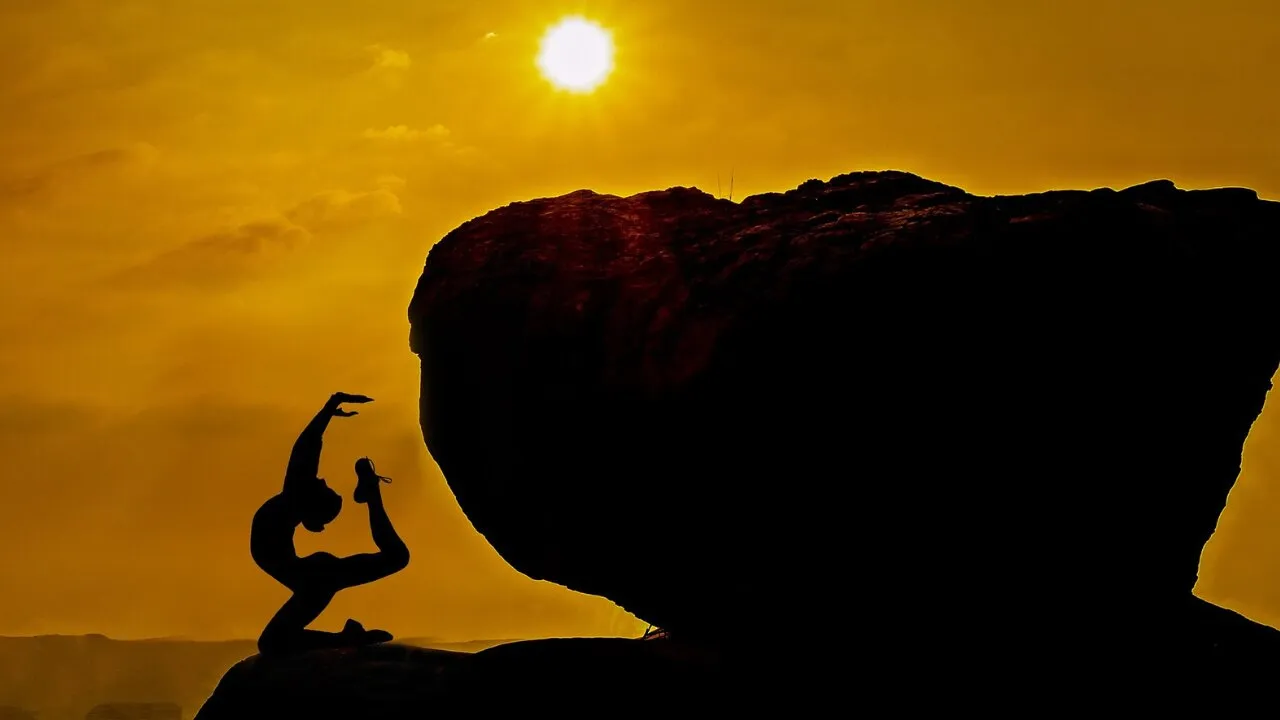
As I stood in the ruins of Timoleague Abbey on the Irish coast, touching ancient stones worn smooth by centuries of weather and human hands, I felt something shift inside me. Not just spiritually, but relationally. I realized, standing there with the sea wind pulling at my hair, that I had been showing up in my relationships the same way I had been showing up in my life: managed, guarded, and half-asleep.
I didn’t go to Ireland in 2011 looking for love advice. I went because something in my bones had been calling me to that island since I was a child. But what I found there, through the unexpected doorway of sacred travel, rewired the way I connect with other people. Particularly in romantic relationships.
Sacred travel is the practice of journeying to places that hold deep meaning, whether ancient sites, pilgrimage routes, or landscapes that stir something primal in you. It’s intentional. It’s reflective. And what I discovered is that it acts as a mirror for how you love, how you let yourself be loved, and all the ways you’ve been getting in your own way.
The Armor We Wear in Love (and How Travel Strips It Away)
Before Ireland, I was what I’d call a “resume dater.” I wasn’t consciously doing it, but I was approaching relationships the same way I approached my career: checking boxes, managing outcomes, performing a version of myself I thought would be impressive enough to earn love. I wasn’t showing up as me. I was showing up as a curated highlight reel.
Sound familiar?
So many of us armor up before we engage with a potential partner. We lead with accomplishments, filter our quirks, and tuck away the parts of ourselves we think are too messy for someone else to hold. Research from Psychology Today on vulnerability consistently shows that emotional openness is the foundation of secure, lasting partnerships. Yet we treat vulnerability like a liability instead of a superpower.
When I stepped into the stone circle at Drombeg that first trip, something cracked open. Not in a dramatic, movie-montage kind of way. More like a slow exhale I didn’t know I’d been holding. I felt, for the first time in a long time, like I didn’t have to perform anything. And I thought: Why don’t I feel this way with the people I’m dating?
The answer was painfully simple. I hadn’t been letting them see me. Not really.
Have you ever noticed that you show up differently on vacation than you do in your relationships back home?
Drop a comment below and let us know what your “vacation self” looks like in love.
Your “Vacation Self” Is the Partner You Were Meant to Be
Here’s something I used to wonder constantly: Why can’t I be the version of myself I am on vacation in my actual relationship?
Vacation me was present. She noticed the light changing over the water. She laughed at things that weren’t even that funny. She made eye contact with strangers and didn’t immediately look away. She was curious instead of guarded, playful instead of performative. She didn’t overthink every text message or rehearse what she was going to say before dinner.
Through sacred travel, I started to understand that this “vacation self” wasn’t some alternate personality that only came out when I had a boarding pass in hand. She was me. The real me. The me that existed underneath layers of stress responses, attachment wounds, and deeply ingrained patterns of self-protection I’d built over the years.
And that version of me? She was capable of a kind of love I hadn’t been allowing myself to experience.
When we strip away the daily triggers, the work stress, the constant notifications, we often find that we are naturally warm, open, and generous partners. The challenge isn’t becoming someone new. It’s peeling back the layers to reveal who was always there. Sacred travel accelerated that process for me because it placed me in environments where my usual defenses simply didn’t apply. There was no one to impress at a 5th-century abbey. There was no performance required at a stone circle in the countryside. There was just me. And once I met that version of myself, I couldn’t unsee her.
Learning to Read the Signs in Love
One of the most transformative shifts that came from my travels was learning to pay attention to the signs, not in a woo-woo, “the universe is sending you a message” kind of way (though I’m not opposed to that either), but in a deeply practical, relational way.
Before I became a more intentional traveler, I was missing signals everywhere in my dating life. I was ignoring red flags because acknowledging them would mean I had to do something about them. I was overlooking green flags because I didn’t trust that good things could just be good. I was so stuck in what attachment theory researchers call anxious or avoidant patterns that I couldn’t read the relational landscape in front of me.
Sacred travel taught me to slow down and notice. To trust my gut when something felt right, or when it didn’t. To stop overriding my instincts with logic or fear. On a pilgrimage trail, you follow the markers. You trust the path. You don’t second-guess every signpost because you’re afraid it might be leading you somewhere uncomfortable.
I started applying that same trust to my romantic life. When someone showed me who they were, I believed them. When a connection felt genuinely easy and safe, I stopped waiting for the other shoe to drop. When my body said “no” to someone, I honored that instead of talking myself into staying.
The result? I stopped ending up in relationships that required me to shrink. And I started finding ones that felt like the stone circle at Drombeg: like coming home.
Finding this helpful?
Share this article with a friend who might need it right now.
The Myth That Sacred Means Easy
Let me be honest about something. On my third trip to Ireland, I nearly had a severe asthma attack on a mountain trail in Maumeen. Reservations got messed up. I got lost more times than I’d like to admit. Sacred travel is not a spa day. It is not always gentle or comfortable.
And this is exactly what it taught me about relationships.
We have this cultural fantasy that when you find the “right” person, everything should flow effortlessly. That love, when it’s “meant to be,” is smooth and painless. But that’s not how growth works, and it’s certainly not how real partnership works.
The healthiest relationships I’ve witnessed and experienced still involve hard conversations. They still involve getting lost together, figuratively and sometimes literally. They involve moments where you’re gasping for air on a metaphorical mountainside and choosing to keep going anyway. Not because you’re suffering for suffering’s sake, but because you trust that the process is teaching you something.
According to research published by The Gottman Institute, even the happiest couples have ongoing, unresolvable disagreements. The difference between couples who thrive and those who don’t isn’t the absence of conflict. It’s how they navigate it. They surrender their rigid expectations. They lay down the fantasy of what the relationship “should” look like and engage with what it actually is.
Sacred travel drilled this into my bones. The path isn’t always clear. The weather doesn’t always cooperate. But if you can stay present, stay curious, and stay willing, the journey itself becomes the gift.
Everything (and Everyone) Is Sacred
This was the biggest lesson, and it took me years to truly absorb it.
After my first few trips, I’d come home buzzing with openness and connection. I’d be the best version of myself for a few weeks, maybe a month. And then real life would creep back in. The commute. The deadlines. The small irritations that accumulate between two people sharing a life. I’d lose that sacred feeling, and with it, I’d lose access to the version of me who knew how to love well.
Then, around 2015, something clicked. I was driving a rental car through the Irish countryside, passing fields full of sheep and weeds, nothing particularly photogenic or notable. And I felt it. That same stirring I’d felt at Drombeg, at the abbey, at every “sacred” site I’d visited. It was everywhere. Not just in the ancient, the beautiful, or the dramatic.
Everything was sacred. The rental car. The sheep. The weeds. My partner’s morning breath and terrible jokes. The way he loaded the dishwasher wrong. The 47th conversation about whose turn it was to take out the trash.
All of it. Sacred.
When you start seeing your partner as sacred, not as a project, not as a problem to solve, not as someone who should be performing for you the way you’ve been performing for them, everything shifts. You stop keeping score. You stop waiting for the extraordinary moments to feel connected and start finding connection in the ordinary ones.
Because here’s what I know now: love is not something you find at a stone circle in Ireland (though it certainly helps). Love is something you practice every single day, in every single interaction, with the person who is standing right in front of you.
Five Ways Sacred Travel Reshaped My Approach to Love
1. I stopped performing and started being present. The biggest gift travel gave my love life was permission to stop curating myself. When you’re standing at the edge of the world, wind in your face, no one cares about your resume. They care about whether you’re really there. I brought that presence into my relationships, and it changed everything.
2. I learned to bring my “vacation self” into daily partnership. The playful, curious, open version of you isn’t reserved for holidays. She’s who you are when you feel safe. Building that safety within your relationship, through consistent trust, honest communication, and emotional availability, lets that version of you live full-time.
3. I started trusting my instincts about people. Just as you learn to follow trail markers on a pilgrimage, you can learn to follow the emotional markers in dating. Your body knows before your brain does. Trust that knowing.
4. I accepted that “right” doesn’t mean “easy.” The most meaningful relationships, like the most meaningful journeys, involve discomfort, uncertainty, and the willingness to keep walking when the path gets steep.
5. I started treating the ordinary moments as sacred. Not just the vacations, the date nights, or the grand gestures. The Tuesday mornings. The grocery runs. The quiet evenings where nothing remarkable happens except two people choosing each other again.
We Want to Hear From You!
Tell us in the comments which of these lessons resonated most with your love life.
Read This From Other Perspectives
Explore this topic through different lenses