Imposter Syndrome Is Quietly Sabotaging Your Relationship and You Might Not Even Realize It
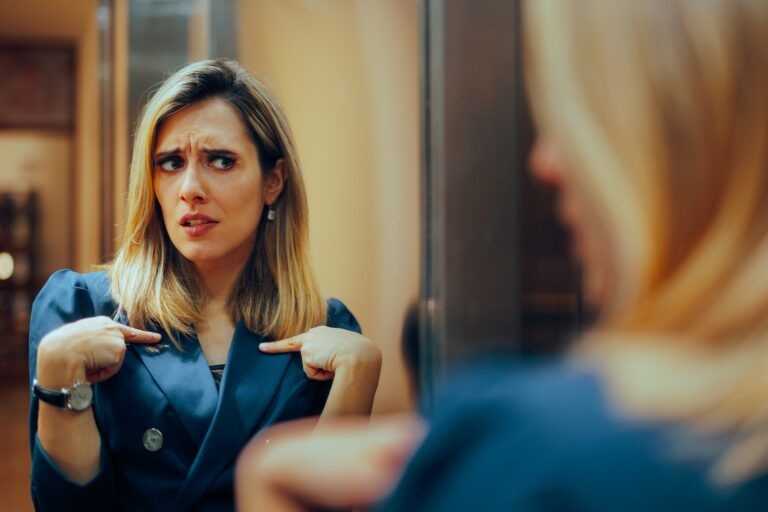
You are lying next to someone who loves you, and all you can think is: when are they going to figure out that I am not who they think I am?
Not because you have been dishonest. Not because you are hiding something sinister. But because somewhere deep inside, you carry this persistent, gnawing belief that you are not actually lovable. That the version of you this person fell for is a performance, a carefully assembled highlight reel, and that the real you (the anxious, uncertain, sometimes messy version) would send them running if they ever truly saw her.
If this feels uncomfortably familiar, I need you to hear something. You are not alone in this. Research suggests that approximately 70% of people experience imposter syndrome at some point in their lives. We hear about it in career contexts constantly. The promotion you do not feel you deserve, the presentation you are sure will expose you. But almost nobody talks about how imposter syndrome infiltrates romantic relationships, and honestly, that is where it does some of its most devastating work.
Because when you feel like a fraud in your career, you might overwork or undersell yourself. When you feel like a fraud in your relationship, you push away the person who loves you, sabotage intimacy, or settle for someone who treats you poorly because you have decided that is all you deserve.
What Imposter Syndrome Looks Like Inside a Relationship
Let’s get specific here, because imposter syndrome in love does not always look the way you would expect. It is not just low self-esteem or general insecurity. It is a very particular kind of disconnect: the gap between who your partner sees and who you believe yourself to be.
Dr. Valerie Young, who has spent decades studying imposter syndrome, identified five distinct types. And every single one of them shows up in how we love.
The Perfectionist Partner holds herself to impossible standards in the relationship. She needs every date to be perfect, every conflict to resolve flawlessly, every text to strike exactly the right tone. When things get messy (as they inevitably do in any real relationship), she interprets it as proof that she is failing. That she is not good enough at being someone’s partner.
The “I Should Know How to Do This” Partner feels like she should instinctively know how to navigate every relationship challenge. If she has to ask for help, read a book, or go to couples therapy, it means she is broken. She watches other couples and assumes everyone else was born knowing how to do this, while she is faking it.
The “If It Were Real, It Wouldn’t Be This Hard” Partner believes that love should come effortlessly. Every disagreement, every rough patch, every moment that requires actual work becomes evidence that the relationship is wrong or that she is incapable of being loved properly.
The Hyper-Independent Partner refuses to lean on anyone. Needing her partner feels like weakness, like exposure. She keeps emotional walls high because vulnerability might reveal that she is not as put-together as she appears. If this resonates, you might also want to explore why patterns in love keep repeating, because hyper-independence often becomes a cycle of its own.
The Overcompensating Partner pours everything into the relationship to prove she is worthy of being in it. She over-gives, over-accommodates, over-performs. Not out of genuine generosity, but out of a desperate need to earn what she cannot believe she simply deserves.
Recognizing your pattern is not about labeling yourself. It is about finally understanding why love has felt so exhausting.
Have you ever felt like your partner was going to “figure out” that you are not enough?
Drop a comment below. Sometimes just naming it takes away its power.
Why Women Carry This Into Relationships
Let’s talk honestly about something. Women do not develop imposter syndrome in a vacuum. We grow up marinating in messages about what makes us lovable, and those messages are relentless. Be beautiful but not vain. Be smart but not intimidating. Be independent but not too independent. Be sexual but not too sexual. Want love but do not need it too much.
The confidence gap, well documented by The Atlantic, shows that women consistently underestimate their abilities compared to men. In a career context, this means not applying for jobs. In a relationship context, this means not believing you deserve the love you are actually receiving. It means shrinking yourself to fit what you think a “good partner” looks like rather than showing up as the full, complicated person you are.
And then there is the double bind. Be warm and nurturing, or risk being seen as cold. Be direct about your needs, or risk being labeled demanding. Be easygoing, or risk being called too much. When you cannot figure out the “right” way to show up in your own relationship, the easiest conclusion to reach is that you simply do not belong in one.
Add in the very particular anxiety of comparing your relationship to the curated versions you see online, and imposter syndrome has everything it needs to thrive. You scroll through someone else’s anniversary post and think: why doesn’t my relationship look like that? What am I doing wrong? You are not doing anything wrong. You are comparing your unfiltered reality to someone else’s most polished moment.
How Imposter Syndrome Quietly Destroys Intimacy
Here is the part nobody warns you about. Imposter syndrome does not just make you feel bad. It actively sabotages the connection you are trying to build.
You deflect love instead of receiving it. Your partner says something genuinely kind, tells you that you are beautiful, that they admire you, that they are grateful for you, and instead of letting it land, you bat it away. “You don’t mean that.” “You’re just saying that.” “You wouldn’t think that if you really knew me.” Over time, this teaches your partner that their love cannot reach you. And that is an incredibly lonely experience for both of you.
You hide the parts of yourself that need to be seen. Real intimacy requires vulnerability, the willingness to let someone see you when you are not performing. But if you believe that the “real” you is somehow less than, you will work overtime to keep up the facade. You will avoid difficult conversations. You will pretend everything is fine. You will never let your partner close enough to love the parts of you that need it most.
You settle for less than you deserve. This one is painful but important. When you do not believe you are worthy of genuine, healthy love, you will tolerate relationships that confirm that belief. You will stay with someone who is emotionally unavailable, dismissive, or unkind because a small part of you thinks: well, this is probably the best I can get. If you have ever found yourself in this position, understanding how self-compassion transforms the way you love might be the shift that changes everything.
You test your partner without realizing it. You create small scenarios to see if they will leave, push boundaries to see if they will stay, or withdraw to see if they will chase you. This is not manipulation. It is the imposter brain desperately seeking evidence to confirm what it already believes: that this person will eventually leave once they see the truth. Research published in the Personality and Social Psychology Bulletin confirms that people who feel like frauds in their relationships engage in more self-sabotaging behaviors, which then create the very rejection they feared.
Finding this helpful?
Share this article with a friend who might need to hear that she is not the only one who feels this way.
Breaking the Pattern: Learning to Let Love In
The good news is that imposter syndrome in relationships is not a life sentence. It is a pattern of thinking, and patterns can be rewired. But it requires something that might feel counterintuitive: you have to let yourself be seen before you feel ready.
Start Telling the Truth About How You Feel
Not in a dramatic, confessional way. But the next time your partner says something kind and your instinct is to deflect, try something different. Try: “That is hard for me to hear, but thank you.” Or even: “I am working on believing that about myself.” This is not weakness. This is the kind of honesty that transforms how you communicate and deepens trust in ways that performing never will.
Stop Waiting to Be “Ready” for Love
One of imposter syndrome’s favorite tricks in relationships is convincing you that you need to fix yourself before you deserve to be loved. That you need to lose the weight, heal the trauma, get the promotion, figure yourself out completely before you are qualified to be someone’s partner. But that is not how love works. You do not have to be a finished product to be worthy of connection. You just have to be willing to show up honestly.
Notice When You Are Performing Instead of Connecting
Pay attention to the moments when you shift from being yourself to auditioning for the role of “good girlfriend” or “perfect partner.” When you catch yourself curating rather than connecting, pause. Ask yourself: what am I afraid will happen if I just… stop trying so hard right now? Usually, the answer is nothing. Usually, your partner prefers the unscripted version of you.
Let Your Partner’s Love Be Evidence
Imposter syndrome works by dismissing evidence that contradicts its narrative. In your career, it dismisses promotions and praise. In your relationship, it dismisses your partner’s consistent, daily choice to be with you. Start treating that choice as data. Not as something they are doing because they do not know better, but as evidence that you are, in fact, someone worth choosing.
Remember That Discomfort Is Not a Warning Sign
When someone loves you well and your nervous system is used to chaos, healthy love can feel boring, suspicious, or even frightening. That discomfort is not your intuition telling you something is wrong. It is your system adjusting to something unfamiliar. The feeling of “I do not deserve this” is not truth. It is a habit. And habits can be broken.
You Deserve to Be Loved Without Apology
Here is what I want to leave you with. The fact that you question whether you are enough for someone is not proof that you are not. It is proof that you care deeply, that you take love seriously, and that you want to show up well for the people you let in. Those are not the qualities of a fraud. Those are the qualities of someone who loves with intention.
You do not have to earn the right to be in your own relationship. You do not have to perform worthiness every day to justify someone choosing you. You are allowed to be imperfect, uncertain, still figuring things out, and deeply loved all at the same time.
Your presence in someone’s life is not an accident or a trick. It is a choice they keep making. Let yourself believe that.
We Want to Hear From You!
Which part of this article hit home for you? Tell us in the comments which pattern you recognized in yourself.
Frequently Asked Questions
Read This From Other Perspectives
Explore this topic through different lenses