Four Sentences That Completely Changed How I Love
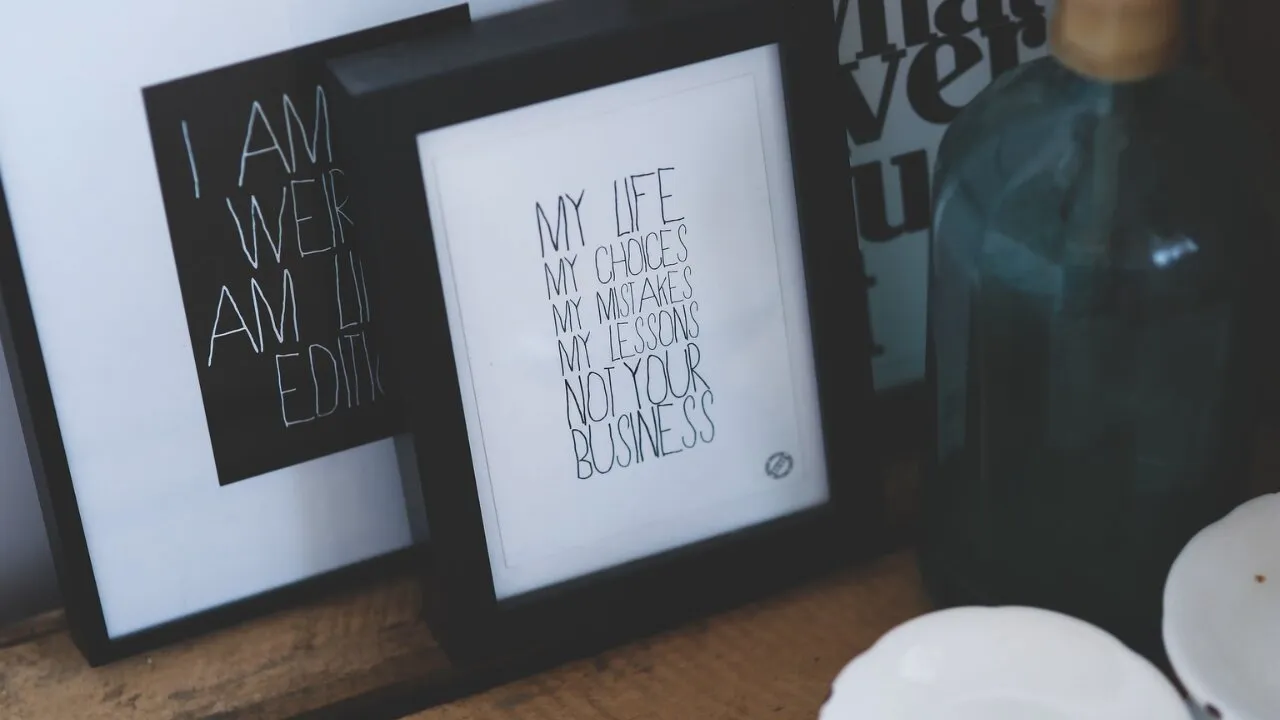
The words that rewired my heart
Let me tell you something I wish someone had told me years ago. The way we talk to ourselves about love, the phrases we repeat in our heads after a breakup, the scripts we rehearse before a hard conversation, those words shape our relationships more than any dating advice ever could.
I spent most of my twenties collecting heartbreak like it was a hobby. Not because I was unlucky, but because I kept showing up to love with a set of beliefs that guaranteed I would get hurt. I believed I was too much and not enough at the same time. I believed that if someone really loved me, they would just know what I needed. I believed that vulnerability was a trap.
And then, over the course of several years and several relationships, four sentences found me at exactly the right moments. They did not come from self-help books or therapists (though therapy helped enormously). They came from real people in real, messy moments of connection. And they fundamentally changed how I show up in love.
If you have ever felt like you are doing everything right but love keeps going sideways, keep reading. Because sometimes the shift is not about finding a better partner. It is about finding better words.
1. “Stop dating who you think you deserve”
My friend Camille said this to me over wine after I had just told her about my latest situationship disaster. I was dating a man who was emotionally unavailable, vaguely commitment-phobic, and, honestly, a little mean. But I kept justifying it because I thought the sparks meant something. I thought the chaos was passion.
Camille looked at me and said, “Tash, stop dating who you think you deserve. Start dating who actually treats you well.”
That sentence knocked the wind out of me because it exposed something I had never examined. I was not choosing partners based on how they treated me. I was choosing them based on a deeply buried belief about what I was worth. And that belief had been shaped by every dismissive comment, every time I was told I was “too sensitive,” every relationship where I made myself smaller to keep the peace.
Research on attachment theory and partner selection confirms what Camille intuited. We tend to gravitate toward partners who confirm our existing self-concept, even when that self-concept is negative. If you believe you are hard to love, you will unconsciously seek out people who make loving you look hard.
Once I heard those words, I could not unhear them. I started paying attention to the gap between what I said I wanted and who I actually chose. I started asking myself, before every date, before every “yes” to another drink, “Am I choosing this person because they feel familiar, or because they feel good?”
Those are two very different things. And learning to tell the difference changed everything about my dating life.
Have you ever realized you were choosing partners based on old wounds instead of real compatibility?
Drop a comment below and let us know what made you finally see the pattern.
2. “You are not asking for too much. You are asking the wrong person.”
This one came from my therapist, but it landed in the context of a relationship that was slowly suffocating me. I had been with someone for over a year who made me feel like every need I expressed was an inconvenience. I wanted consistent communication. Too needy. I wanted to talk about where we were headed. Too intense. I wanted him to show up to things that mattered to me. Too demanding.
I had internalized all of it. I walked into therapy one afternoon genuinely asking, “How do I stop needing so much from people?”
And she said, “You are not asking for too much. You are asking the wrong person.”
I sat with that for a long time. Because here is what happens when you are with someone who cannot meet your needs: you start to believe your needs are the problem. You shrink. You edit yourself. You learn to swallow your feelings before they even fully form, and then you wonder why you feel so hollow.
The Gottman Institute’s research on successful relationships shows that partners in healthy relationships turn toward each other’s bids for connection at least 86% of the time. That means consistently showing up, consistently responding, consistently choosing to engage. It is not a bonus feature of a good relationship. It is the foundation.
When I finally left that relationship, I did not leave because he was a bad person. I left because I finally understood that compatibility is not just about chemistry or shared interests. It is about capacity. Does this person have the emotional capacity to meet you where you are? Can they hold what you are offering?
If the answer is no, it does not mean you are offering too much. It means you are at the wrong door.
3. “Love should make you more of yourself, not less”
I read a version of this somewhere years ago, but it really clicked when a close friend said it during one of those late-night, brutally honest conversations. I had just described how I had stopped writing poetry since getting into my new relationship. I had stopped seeing certain friends. I had stopped wearing the clothes I liked because my partner made comments about them.
And I was framing all of it as compromise. As maturity. As “choosing my relationship.”
My friend just looked at me and said, “Tash, love should make you more of yourself, not less. You are disappearing.”
She was right. And that is the thing about losing yourself in a relationship. It happens so gradually that you do not notice until someone holds up a mirror. One small concession becomes two, then ten, and suddenly you cannot remember what you actually like, what you actually think, who you actually are outside of this other person.
Holding onto your identity inside a partnership is not selfish. It is essential. The healthiest relationships are the ones where both people are growing, individually and together. Where your partner is curious about the parts of you they have not met yet, not threatened by them.
After that conversation, I made a quiet promise to myself. I would never again measure the health of a relationship by how much of myself I was willing to sacrifice. Real love does not require you to amputate pieces of who you are to fit into someone else’s comfort zone.
Finding this helpful?
Share this article with a friend who might need it right now. Sometimes the right words at the right time change everything.
4. “The right person will not make you fight for your peace”
This last one came from my mother, of all people. She said it casually over the phone, almost as an afterthought, while I was venting about yet another argument with a partner who turned every disagreement into a three-day silent treatment.
“Baby, the right person will not make you fight for your peace.”
I think I actually stopped breathing for a second. Because I had spent years equating difficulty with depth. I thought that if a relationship was easy, it was boring. I thought that conflict meant passion and that making up after a blowout was intimacy. I had confused emotional exhaustion with emotional investment.
But peace is not the absence of passion. Peace is knowing that when conflict comes (and it will), you and your partner are on the same team. It is knowing that a disagreement will not cost you the relationship. It is the safety to say hard things without bracing for punishment.
According to research published in the Journal of Social and Personal Relationships, perceived partner responsiveness (the feeling that your partner understands, validates, and cares for you) is one of the strongest predictors of relationship satisfaction and longevity. That responsiveness is what peace feels like in practice.
When I finally found a relationship where I did not have to fight for basic respect, where I could be honest without fear, where silence meant comfort instead of punishment, I almost did not recognize it. It felt too calm. Too easy. I kept waiting for the other shoe to drop.
But the shoe never dropped. And slowly, I learned that this is what love is supposed to feel like. Not a battlefield. Not a performance. Just two people choosing each other, consistently and kindly, one ordinary day at a time.
Words become blueprints
Here is what I have learned about love and language. The sentences we absorb, from partners, friends, family, even strangers, become the blueprints for how we build our relationships. Bad blueprints give you houses that collapse. Good ones give you something you can actually live in.
These four sentences did not just change my relationships. They changed me as a partner. They taught me to choose with my eyes open, to protect my identity inside of love, to stop shrinking, and to recognize peace when it finally showed up.
If you are reading this and something resonated, hold onto it. Write it down. Say it out loud. Let it work on you the way these words worked on me. Because the next relationship you build deserves a better blueprint than the ones that came before.
And if you are in a relationship right now that is asking you to be less than who you are, let me be the friend who says it plainly: you are not too much. You are not too needy. You are not too sensitive. You might just be at the wrong door.
The right one will not require you to knock.
We Want to Hear From You!
Which of these four sentences hit closest to home for you? Tell us in the comments below. Your story might be exactly what another woman needs to read today.
Read This From Other Perspectives
Explore this topic through different lenses