When Burnout Starts Breaking Your Relationships and How to Rebuild the Bonds That Matter
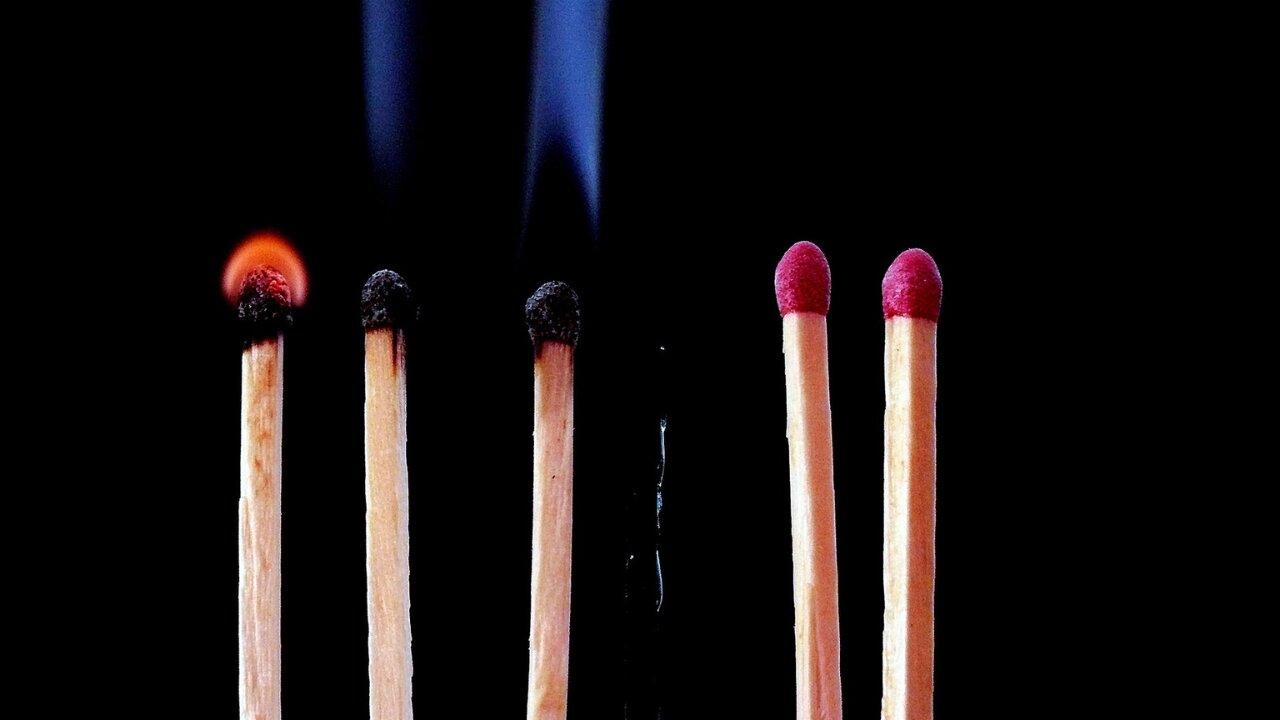
The people who love you noticed before you did.
I remember the exact moment I realized burnout had crept into my most precious relationships. My daughter was tugging at my sleeve, asking me to come see something she had built with her blocks, and I heard myself say, “In a minute, sweetheart.” That minute turned into an hour. Then a forgotten evening. Then a pattern. I was physically in the room but emotionally somewhere else entirely, lost in the fog of exhaustion that had quietly wrapped itself around every part of my life.
Here is what nobody tells you about burnout. It does not just steal your energy or your motivation. It steals your presence. And when your presence disappears, your relationships start to fracture in ways you do not notice until you are standing in the rubble wondering what happened.
Your partner feels like they are living with a ghost. Your children learn to stop asking. Your friendships fade into a string of unanswered texts and cancelled plans. Your mother calls and you let it ring because you simply cannot hold one more conversation. The people who love you the most become the ones who bear the heaviest weight of your depletion, and that is a painful truth to sit with.
But if you are reading this and recognizing yourself in these words, I want you to know something. The fact that it hurts means the love is still there. The bonds are not gone. They are just buried under layers of exhaustion, and we can dig them out together.
Have you ever looked up from your exhaustion and realized you had been missing the moments that matter most?
Drop a comment below and let us know. Sometimes just naming it is the first step toward finding your way back.
How Burnout Quietly Unravels Your Closest Relationships
Before we talk about rebuilding, we need to understand what is actually happening beneath the surface. Burnout does not announce itself with a dramatic entrance. It seeps in slowly, and it has a very specific way of poisoning the relationships that should be our greatest source of comfort.
You start withdrawing from the people you love
When you are running on empty, social connection starts to feel like another demand on your already depleted reserves. Research published in the Journal of Clinical Psychology has shown that emotional exhaustion significantly reduces a person’s capacity for empathy and social engagement. In other words, it is not that you have stopped caring about your family and friends. Your nervous system has simply shifted into survival mode, and survival mode does not leave room for deep connection.
I have seen this play out in my own life and in the lives of so many women I know. The friend who always organized the group dinners suddenly goes quiet. The mother who used to sit on the bedroom floor playing dolls now scrolls her phone with glazed eyes while her children play around her. The sister who always remembered birthdays lets one slip by without a word. It is not neglect. It is depletion wearing the mask of indifference.
Resentment builds on both sides
Here is where it gets complicated. While you are drowning in exhaustion, the people around you are experiencing their own pain. Your partner might feel rejected. Your children might feel invisible. Your best friend might feel abandoned. And because none of these feelings are being communicated (because who has the energy for difficult conversations when they are burnt out?), resentment starts to quietly build on both sides.
You resent them for not seeing how much you are struggling. They resent you for pulling away. And nobody is wrong, which is what makes it so heartbreaking. According to the American Psychological Association, burnout creates a cycle of emotional withdrawal that, left unchecked, can cause lasting damage to family systems and close friendships.
You lose yourself, and they lose you too
The version of you that your family and friends fell in love with, the one who laughed easily, who was curious about their lives, who showed up with her whole heart, she is still in there. But burnout buries her so deep that even you forget she exists. And when you lose touch with yourself, the people closest to you lose touch with you too. It is a grief that nobody quite knows how to name.
Finding Your Way Back to the People Who Matter
Now for the part that actually gives me hope. Because I have lived through this, and I have watched other women live through it, and I can tell you with complete honesty that these relationships can heal. Sometimes they even come back stronger than they were before, because the process of rebuilding requires a kind of honesty and vulnerability that many of us were not practicing before burnout forced our hand.
Start by telling the truth to the people closest to you
I know this feels terrifying. Especially if you are someone (like me) who has spent years being the strong one, the reliable one, the woman who holds everything together. But the walls you have built to protect yourself are the same walls keeping your loved ones out.
You do not need a dramatic speech. You do not need to have it all figured out. Sometimes the most powerful thing you can say is, “I have not been okay, and I think it has been affecting us.” That single sentence can crack open a door that has been closed for months. I remember saying something similar to my partner one evening after the kids were in bed, and the look of relief on his face told me everything. He had been waiting. He just had not known how to reach me.
This kind of honest communication is at the heart of healthy relationship dynamics, whether we are talking about romantic partnerships, family bonds, or friendships.
Finding this helpful?
Share this article with a friend who might need it right now. Sometimes knowing you are not the only one is everything.
Release the guilt, but take responsibility
There is an important distinction here that I want to make sure we do not skip over. Guilt says, “I am a terrible mother, friend, daughter, partner.” Responsibility says, “I was not able to show up the way I wanted to, and I want to change that.” One keeps you stuck. The other moves you forward.
You did not choose burnout. Nobody wakes up one morning and decides to emotionally abandon the people they love. But you can choose what happens next. And part of that choice involves gently acknowledging to the people in your life that your absence had an impact on them too. Not from a place of shame, but from a place of love.
Learning to approach yourself with compassion during this process is not selfish. It is necessary. Because you cannot pour love back into your relationships from an empty, shame-filled cup.
Rebuild through small, consistent moments of connection
You do not need a grand gesture. You do not need to plan an elaborate family holiday or throw your best friend a surprise party to prove that you are “back.” In fact, the pressure of big gestures is often what contributed to burnout in the first place.
Instead, think small. Painfully, beautifully small. Sit next to your child for ten minutes and actually watch what they are doing. Send your friend a voice note that says, “I have been thinking about you.” Cook a simple meal with your partner instead of eating in separate rooms while staring at separate screens. Call your mother back, and when she asks how you are, tell her the truth.
These tiny moments of genuine presence are worth more than a hundred grand gestures performed on autopilot. The Greater Good Science Center at UC Berkeley highlights that relational recovery after burnout depends far more on quality of attention than quantity of time. Ten minutes of real presence outweighs an entire distracted weekend.
Let people back in gradually
One of the trickiest parts of burnout recovery within relationships is learning to receive again. When you have spent months (or years) in survival mode, accepting help, love, and support can feel deeply uncomfortable. Your instinct might be to say, “No, I am fine,” even when you are anything but fine.
Practice letting people in, one small yes at a time. Yes, you can pick up the kids today. Yes, I would love to have coffee this weekend. Yes, it would actually mean the world to me if you could just sit with me for a while. Each yes is a tiny act of trust, and trust is the foundation that every meaningful relationship is built on.
Create new boundaries to protect your relationships going forward
Here is the part that requires real courage. If you want to avoid finding yourself in this exact same situation six months from now, something in your life has to shift. And I am not talking about quitting your job and moving to a cottage by the sea (though the fantasy is lovely). I am talking about identifying the specific patterns that drained you to the point where you had nothing left for the people who matter most.
Maybe it means learning to say no to the school committee so you can say yes to an unhurried bedtime routine with your kids. Maybe it means putting your phone in another room after dinner so you can actually be present with your family. Maybe it means telling a draining friend that you need to step back from that dynamic for a while, so you can invest more deeply in the friendships that truly nourish you.
Boundaries are not walls. They are the fences that keep the garden safe so beautiful things can actually grow inside it. And the most beautiful things in your life, the relationships that make everything else worthwhile, deserve that protection.
Your Relationships Are Worth the Rebuild
I want to leave you with something I wish someone had told me during my darkest burnout days. The people who love you are not keeping score. They are not tallying up the missed calls and the cancelled plans and the times you were too exhausted to listen. They are waiting for you. They are hoping you will come back. And most of them will meet you with more grace than you are giving yourself right now.
Recovery is not linear, and rebuilding relationships after burnout takes patience from everyone involved. But the fact that you are here, reading this, thinking about the people in your life and how to reconnect with them, that tells me everything I need to know about who you are. You are someone who loves deeply. You just forgot for a little while. And that is okay. We all do.
Now go send that text. Make that call. Sit on the floor and play with the blocks. The people who love you are still right there. They have been waiting.
We Want to Hear From You!
Which relationship in your life needs a little extra tenderness right now? Tell us in the comments. Let’s remind each other that it is never too late to reconnect.
Read This From Other Perspectives
Explore this topic through different lenses