The People Who Watched Me Fall Apart Taught Me What I Never Could Have Learned Alone
When Your Inner Circle Sees You Crumble
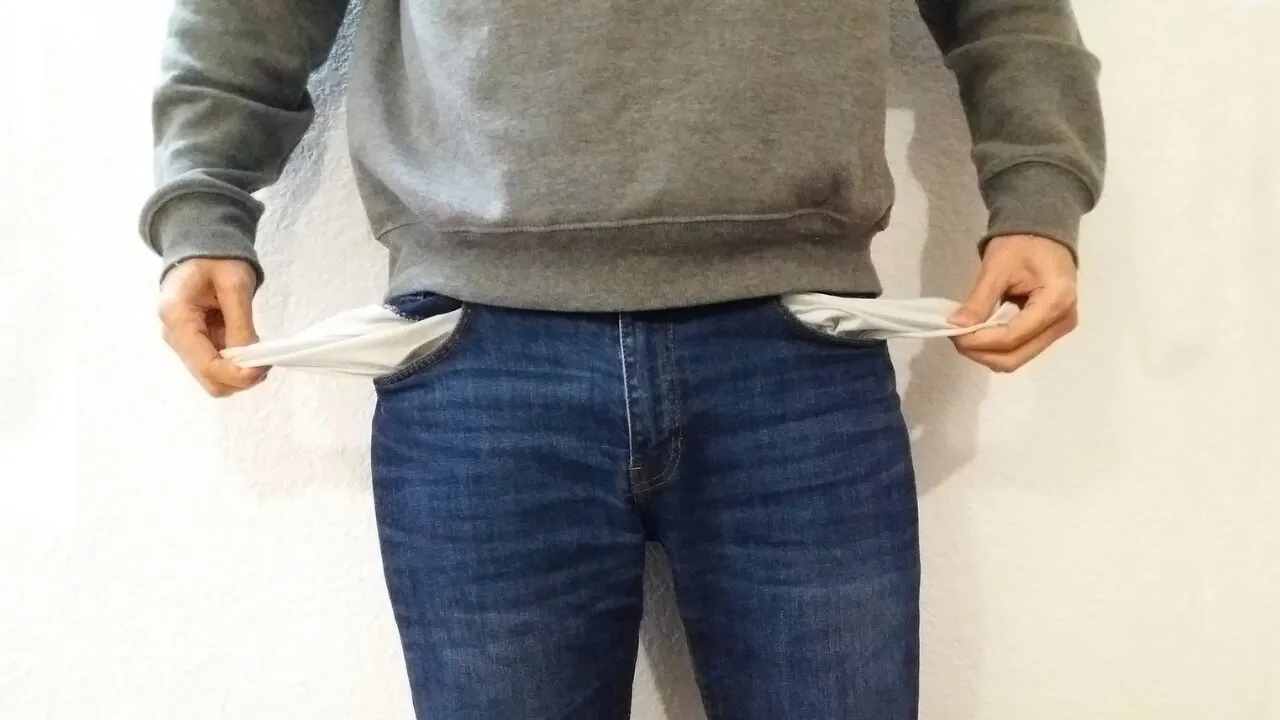
There is a particular kind of vulnerability that comes with falling apart in front of the people who love you. Not the polished, Instagram-worthy version of struggle. The real kind. The kind where your sister finds you crying on the kitchen floor at 2 a.m. while your kids sleep in the next room. The kind where your best friend shows up with groceries because she knows your bank account is empty and your pride is too full to ask.
When I hit the lowest point of my life, newly separated, financially wrecked, and convinced I had failed at every role I had ever been given, the hardest part was not the circumstances themselves. It was watching the people around me witness it. My mother’s face when I told her the marriage was over. My cousin’s careful silence on the other end of the phone. The way my oldest friend hugged me a little too long, like she was afraid I might dissolve if she let go.
What I did not understand then, but understand deeply now, is that losing yourself is not something that happens in isolation. It happens in relationship. The roles we play for our families, the masks we wear for our friends, the version of ourselves we perform for our communities, those are the very things that can slowly erase who we actually are. And it is often the people closest to us who notice the disappearance before we do.
According to research published by the National Institutes of Health, social support is one of the most significant protective factors against depression and emotional collapse, yet many women report feeling unable to access that support due to shame, guilt, or the pressure to appear “fine” within their family and social networks.
Have you ever hidden your struggles from the people closest to you, not because they wouldn’t care, but because you didn’t want to burden them?
Drop a comment below and let us know. You might be surprised how many women share that exact same instinct.
The Family Script I Was Performing
Here is something nobody tells you about family dynamics: the role you were assigned as a child does not expire when you become an adult. It just gets more elaborate.
I was raised to be the strong one, the capable one, the daughter who figured things out and never needed too much. My mother, who had her own battles with survival, needed me to be that person. My abuela needed me to be the one who “made it.” And so I performed that role with everything I had, through a marriage that was quietly suffocating me, through motherhood that felt nothing like the gentle, selfless picture I had been sold, through financial stress I could not admit to anyone because admitting it would mean the strong one had cracked.
The problem with being the strong one in your family is that people stop checking on you. Not because they do not care, but because the script says you are fine. You are always fine. You have it handled. And after a while, you start believing the script yourself, right up until the moment you cannot.
When the Roles We Play Start Playing Us
I think about this often now, how the roles we take on within our families become invisible cages. The peacekeeper who swallows her own anger to keep everyone else comfortable. The responsible one who never gets to be messy or uncertain. The caretaker who gives and gives until there is nothing left and then feels guilty for being empty.
These are not just personality traits. They are survival strategies we learned in childhood, and they become the very patterns that disconnect us from ourselves as adults. Psychologist Dr. Harriet Lerner, author of The Dance of Connection, has written extensively about how family roles and patterns of over-functioning can lead women to lose their authentic voice within their closest relationships.
My real downfall was never the divorce. It was never the empty bank account. It was the moment I realized I had been performing a version of myself for my family and friends for so long that I could no longer find the original underneath all the costumes.
The Friends Who Held Up a Mirror
If family gave me the script, my friendships were where I first started to see that the script was not working.
It was my friend Daniela who said it first. We were sitting in her car outside a Target, and she looked at me and said, “Where did you go?” She did not mean physically. She meant the version of me that used to laugh loudly, who had opinions, who would argue about things that mattered. That woman had been replaced by someone who just nodded along and said “I’m good” to every question.
True friendship, the kind that actually matters, is not about being there for the fun parts. It is about being the person who notices when someone’s light goes dim and loves them enough to say something. That takes courage, both from the person speaking and the person hearing it.
But here is what I have learned about friendships during rock bottom: they get tested in ways you never expect. Some friends cannot handle your darkness. Some friends, the ones you thought were ride-or-die, quietly fade away when your life stops being convenient to be around. And some friends, sometimes the ones you least expect, show up in ways that reshape your entire understanding of what connection actually means.
Letting People See the Real Mess
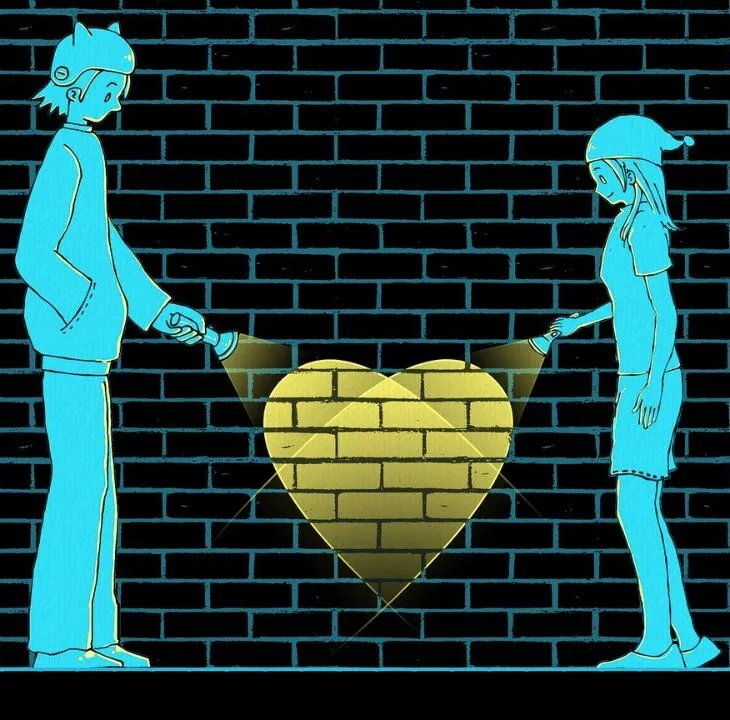
The turning point for me was not some grand revelation. It was a Tuesday afternoon when my friend Gia called and asked how I was, and instead of saying “I’m fine,” I said, “I’m not. I’m really not.”
Three words. That is all it took to crack open a door I had been keeping locked for years. And what came flooding through was not judgment or pity. It was relief. Hers and mine. She told me later she had been waiting for me to stop pretending. She had seen the cracks for months and had been holding space, just waiting for me to trust her enough to be honest.
A study from the Greater Good Science Center at UC Berkeley confirms what many of us know instinctively: the quality of our social bonds is one of the strongest predictors of emotional resilience and recovery during life’s hardest seasons. Not the number of friends you have. The depth of honesty within those friendships.
Finding this helpful?
Share this article with a friend who might need it right now.
What My Kids Taught Me About Rebuilding
People talk a lot about how hard single motherhood is, and they are not wrong. But what gets lost in that conversation is the unexpected clarity that comes from parenting on your own terms.
When I was inside the marriage, I was parenting through a filter, constantly adjusting myself to maintain peace, to uphold the image of the “good family,” to make sure my boys saw a united front even when there was a war happening behind closed doors. When that structure fell away, something unexpected emerged. I could finally be honest with my children, in age-appropriate ways, about the fact that life is not always neat, that their mother is a full human being and not just a role.
My older son said something to me about a year after the separation that I will carry with me forever. He said, “Mom, you laugh more now.” He was seven. Seven years old, and he had noticed the difference between a mother performing happiness and a mother actually experiencing it.
Children are extraordinary mirrors. They do not care about your job title, your marital status, or your bank balance. They care about your presence. They care about whether you are actually there when you are in the room with them. And I had not been. Not really. Not for a long time.
Redefining What Family Looks Like
One of the most liberating things about hitting rock bottom within your family structure is that you get to rebuild it on your own terms. The nuclear family ideal I had been chasing, the one with the husband and the house and the perfectly orchestrated Sunday dinners, that was never my dream. It was the dream I had inherited.
What I built instead was messier and more honest. Weekly dinners at my mother’s house where I finally told her the truth about how hard things had been. A group text with three friends who became my emergency contacts in every sense of the word. A home where my boys saw their mother struggle, adapt, and keep going, not because she had all the answers, but because she refused to stop showing up.
Family, I have learned, is not always the people who share your blood. Sometimes it is the friend who drives forty minutes to sit with you in silence because you asked. Sometimes it is the neighbor who watches your kids for an hour so you can just breathe. Sometimes it is the community of women who have been exactly where you are and can look you in the eye and say, “You will survive this. I know because I did.”
The Relationships That Survived (and the Ones That Didn’t)
I would be dishonest if I said every relationship in my life survived my unraveling. Some did not. Some family members could not reconcile the woman I was becoming with the role they needed me to play. Some friendships, the ones built on surface-level pleasantries and shared routines rather than real intimacy, simply could not bear the weight of authenticity.
And that is okay. It took me a long time to accept that, but it is okay.
The relationships that survived my rock bottom are the ones that are now the strongest. They survived because they were willing to evolve. Because the people in them loved me, not the performance of me. My relationship with my mother is deeper now than it has ever been, partly because I finally stopped protecting her from my truth and gave her the chance to actually be my mother, not just the woman I performed strength for.
What I Want You to Know About Your People
If you are in the middle of your own unraveling right now, I want you to look around. Not at the people who are judging you. Not at the ones who have gone quiet. Look at the ones who are still standing there. The ones who text you back. The ones who do not need you to be okay in order to stay.
Those people are your foundation. Not the old script. Not the roles you have been assigned. Not the family portrait you think you are supposed to be holding up. The real people, with their imperfect love and their willingness to sit in the discomfort with you, they are what will carry you through.
You do not have to rebuild alone. In fact, you were never meant to. The myth of the self-made recovery is just that, a myth. Every woman I know who has come through her darkest season will tell you the same thing: someone was there. Someone saw her. And that made all the difference.
We Want to Hear From You!
Tell us in the comments which part of this story hit home for you. Whether it was the family roles, the friendships, or the moment you stopped pretending, your words might be exactly what another woman needs to read today.
Read This From Other Perspectives
Explore this topic through different lenses