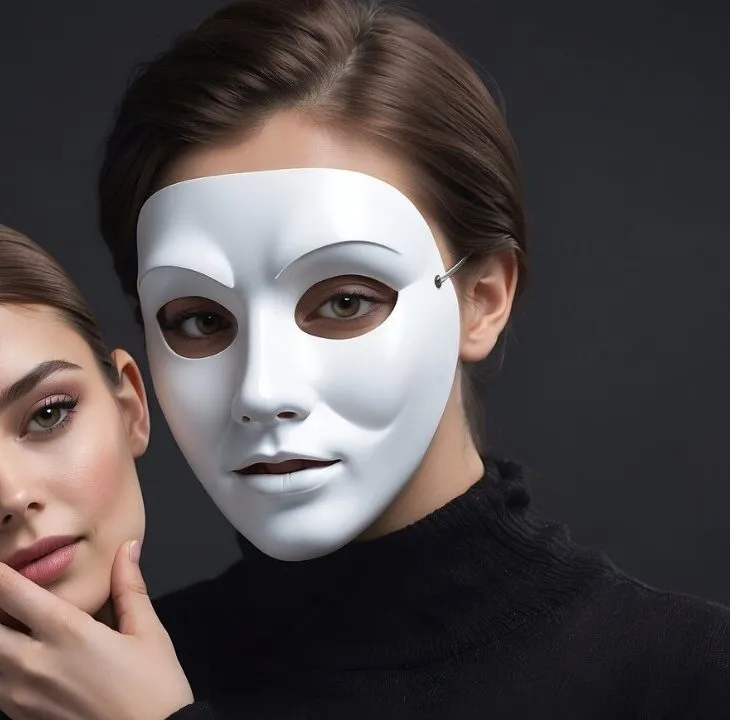
The Beauty Advice We Pass Down: How Family and Friends Shape the Way We Care for Our Skin

Your First Beauty Teacher Was Probably Sitting at the Kitchen Table
Think back to the very first time you learned anything about taking care of your skin. Chances are, it was not from a dermatologist or a glossy magazine. It was from your mother smoothing lotion on your sunburned shoulders. Your grandmother insisting that cucumbers on your eyes would fix everything. Your older sister handing you her half-used tube of concealer and whispering, “Trust me, this one actually works.”
The beauty habits we carry into adulthood are deeply personal, and they are almost always inherited from the women (and sometimes the men) who raised us. According to a study published in the Journal of Consumer Research, family influence is one of the strongest predictors of consumer behavior around personal care, often outweighing advertising and peer pressure combined. That means the moisturizer your mom swore by in 1998 might still be sitting on your bathroom counter today, not because it is the best option, but because it feels like home.
There is something beautiful about that kind of loyalty. But there is also something worth examining. Because some of what we inherit is wisdom, and some of it is just habit. And knowing the difference matters, not only for our own skin, but for the lessons we pass along to the people who look to us for guidance.
What is the one beauty habit you picked up from your mom, your grandma, or your best friend that you still swear by?
Drop a comment below and let us know. We bet there are some gems hiding in those family traditions.
When Your Friend Group Becomes Your Skincare Advisory Board
At some point, the influence shifts. You leave home, and suddenly your friends become your primary source of beauty advice. The group chat lights up with product recommendations. Someone swears by a new serum. Another friend posts a before-and-after that makes you immediately add something to your cart. It is a bonding experience, honestly. Sharing what works for your skin feels intimate in a way that is hard to explain to anyone who has not experienced it.
But here is where it gets complicated. What works beautifully for your best friend’s skin might wreak havoc on yours. We have different skin types, different sensitivities, different diets, and different stress levels. Yet we treat product recommendations from friends almost like prescriptions, because trust is powerful. When someone you love tells you something changed their life, you want it to change yours too.
The Environmental Working Group’s Skin Deep database has catalogued thousands of personal care products and their ingredient safety profiles, and the range is staggering. Two products that claim to do the same thing can have wildly different formulations. So while your friend’s enthusiasm is genuine, what she is really offering you is a starting point, not a guarantee. The best thing we can do in our friendships is share openly while also encouraging each other to pay attention to what our own bodies are telling us.
This is actually a deeper pattern in how we show up in relationships. We want connection, and sharing routines creates that. But genuine self-care sometimes means trusting your own experience over the crowd’s opinion, even when the crowd is made up of people you adore.
Teaching the Next Generation Without Passing Down the Pressure
If you have kids, nieces, nephews, or younger family members who look up to you, the conversation about skin care is really a conversation about self-worth. And it starts earlier than you might think.
What Kids Actually Absorb
Children are watching us long before we sit them down for any intentional lesson. They notice when you frown at yourself in the mirror. They pick up on the casual comment about needing to “fix” your skin. They internalize the idea that your face, as it naturally exists, requires correction. Research from the American Psychological Association has consistently shown that parental attitudes toward appearance significantly shape a child’s developing body image, sometimes lasting well into adulthood.
This does not mean you have to pretend you never have a bad skin day. It means being intentional about the language you use. There is a world of difference between “I need to cover up these dark circles” and “I am going to take a few minutes to do something nice for my skin this morning.” One frames care as damage control. The other frames it as nourishment. Kids hear the distinction even when we think they are not listening.
Building Rituals, Not Rules
Some of the most meaningful family memories can be built around simple beauty rituals. Making a face mask together with ingredients from the kitchen (honey, oats, a little yogurt). Teaching a teenager how to do oil cleansing with a warm cloth instead of handing them a harsh acne wash that strips their skin. These moments are not really about skincare at all. They are about slowing down together, about touch and attention, about saying “your body is worth caring for gently.”
When we approach beauty as a family practice rooted in care rather than a corrective routine driven by insecurity, we give younger people a completely different foundation. They learn that looking after themselves is not vanity. It is a form of respect for the body they live in.
Finding this helpful?
Share this article with a friend who might need it right now.
The Skin Conversations We Are Not Having (But Should Be)
In families, there are spoken rules and unspoken ones. Sometimes the unspoken ones do the most damage. Maybe your family never talked about skin conditions openly, so you grew up thinking your eczema was something to hide. Maybe acne was treated as a cleanliness issue rather than a health one, and you carried shame about it for years. Maybe nobody in your household ever mentioned that what you eat directly affects your complexion, so you spent a decade buying products to solve a problem that started in your gut.
The gut-skin connection is well documented in published research, and it is one of those things that, once you understand it, changes how you feed yourself and your family. Probiotic-rich foods like yogurt, kimchi, and sauerkraut support the gut microbiome, which in turn supports clearer skin. A plate full of deeply pigmented vegetables (beets, berries, leafy greens) delivers the antioxidants that protect skin at the cellular level. These are not complicated changes, but they are the kind of thing that often gets lost when families default to convenience over conversation.
Opening up these conversations within your household, whether it is with your partner, your kids, or your aging parents, creates space for everyone to feel less alone in their skin struggles. Your teenage daughter needs to hear that breakouts are normal and not a reflection of her worth. Your mother might benefit from hearing that the products she has used for thirty years contain ingredients that are now known to be worth reconsidering. These are not easy conversations, but they are loving ones.
Friendship, Accountability, and the Beauty Routines We Build Together
There is a reason “self-care Sundays” became such a phenomenon among friend groups. Doing something nourishing alongside someone you care about reinforces the habit and deepens the relationship at the same time. It is harder to skip your evening routine when your best friend texted you a selfie of her sheet mask at 9 PM. It is easier to commit to eating better when your roommate is chopping vegetables right next to you.
But accountability in friendships around beauty and wellness works best when it comes without judgment. The friend who says “You look tired, are you even moisturizing?” is not the same as the friend who says “Hey, I tried something new this week and my skin feels amazing. Want me to tell you about it?” One monitors. The other invites. The healthiest friendships around self-care are the ones where you share what lights you up without making anyone feel deficient for not doing the same thing.
This extends to how we talk about holistic wellness within our social circles. When a friend starts exploring cleaner beauty products, eating more whole foods, or simplifying her skincare routine, the best thing you can do is be curious rather than dismissive. Ask her what she has noticed. Share your own experiments. Let the relationship be a space where trying new things feels safe, not performative.
Small Shifts That Ripple Through Your Whole Circle
You do not have to overhaul your entire life to make a difference. Start with one small, intentional change and let the people around you witness it. Swap your morning face wash for a gentle oil cleanse. Add one probiotic-rich food to your family’s dinner rotation. Replace one product in your bathroom with something you can actually pronounce the ingredients of. Then talk about it. Not in a preachy way, but in a “hey, I tried this and here is what happened” way.
That is how real change moves through families and friend groups. Not through lectures or ultimatums, but through someone they trust showing up a little differently and being honest about the experience. Your daughter notices. Your best friend asks questions. Your mother gets curious. And slowly, the collective wisdom of your inner circle starts to evolve.
Beauty really does come from within, and “within” includes the relationships that shape who you are. When we care for ourselves in community, with honesty, gentleness, and a willingness to learn together, the glow that follows is not just skin deep. It is the kind that comes from being truly seen, supported, and loved exactly as you are.
We Want to Hear From You!
Tell us in the comments which tip resonated most with you.
Frequently Asked Questions
How do family beauty habits affect us as adults?
The beauty routines and attitudes we grow up with become deeply embedded in our sense of normal. Research on consumer behavior shows that family influence is one of the strongest predictors of the personal care products we choose as adults. This means many of us are using products or following routines not because they are the best fit for our skin, but because they carry emotional associations with the people who taught us. Becoming aware of this pattern is the first step toward making more intentional choices.
How can I talk to my teenager about skincare without making them self-conscious?
Focus on framing skincare as a form of nourishment rather than correction. Avoid language that implies their skin needs “fixing” and instead invite them into simple, enjoyable rituals. Making a face mask together or teaching gentle cleansing techniques can open the door to conversations about body care in a way that builds confidence rather than insecurity. Let them see you caring for your own skin with ease, not anxiety.
Should I follow my friends’ skincare recommendations?
Friend recommendations are a wonderful starting point, but they are not one-size-fits-all. Skin type, diet, stress levels, and sensitivities vary widely from person to person. The best approach is to take your friend’s suggestion as an invitation to explore, then pay close attention to how your own skin responds. What works for someone you love may not be the right match for your body, and that is completely normal.
How does what my family eats affect our skin health?
Diet plays a direct role in skin health through what scientists call the gut-skin axis. An imbalanced gut microbiome, often caused by processed foods and low fiber intake, can trigger inflammatory skin conditions like acne, eczema, and dullness. Incorporating probiotic-rich foods (yogurt, kimchi, sauerkraut) and antioxidant-packed vegetables (berries, beets, leafy greens) into family meals supports both digestive health and clearer complexions for everyone at the table.
How can I encourage my family to switch to cleaner beauty products?
The most effective approach is to lead by example rather than lecture. Make one small swap in your own routine, talk openly about what you noticed, and let curiosity do the rest. People are far more likely to change their habits when they see someone they trust experiencing positive results than when they feel pressured. Start with shared products like hand soap or body lotion so the whole household can experience the difference together.
Why is it important to build beauty routines with the people in your life?
Shared beauty and wellness rituals create opportunities for connection, conversation, and mutual support. Whether it is a self-care evening with friends or teaching a child to care for their skin gently, these moments strengthen relationships while reinforcing healthy habits. When self-care becomes something you do alongside people you love rather than in isolation, it is easier to sustain and far more meaningful.
Read This From Other Perspectives
Explore this topic through different lenses