Hitting Rock Bottom Financially Was Never My Real Downfall, It Was Losing My Worth Beyond the Bank Account
The Financial Collapse Wasn’t the Real Crisis
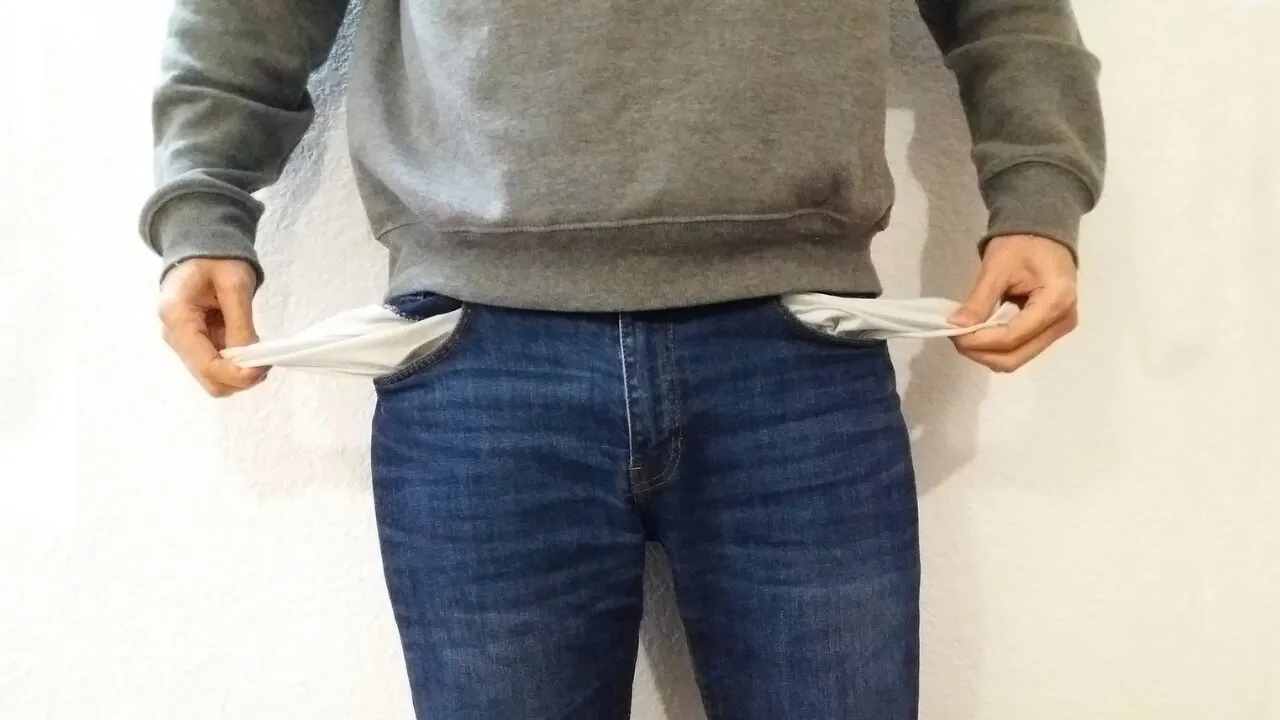
Being penniless, with the absolute certainty of raising my two boys as a single mother, looked like the kind of financial ruin most people would call rock bottom. No savings. Mounting debt stacking up like unpaid invoices. The kind of bank account balance that makes you avoid looking at your phone after every transaction.
But here is what nobody tells you about financial rock bottom, lovely. The empty bank account was never the actual problem. The real downfall happened long before the money ran out. It happened the moment I stopped seeing myself as someone capable of building wealth, earning on my own terms, and making financial decisions that honored who I actually was.
I had internalized every message the world had ever handed me about women and money. That I should be grateful for financial security through partnership. That ambition in a mother was selfishness in disguise. That wanting more, financially, creatively, professionally, made me ungrateful for what I had. And so I shrank. I stopped trusting my own financial instincts, stopped investing in my own ideas, and handed over the economic authority of my life to a situation that was never designed to serve me.
According to research from the American Psychological Association’s Stress in America survey, money is consistently one of the top sources of stress for Americans, with women reporting higher financial stress levels than men. But what the numbers don’t capture is the deeper story: for many women, financial stress isn’t just about the dollars. It’s about the identity crisis that comes when you realize you’ve been outsourcing your financial power for years.
Have you ever felt like your financial worth and your self-worth got tangled into the same knot?
Drop a comment below and tell us about it. Your honesty might be exactly what another woman needs to hear today.
The Lie That I Was a Financial Failure
My mind proclaimed to me that I had essentially failed at money.
It told me I failed at building security. It whispered that a good mother would have had a savings account, a retirement fund, a plan. It reminded me that I was now, despite all of my previous efforts, nothing more than a statistic. A young, Latina single mother with lint in her pockets and a financial future that looked like a blank page.
The thing about these mental loops is that they feel absolutely true when you’re inside them. Financial therapists actually have a term for this. They call them “money scripts,” deeply ingrained beliefs about money that we absorb from our families, our culture, and our experiences. Research from Forbes explains that these unconscious money beliefs drive our financial behaviors far more than logic or education ever could.
My money script was clear: I had failed. I wasn’t just broke. I was broken. And every time I looked at my financial situation, my brain confirmed the story. You don’t have savings, so you’re irresponsible. You don’t have a career trajectory, so you’re aimless. You relied on someone else financially, so you’re weak.
But here is what I couldn’t see at the time. I wasn’t financially illiterate. I was financially silenced. There’s a massive difference between someone who doesn’t understand money and someone who was never given the space to make their own financial decisions. I had been the second one for years, and I was punishing myself as though I were the first.
Discounting My Own Financial Intelligence
At rock bottom, none of my accomplishments mattered. To me, I had none. It was as if the ending of that chapter in my life held more weight than anything I had ever built.
I had discounted the fact that I went to a top university and earned a degree that represented real intellectual capital. I had devalued the fact that I had managed to travel and explore the world, navigating foreign currencies and budgets and logistics in ways that actually demonstrated serious financial resourcefulness. I overlooked every creative solution I had ever found to stretch a dollar, feed my kids, and keep the lights on.
And perhaps most importantly, I had completely discredited the financial courage it took to leave the marriage. Walking away from shared income, from the illusion of stability, from the only economic safety net I knew. That decision, which so many women stay trapped precisely because of the financial fear surrounding it, I saw as a loss rather than the bravest financial bet I had ever placed on myself.
When You Can’t See Your Own Financial Strength
This is something so many women experience when it comes to money. We minimize our resourcefulness and magnify our perceived shortcomings. We look at the bravest financial decision we’ve ever made and call it reckless because it didn’t come with a spreadsheet and a five-year plan.
Leaving a partnership that was slowly eroding my sense of financial agency was one of the most courageous economic choices I have ever made. But at rock bottom, courage doesn’t look like a smart investment. It looks like destruction. It looks like you torched the only financial structure you had, and now you’re standing in the ashes wondering how you’ll rebuild.
So when the bank account hit zero and the debt started piling up, that was merely the physical manifestation of a financial identity crisis that had been brewing for years. The numbers were just catching up to the story I had already been telling myself about my worth.
Finding this helpful?
Share this article with a friend who might need it right now.
The Financial Wake-Up Call Nobody Talks About
My dips in life have never been the actual downfalls, lovely.
They have been the universe’s way of showing me that I had given up financial control of my life to something external, something that was never truly mine to begin with.
The loss of financial power came when I abandoned my own economic instincts. It happened gradually. One deferred decision at a time. One “he handles the money” after another. One more month of not looking at the bank statements because it was easier not to know. Until one day I realized I couldn’t make a single financial decision with confidence because I had spent years letting someone else’s priorities dictate where every dollar went.
It was easier to stop trusting my own financial intuition and give in to what the relationship, the culture, and the expectations demanded.
Over time, I had willingly allowed my financial identity to dissolve into someone else’s budget, someone else’s goals, someone else’s version of security. And then I blamed myself for being “bad with money” when the structure collapsed. A study published by the National Bureau of Economic Research found that women who experience divorce face a significantly larger decline in household income compared to men, yet the financial rebuilding that follows often reveals capabilities that were always present but suppressed.
The Financial Disconnection That Precedes the Fall
Looking back, I can trace the beginning of my real financial downfall to a very specific pattern. It wasn’t a single dramatic moment. It was a slow, quiet disconnection from my own relationship with money. I stopped tracking my spending. I stopped dreaming about what I might build on my own. I stopped asking myself what financial freedom actually looked like for me, not for the household, not for appearances, but for me.
That disconnection is the real danger. Not the empty bank account. Not the single motherhood. Not the creditors calling. The danger is in losing touch with your own financial agency and not even realizing it’s happened until you’re already at the bottom.
Finding Opportunity in the Financial Breakdown
And when I actually hit the rock bottom of that financial abyss, I was exhausted in every way a person can be exhausted. But something unexpected happened when my old financial life fell apart completely.
That was the beauty of my dip.
Having to pick up the broken pieces of my financial life allowed me to build an economic reality I actually wanted to participate in. I was no longer confined to the parameters of someone else’s definition of financial success. No more performing stability for the sake of appearances. No more pretending that financial dependence was the same as financial partnership.
Now I had the opportunity to earn, spend, save, and invest like the woman I actually was, not the woman I had been told to be.
There is a concept in Japanese art called kintsugi, the practice of repairing broken pottery with gold, making the cracks part of the object’s beauty rather than something to hide. That is what financial rock bottom did for me. Every crack in my financial story became a place where new wisdom could settle. Every scar from a bad financial season became a lesson I would never need to learn again.
Rebuilding Your Financial Life on Your Own Terms
The rebuilding process wasn’t quick, and it certainly wasn’t linear. There were months when I felt like I was gaining ground and months when an unexpected bill sent me spiraling back to zero. But the difference was that this time, I was building something that was mine.
I started small. I started by making one financial decision a day that was entirely my own. What did I want to spend on? What felt like a worthwhile investment of my limited resources? What kind of financial life did I actually want to build, not the kind I thought I should have?
I opened my own bank account. I tracked every dollar, not out of fear, but out of curiosity. I started seeing money not as a measure of my worth but as a tool I could learn to use. These tiny acts of financial self-reclamation added up over time into something powerful. They became the foundation of a financial life I no longer wanted to hide from.
Financial Redemption and the Freedom of Redefining Wealth
Thankfully, my road back to financial wholeness hadn’t been paved by anyone else’s blueprint. Finally, I was able to release those feelings of financial failure once and for all, because I had stopped measuring my worth by someone else’s spreadsheet. I had survived the fall, and that survival itself was the first deposit into a new kind of wealth.
Walking this path has not been easy. There have been plenty of months where I’ve had to get creative, hustle harder, and make choices that looked like setbacks to anyone watching from the outside. But at least now, every dollar I earn, save, or spend is a reflection of my own values, my own priorities, my own vision for the life I’m building.
What I Want You to Know About Money and Worth
If you are reading this and you recognize yourself in any part of my story, I want you to know something. Your bank account balance is not your identity. Your financial situation is not a measure of your intelligence, your effort, or your value as a woman. The money scripts you inherited, the ones that tell you that you’re bad with money, that you should have saved more, that you’ll never catch up, those are not truths. They are stories. And you have the power to rewrite every single one of them.
The real financial downfall is never the empty account. It’s the moment you stop believing you’re capable of filling it on your own terms. And the real redemption? It’s not about getting back to some previous level of income or savings. It’s about building a financial life that actually reflects who you are, what you value, and the kind of freedom you deserve.
You have survived every difficult financial season you’ve faced so far. That track record is worth more than any credit score. Hold onto it.
We Want to Hear From You!
Tell us in the comments which part of this story hit home for you. Whether it’s the money scripts, the rebuilding, or the moment you started trusting yourself financially, your words might be exactly what another woman needs to read today.
Read This From Other Perspectives
Explore this topic through different lenses