Four Sentences That Kept My Business Alive When I Was Ready to Walk Away
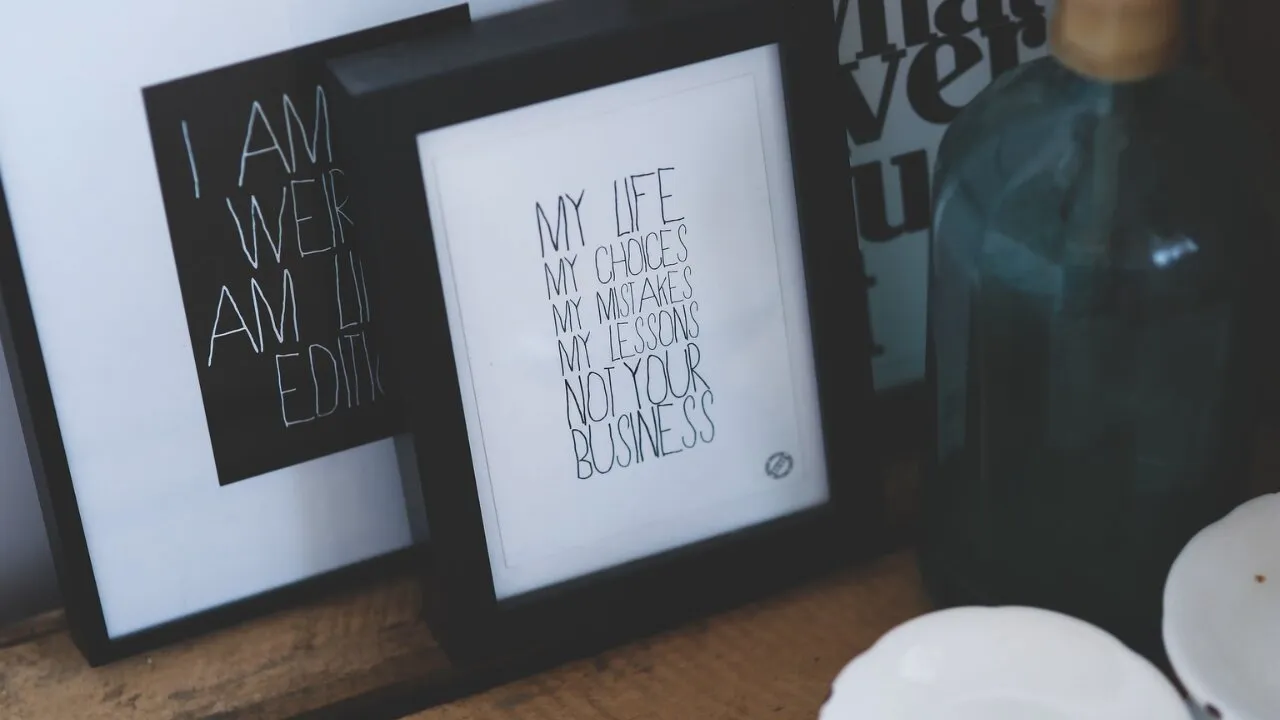
Sometimes a few words are all that stand between you and closing up shop
Listen closely, busy lady. I want you to know that every failed pitch, every rejected proposal, every month where the numbers just did not add up, all of it matters. We all walk different paths in business, and what works for one woman’s empire may sink another’s. Try not to measure your financial journey against someone else’s curated LinkedIn profile. How you feel about where you are right now is valid, and that alone deserves your attention.
As I continue building my relationship with money, ambition, and what success actually looks like on my own terms, I have come to understand that words have been essential to my survival as a professional. Four sentences, all spoken at separate times by different people, became anchors that held me in place when my business, my bank account, and my confidence were falling apart.
I was once that girl with the polished resume, the summa cum laude degree, the trajectory everyone envied. Two years into building what I thought would be my dream career, everything unraveled. Personal crises bled into professional ones. I could not focus. Clients noticed. Revenue tanked. I sat in my car in a parking lot more than once, convinced I should just quit everything and disappear.
But I did not. And the reason I did not comes down, in large part, to four sentences that changed how I understood business, money, and my own capacity to keep going.
1. “Never say never”
I know. You have heard this one a thousand times. It sounds like something printed on a coffee mug in a clearance bin. But stay with me, because when it landed for me, it landed hard.
I was sitting across from a mentor during the worst financial quarter of my life. I had just lost my biggest client, my savings were nearly gone, and I told him flat out: “I will never recover from this. I will never be taken seriously again. My reputation is finished.”
He leaned back and said, very simply, “Never say never.”
I wanted to throw my coffee at him. But then he started talking about his own career. He had gone bankrupt at forty-two. Lost his house. His wife left. And now, at sixty, he was running a consulting firm that brought in seven figures. Not because he was lucky, but because he stopped telling himself that the worst outcome was the permanent one.
Research in cognitive behavioral therapy shows that absolute language, words like “never,” “always,” and “impossible,” reinforces rigid thinking patterns that deepen anxiety and hopelessness. In business, this kind of thinking is especially dangerous because it makes you quit before the market even has a chance to shift.
When I dropped the “nevers” from my vocabulary, something opened up. I stopped seeing my financial setback as a death sentence and started seeing it as a chapter. A bad one, sure, but not the last one. I became more comfortable with uncertainty, which is, frankly, the only real skill you need in entrepreneurship.
I still catch myself saying it. “I could never charge that much.” “I could never pivot into that industry.” And every time, I hear his voice. Never say never. Because the moment you close that door, you lose access to every opportunity behind it.
Have you ever said “I will never recover from this” about a financial setback, only to surprise yourself later?
Drop a comment below and tell us about the career or money moment that proved your “never” wrong.
2. “Wanting to quit is part of the process”
I share this one carefully, because there is a toxic culture in business that tells women they should love every minute of the grind. That if you want to quit, you are not cut out for it. That desire is weakness.
It is not.
During the period when everything was collapsing, I called a friend who had built and lost two businesses before her current one took off. I told her I was done. I wanted out. I did not care about the sunk costs, the brand I had built, any of it. I just wanted to stop hurting.
She said, “Quinn, wanting to quit is part of the process.”
Then she said something I will never forget: “Why don’t you commit to six more months of trying before you make that decision? Because walking away will always be an option.”
Most people are shocked that those words kept me going, but being reminded that I did not have to decide right now was a profound relief. The pressure to either grind forever or quit dramatically is a false binary. She gave me a third option: just keep going for a little while longer, and then reassess.
According to the Harvard Business Review, one of the biggest barriers to workplace well-being is the stigma around admitting you are struggling. We treat exhaustion and the desire to quit as character flaws instead of what they actually are: normal responses to sustained pressure. My friend normalized my experience instead of shaming it, and that made all the difference.
I started reading about founder burnout, about the psychological stages of business growth, and about how virtually every successful entrepreneur has stood exactly where I was standing. The ones who made it through were not the ones who never wanted to quit. They were the ones who talked about it openly, made space for the feeling, and then chose to stay one more day.
Six months later, I had two new clients, a restructured business model, and a savings account that was no longer terrifying to look at. Not because I hustled harder, but because I gave myself permission to want to quit without actually doing it.
Finding this helpful?
Share this article with a friend who might need it right now. Sometimes a single conversation can change how someone sees their next business move.
3. “My bank account does not define my worth, even when it feels like it does”
Someone once told me, “It’s okay to not be okay financially.” And that cracked something open in me. But over time, I transformed that into something I carry with me every single day: “My bank account does not define my worth, even when it feels like it does.”
There is an important distinction here. The first version gives you permission to struggle. The second version reminds you that your financial situation, no matter how dire, does not determine who you are as a person, a professional, or a woman.
We live in a culture that ties identity to income so tightly that when the money dries up, we feel like we are disappearing. I know what it is like to check your balance and feel your entire sense of self deflate. To skip social events because you cannot afford them and then tell yourself the reason you feel small is because you are small.
You are not.
A study by the American Psychological Association consistently ranks money as one of the top sources of stress for Americans, and that financial stress directly impacts self-esteem, relationships, and even physical health. When we internalize financial struggle as personal failure, we make it exponentially harder to recover, because we are fighting shame on top of the actual problem.
I have learned that I am the only one with myself twenty-four hours a day, seven days a week, through the months when revenue is flowing and the months when it is not. Even when I was at my lowest financially, I still had skills. I still had ideas. I still had the capacity to rebuild from within.
So if everything is stripped away and I sit alone with nothing but my name and an empty bank account, I still know I am okay. That knowing lives somewhere deeper than a balance sheet. It is the foundation that does not crack even when the numbers do.
Separating identity from income
This is the work most financial advice skips entirely. They tell you to budget, invest, diversify. And yes, those things matter. But if you have not untangled your self-worth from your net worth, no amount of strategy will make you feel secure. Because the goal posts will keep moving. You will hit the number and immediately need a bigger one, because the hunger was never about money. It was about proving you were enough.
You are enough right now, even if your bank account does not reflect it yet.
4. “I can build as much wealth as I have weathered hardship, sometimes more”
This is the sentence I say to myself when the doubt creeps in, and I believe it completely.
I have known financial rock bottom. I have stared at overdraft notices at two in the morning. I have done the math on whether I could afford both groceries and gas in the same week. But along the way, I have also known extraordinary wins.
For every month I could not make rent, there has been a month where a client said yes to a proposal that changed everything. For every rejection email, there has been a contract that exceeded what I thought I could earn. For every night I sat on the floor of my apartment wondering if I was delusional for thinking I could do this, there has been a morning where I woke up and realized I was actually doing it.
The same depth that allows you to feel financial despair is the same depth that allows you to feel financial freedom. One does not exist without the other. The woman who has never struggled with money will never know the specific, electric joy of earning her way back from nothing.
It was not just sentences that saved my business. It was also me. It was the decision, made over and over on the hardest mornings, to open my laptop. To send one more email. To stay.
Rebuilding is not linear, and that is the whole point
If there is one thing I have learned through all of this, it is that financial recovery is not a straight line. It is not a destination you arrive at and never leave. It is a practice. A returning. You will lose momentum, and you will find it again, and you will lose it again. That is not failure. That is business. That is life.
Above all and no matter what, return to yourself over and over again. Support your ambitions through every season, the abundant ones and the lean ones. Be honest about where you are financially. Be radical in believing you deserve more. Be raw about what it actually takes to get there.
And if you are in that dark place right now, where the money is not working and neither is your confidence, please know: it is not weakness. It is not forever. And you are not the only woman sitting with that fear tonight.
If financial stress is affecting your mental health, the 988 Suicide and Crisis Lifeline is available 24/7 by calling or texting 988. The National Foundation for Credit Counseling also offers free and low-cost financial guidance.
We Want to Hear From You!
Which of these four sentences hit closest to home for you? Tell us in the comments below. Your story might be the thing another woman needs to read before she gives up on her business today.
Read This From Other Perspectives
Explore this topic through different lenses