The Quiet Rebellion of Jennifer Aniston’s Wellness Philosophy: What Her Morning Ritual Teaches Us About Self-Care
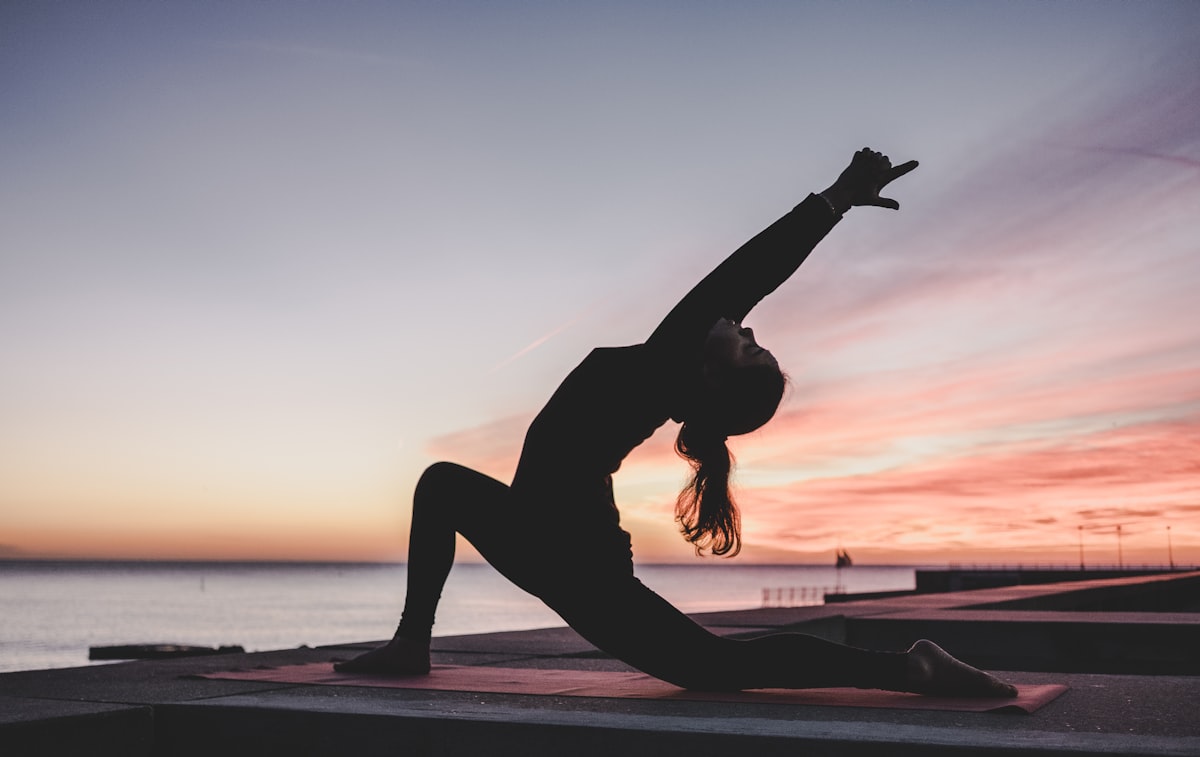
In a world that constantly tells us we need to do more, be more, and optimize every waking moment, there is something quietly radical about a woman who has chosen a different path. Jennifer Aniston, at 57, has become an unexpected voice for a gentler approach to wellness, one that prioritizes presence over perfection and consistency over intensity.
What strikes me most about Aniston’s approach is not the specific practices she follows, though we will explore those. It is her underlying philosophy: that self-care is not about achieving an ideal weight or staying young forever. It is about living the longest, happiest life possible. This subtle but profound shift in perspective changes everything about how we relate to our bodies, our routines, and ourselves.
In a recent interview, Aniston shared the foundation of her morning ritual: “My self-care is my morning routine. I don’t pick up my phone ’til I’m finished walking my dogs, feeding the dogs, meditating, journaling, making my coffee.” These words reveal someone who has learned, perhaps through years of trial and error, that how we begin our day shapes everything that follows.
The Psychology of Phone-Free Mornings
One of Aniston’s most steadfast practices is refusing to check her phone for the first hour after waking. She keeps her chargers in a drawer six feet away from her bed and uses a dedicated device strictly for alarms and sleep apps. This might seem like a small detail, but the psychological implications are significant.
When we reach for our phones immediately upon waking, we surrender the first moments of our consciousness to external demands. Emails, notifications, news alerts, and social media all compete for our attention before we have even had a chance to check in with ourselves. We begin the day in reaction mode rather than intention mode.
Research from the American Psychological Association has consistently linked smartphone overuse to increased stress and anxiety. By creating a buffer between waking and digital engagement, Aniston protects her nervous system from the cortisol spike that comes with immediately processing the outside world’s demands.
As she puts it: “No phones, no email, no texting and no social media. No looking at any of that for a good hour, hour and a half. I highly recommend doing a week of it, you won’t believe the difference.”
This is not about demonizing technology. It is about reclaiming sovereignty over our attention, that most precious and finite resource we possess.
What is the first thing you reach for when you wake up?
Share your honest answer in the comments below. Awareness is always the first step toward change.
Meditation: The Practice That Changes Everything
Aniston has maintained a transcendental meditation practice for more than a decade, dedicating fifteen to twenty minutes each morning to sitting in stillness. What I find most compelling about how she describes this practice is her honesty about its intangible benefits.
“Boy, when you do meditate consistently, there’s such a difference,” she has shared. “And it’s not like something you can put your finger on and go, ‘It’s because of this’. I don’t know what it is that takes place, but something does.”
This acknowledgment of mystery within the practice resonates deeply. We live in a culture obsessed with measurable outcomes, trackable metrics, and quantifiable results. Meditation offers something different: a transformation that cannot be reduced to data points. You cannot graph inner peace or chart spiritual growth, yet those who practice consistently know something has shifted.
The neuroscience supports what meditators have known for millennia. Regular meditation practice has been shown to reduce activity in the amygdala (our fear center), increase gray matter in areas associated with self-awareness and compassion, and literally rewire neural pathways toward calmer responses to stress. But perhaps the most important benefit is simply learning to be present with ourselves without judgment, to sit with whatever arises without needing to fix, change, or escape it.
The 15-15-15 Method: Movement Without Punishment
Aniston’s approach to exercise reflects the same balanced philosophy that guides her overall wellness. Her favorite workout, the 15-15-15 method, involves fifteen minutes of spinning, fifteen minutes of elliptical, and fifteen minutes on the treadmill. It is structured enough to be effective yet flexible enough to accommodate real life.
What I appreciate about this approach is its inherent gentleness. After years of intense training for film roles, Aniston has moved toward exercise that energizes rather than depletes. She incorporates yoga several times a week, valuing its combined benefits of physical flexibility and emotional balance. Recovery practices like foam rolling and post-workout meditation are treated as essential rather than optional extras.
This stands in stark contrast to the punitive relationship many women develop with exercise, where working out becomes a way to atone for eating, to earn rest, or to force the body into compliance. Aniston’s fitness philosophy suggests a different relationship: movement as a form of self-care, a way of honoring the body rather than punishing it.
For those of us healing our relationship with exercise, this reframe is invaluable. What if we approached movement with curiosity rather than obligation? What if we asked our bodies what kind of movement they need today rather than imposing external standards upon them?
Nourishment Over Restriction
Aniston’s eating philosophy has evolved significantly over the years. She has openly discussed how moving to plant-forward eating has transformed her vitality, skin clarity, and total wellness. Her typical morning includes either a smoothie prepared with collagen powder, plant-based protein, bananas, blueberries, and almond butter, or avocado toast with poached eggs on whole-grain bread.
What stands out is not the specific foods but the process by which she arrived at this approach: “years of experimentation and listening to her physical requirements.” This is the opposite of following the latest diet trend or adhering to external rules about what and when to eat. It is a practice of attunement, of developing an ongoing dialogue with your body about what it actually needs.
This kind of intuitive eating requires something many of us have lost: trust in our own bodies. Diet culture has taught us to override our hunger signals, to distrust our cravings, to see our bodies as problems to be solved rather than partners to be listened to. Reclaiming this trust is deep healing work, and it begins with paying attention.
Finding this perspective helpful?
Share this article with a friend who might benefit from a gentler approach to wellness.
The Whole Person Approach
Perhaps the most profound aspect of Aniston’s wellness philosophy is her insistence that enduring health requires addressing the whole person rather than focusing solely on physical appearance. This holistic understanding recognizes what ancient healing traditions have always known: we are not just bodies to be optimized but integrated beings whose physical, mental, emotional, and spiritual dimensions are deeply interconnected.
Her advice reveals this awareness: “Be really mindful about what you put into your ears, your eyes, what you intake, the social media that you put in, the news. It’s very, very, very, very crucial to our well-being.”
This is wisdom that extends far beyond nutrition and exercise. We are constantly consuming, not just food but information, images, stories, and energies. The news we watch, the social media we scroll, the conversations we participate in, all of this shapes our inner landscape just as surely as the food we eat shapes our physical bodies.
The invitation here is to become conscious consumers of everything, to ask ourselves regularly: Is this nourishing me? Is this aligned with how I want to feel? Is this contributing to my wellbeing or depleting it?
What We Can Learn
It would be easy to dismiss celebrity wellness routines as inaccessible fantasies, the province of people with personal chefs, trainers, and unlimited time. But when we look past the surface details of Aniston’s routine, we find principles that are available to anyone, regardless of resources or circumstances.
Protect your mornings. You do not need an hour of phone-free time to benefit from this practice. Even fifteen minutes of presence before engaging with the digital world can shift your entire day. The principle is about establishing yourself in your own experience before letting the outside world in.
Find stillness daily. Meditation does not require a special room, expensive apps, or lengthy sessions. Five minutes of conscious breathing, done consistently, can begin to rewire your stress responses. The transformative power lies in regularity, not duration.
Move with kindness. Your body is not a problem to be fixed through punishing workouts. It is your home, your vehicle for experiencing this life. How might your relationship with exercise change if you approached it as a gift rather than a punishment?
Listen to your body. Your physical form has wisdom that goes beyond any diet book or nutrition plan. Learning to hear and honor its signals is a practice that deepens over time. Start by simply noticing: how do you feel after eating certain foods? What does your body ask for when you truly listen?
Guard your consumption. Be as mindful about what enters through your eyes and ears as what enters through your mouth. Curate your information diet with the same care you would curate your nutrition.
Beyond the Surface
What makes Aniston’s approach truly noteworthy is not any single practice but the integration of all of them into a coherent philosophy of self-care. She is not chasing trends or optimizing for appearance. She is cultivating a sustainable way of living that honors her whole self.
At its core, this is about self-compassion, about treating ourselves with the same kindness and consideration we would offer a dear friend. It is about recognizing that we are worthy of care not because of what we achieve or how we look but simply because we exist.
In a culture that profits from our self-doubt, choosing to treat ourselves gently is a quiet rebellion. Every time we meditate instead of scrolling, move our bodies with appreciation rather than punishment, or nourish ourselves with attention and care, we are pushing back against systems that want us anxious, insecure, and endlessly consuming.
Jennifer Aniston, with her decades in an industry notorious for impossible standards, has found her way to a different relationship with herself. Her journey suggests that it is possible to age with grace, to find peace in simple routines, and to prioritize genuine wellbeing over performative wellness.
Perhaps the most important lesson is also the simplest: the goal is not perfection. It is presence. It is not optimization. It is peace. And that, unlike so much of what wellness culture sells us, is actually available to everyone.
We Want to Hear From You!
Which aspect of Jennifer Aniston’s wellness philosophy resonates most with you? Share in the comments below.
Frequently Asked Questions
What time does Jennifer Aniston wake up?
Jennifer Aniston’s alarm rings at 4:30 AM. However, it is worth noting that her early wake-up time is tied to her specific lifestyle and work demands. The more universal principle from her routine is not the specific hour but the intentionality with which she begins her day, protecting her morning time for self-care practices before engaging with external demands.
What is Jennifer Aniston’s morning routine?
Aniston’s morning begins with a glass of room-temperature water with fresh lemon juice, followed by fifteen to twenty minutes of transcendental meditation. She then walks and feeds her dogs, journals, and makes coffee. Crucially, she avoids her phone, email, and social media for the first hour to hour and a half after waking, protecting this time for grounding practices.
What is the 15-15-15 workout method?
The 15-15-15 method is Jennifer Aniston’s favorite cardio workout, consisting of fifteen minutes on a spin bike, fifteen minutes on an elliptical machine, and fifteen minutes on a treadmill. This approach provides variety and keeps workouts engaging while totaling 45 minutes of cardiovascular exercise.
Does Jennifer Aniston meditate?
Yes, Jennifer Aniston has practiced transcendental meditation for more than a decade. She dedicates fifteen to twenty minutes each morning to meditation and has spoken about how consistent practice creates a noticeable difference in her overall wellbeing, even if the specific benefits are difficult to articulate.
What does Jennifer Aniston eat for breakfast?
Aniston typically starts her day with either a smoothie made with collagen powder, plant-based protein, bananas, blueberries, and almond butter, or avocado toast with poached eggs on whole-grain bread. Her approach to nutrition emphasizes plant-forward eating developed through years of listening to her body’s needs.
What is Jennifer Aniston’s approach to wellness?
Aniston’s wellness philosophy centers on holistic self-care rather than appearance-focused goals. She emphasizes being mindful about all forms of consumption, including media and information, not just food. Her approach prioritizes consistency over intensity, presence over perfection, and addressing the whole person rather than focusing solely on physical appearance.