Mindfulness On and Off the Yoga Mat: Small Practices That Actually Change Your Daily Life
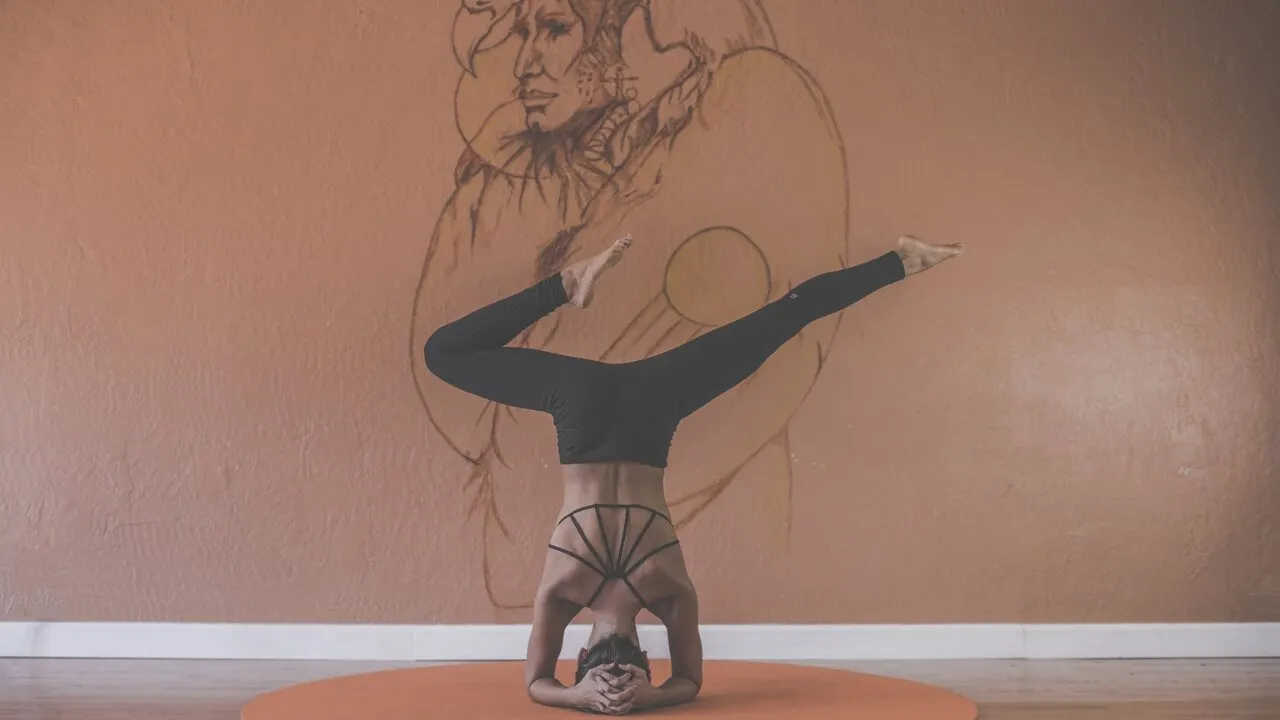
Mindfulness gets thrown around a lot these days. You hear it in wellness podcasts, workplace seminars, and even cereal commercials. But if you strip away the marketing gloss, what remains is something genuinely worth your attention: the skill of being fully present in your own life. Not half-present while scrolling your phone. Not sort-of-present while mentally rewriting tomorrow’s to-do list. But completely, unmistakably here.
For many women, the yoga mat is where this awareness first clicks into place. You step on, plant your feet, and suddenly notice the weight of your own body in a way you never do while rushing between meetings and school pickups. But the real shift happens when you learn to carry that same quality of attention into the rest of your hours, into the ordinary, unglamorous moments that actually make up most of your life.
What Mindfulness Really Means Beyond the Buzzword
Jon Kabat-Zinn, the founder of Mindfulness Based Stress Reduction (MBSR), defined mindfulness as “the awareness that arises through paying attention, on purpose, in the present moment and non-judgmentally.” He also said something most of us can relate to: “When we start paying attention to how much we pay attention, half of the time our minds are all over the place and we have a very hard time sustaining attention.”
Research confirms this. A landmark Harvard study published in Science found that people spend roughly 47% of their waking hours thinking about something other than what they are currently doing. Nearly half your life, spent somewhere else mentally. The researchers also found that this mind-wandering consistently made people less happy, regardless of the activity they were engaged in.
Think about that for a moment. When you eat dinner but mentally replay a conversation from work, you miss the meal. When you play with your kids but plan tomorrow’s schedule in your head, you miss the connection. Mindfulness is simply the practice of closing the gap between where your body is and where your mind is.
According to the American Psychological Association, mindfulness meditation has been shown to reduce stress, improve focus, decrease emotional reactivity, and boost working memory. These are not vague spiritual claims. They are measurable, replicable outcomes backed by decades of clinical research. And perhaps the most encouraging finding is that you do not need years of practice to see results. Even a few weeks of consistent, short sessions can produce noticeable changes in how you process stress and respond to your environment.
When was the last time you were fully present for an entire hour without your mind drifting somewhere else?
Drop a comment below and let us know how you catch yourself wandering and what helps you come back.
Why Yoga Is Such a Natural Gateway to Mindfulness
There is a reason so many people discover mindfulness through yoga rather than through a book or a lecture. Yoga gives you something concrete to anchor your attention to: your body, your breath, the physical sensation of holding a pose while gravity does its work.
When you step onto your mat, try this before moving into any sequence. Stand in Mountain Pose and notice how your feet feel against the floor. Feel the distribution of your weight. Notice whether you lean forward or back, left or right. Some days you will feel grounded and strong. Other days your body will feel heavy, tight, or reluctant. Both are perfectly fine. The point is not to judge what you find but simply to notice it.
This kind of body awareness builds over time. After weeks or months of practice, you start to recognize patterns. You might notice that stress from work shows up as tension in your shoulders. Or that emotional heaviness makes your hips feel locked. These connections are not coincidences. Research on the mind-body connection consistently shows that psychological stress manifests physically, and yoga helps you become literate in that language.
The breath serves as your second anchor. In yoga, the breath is not just something happening in the background. It is a tool. When your teacher cues you to inhale as you lengthen and exhale as you fold, they are training you to synchronize awareness with movement. That synchronization is mindfulness in its purest, most physical form.
What makes yoga particularly effective as a mindfulness practice is the immediate feedback loop. If your mind wanders during a balancing pose, you wobble. If you hold your breath during a challenging sequence, your muscles fatigue faster. Your body tells you, in real time, when your attention has drifted. Over months of practice, you get better at catching that drift earlier and redirecting your focus before the wobble even happens.
Taking It Off the Mat: Four Practices That Actually Work
The real transformation does not happen on the yoga mat. It happens when you take that same quality of presence into the rest of your day. Here are four practices, tested through years of daily use, that bridge the gap between yoga-class mindfulness and the kind that changes how you experience ordinary life.
1. Ride Public Transit Without Distractions
This does not need to be a daily commitment. Just try it when the opportunity arises. Leave the headphones in your bag. Keep your phone in your pocket. Simply be present with the experience of sharing a space with strangers.
If you get a window seat, watch the scenery. Notice how the light changes, how the trees mark the season, how the city looks different from this angle compared to when you are behind the wheel. If you are in the middle of the bus or train, listen. Notice the hum of different conversations, the variety of accents and languages, the sounds of a city in motion.
This is not people-watching in the voyeuristic sense. It is simply expanding your awareness beyond the tight bubble of your own thoughts. You share this world with millions of people whose stories you will never know, and there is something deeply grounding about letting yourself feel that, even for a few stops.
2. Walk Without Looking at Your Phone
Keep your phone in your pocket for emergencies, but resist the urge to check it. Instead, pay attention to what your senses are telling you. Feel the sun or wind on your skin. Smell whatever the neighborhood offers: flowers from someone’s garden, coffee from the cafe on the corner, rain on warm pavement.
Notice the pace at which you naturally walk when you are not rushing. Notice which streets draw you in and which ones you instinctively avoid. Try to find a route you have never taken before. One useful approach: pick a direction and commit to walking that way for fifteen minutes before turning around.
Walking is one of the most accessible forms of doing nothing productive while still doing something genuinely good for your body and mind. It requires no equipment, no membership, and no special clothing. It just requires the willingness to be present for the walk itself rather than treating it as dead time between destinations.
Finding this helpful?
Share this article with a friend who might need it right now.
3. Sit Down and Just Breathe
A yoga teacher once offered this advice during class: “Sometimes the word meditation can be intimidating, so sometimes I just sit down and shut up.” That might be the most honest description of meditation ever spoken.
You do not need a cushion, a timer app, or a guided recording. You just need a few minutes and the willingness to sit still. Find a chair, a bench, or a patch of floor. Sit down. Close your eyes or soften your gaze. And for two minutes, just notice that you are breathing.
That is the whole practice. You are not trying to empty your mind (that is a persistent myth about meditation that discourages a lot of beginners). You are simply giving your attention a single, steady anchor: the breath. When your thoughts wander, and they absolutely will, gently bring your focus back. The wandering is not failure. The bringing-back is the practice. Every time you notice your mind has drifted and redirect it, you are building the mental muscle that makes presence possible in every other area of your life.
According to Harvard Health, even brief mindfulness meditation sessions can reduce anxiety and mental stress. You do not need thirty minutes. You do not need a silent room. You just need the intention to pause, even for two minutes between tasks or before bed.
4. Spend Unhurried Time with Animals
If you have a pet, you already have a built-in mindfulness teacher. Dogs do not ruminate about yesterday or worry about tomorrow. They are fully absorbed in whatever is happening right now: the smell of the grass, the warmth of a sunbeam, the sheer joy of seeing you walk through the door.
If you do not have a pet, visit a shelter and volunteer. Go to a dog park and just watch. Sit with a friend’s cat. Animals model a kind of presence that most humans have to work very hard to achieve. When you match their energy, when you get down on the floor and just play or sit quietly together, you naturally drop into a more mindful state without having to try.
There is a reason animal-assisted therapy is used in hospitals, schools, and rehabilitation centers. The presence of an animal naturally lowers cortisol and raises oxytocin. But beyond the biochemistry, animals remind you that joy often lives in the simplest moments. Not in achievements or acquisitions, but in a warm body curled up next to yours on the couch.
Why Presence Matters More Than You Think
Mindfulness is not about becoming a calmer, more zen version of yourself (though that may happen as a side effect). It is about being present for your own life. Every moment you spend mentally elsewhere is a moment you do not get back. The dinner you ate without tasting. The conversation you had without truly listening. The walk you took without seeing anything around you.
These four practices (riding transit without distractions, walking without your phone, sitting in stillness, spending time with animals) are not complicated. They do not require special training, expensive retreats, or hours carved out of your already packed schedule. They just require you to choose presence over productivity, even for a few minutes a day.
The consistency matters far more than the duration. Five minutes of genuine presence is worth more than an hour of going through the motions. Start small. Pick one of these practices and try it tomorrow. Then notice, without judgment, what shifts in how you feel, how you relate to others, and how you experience the small details of your day.
Because mindfulness is not something you achieve once and then carry forever like a certificate on your wall. It is a practice, something you return to again and again, on the mat and off it, in the quiet moments and in the chaos. And every time you return, you get a little better at being right where you are.
We Want to Hear From You!
Tell us in the comments which of these four practices you are going to try first.