When Your Partner Has Anxiety: What Real Love Looks Like in the Hard Moments
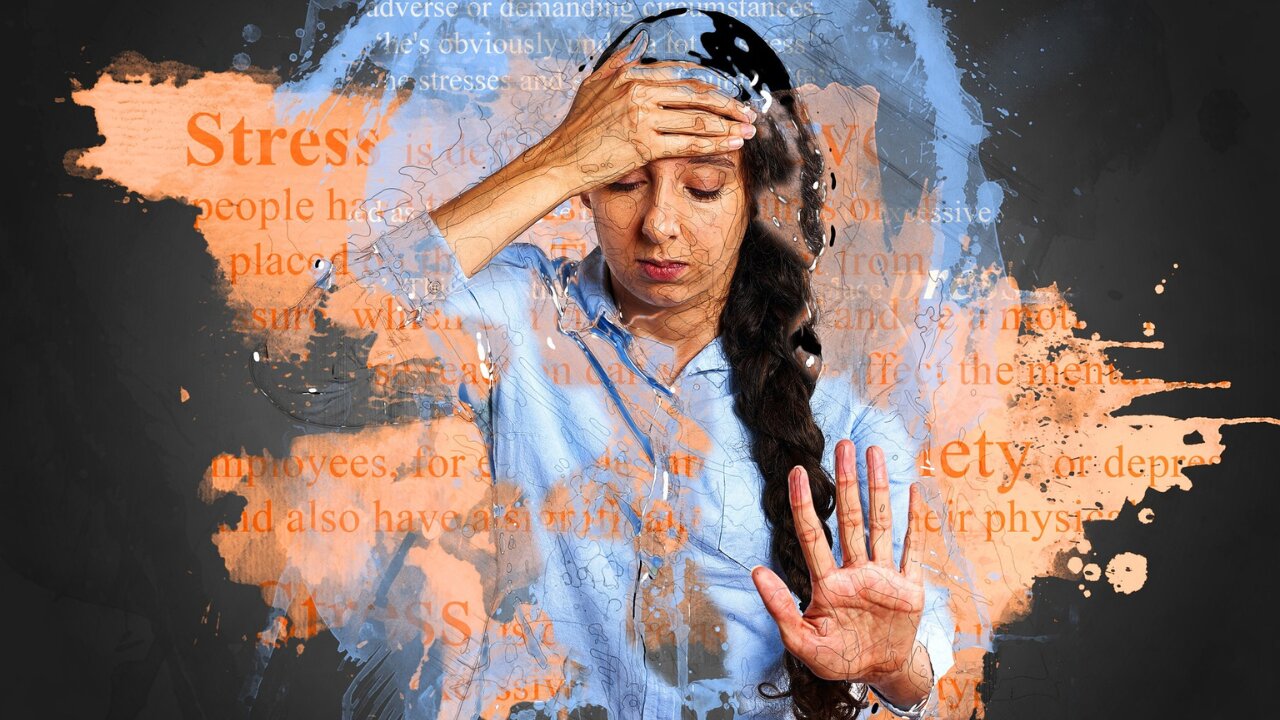
Nobody warns you about this part of falling in love. You find someone who makes your heart race, who gets your weird humor, who feels like home. And then one evening, seemingly out of nowhere, they are spiraling. Their breathing changes. Their eyes get that faraway look. They ask you for the third time if you are sure you are not mad at them. And you are standing there thinking: what do I do with this?
If you are dating or in a relationship with someone who lives with anxiety, I want you to hear something important. This is not a dealbreaker. This is not a sign that your relationship is broken. This is simply one of the realest, most vulnerable parts of loving another human being. And how you show up in these moments will shape the entire trajectory of your connection.
Anxiety Is Not a Red Flag. It Is a Reality.
Let me be direct with you. Anxiety disorders affect more than 40 million adults in the United States, according to the Anxiety and Depression Association of America. That means if you are dating, there is a very real chance that someone you love (or will love) experiences anxiety on a regular basis. Possibly you do too.
In the context of romantic relationships, anxiety does not always look the way you might expect. It is not just panic attacks or nervous hand wringing. Sometimes it shows up as your partner needing constant reassurance that you still love them. Sometimes it looks like them overanalyzing a text you sent three hours ago. It can be the need to know your exact plans for Saturday down to the minute, or withdrawing from you entirely after a perfectly normal conversation because their brain convinced them something went wrong.
Here is what matters: none of this is a choice. Harvard Health explains that anxiety involves real, measurable changes in brain chemistry and nervous system activation. When your partner seems irrational or overly sensitive, their brain is genuinely operating in threat mode. Their body is flooded with cortisol and adrenaline. They are not being dramatic. They are surviving something invisible.
Understanding this changes everything about how you approach your relationship. Because once you stop seeing anxiety as a personality flaw and start seeing it as something your partner navigates every single day, your compassion deepens in ways that transform your bond entirely.
Have you ever struggled to support a partner through anxiety without knowing the right thing to say?
Drop a comment below and let us know what that experience was like for you. Your honesty could help someone else feel less alone right now.
The Attachment Factor: Why Anxiety Hits Harder in Love
There is a reason anxiety tends to amplify inside romantic relationships, and it comes down to attachment. When we love someone, we become emotionally dependent on them in healthy and natural ways. But for a person with anxiety, that emotional dependency can trigger their deepest fears: abandonment, rejection, not being enough.
If your partner has an anxious attachment style (which often overlaps with generalized anxiety), their nervous system is essentially on high alert for signs that you might leave. A delayed text response, a shift in your tone, a canceled plan. Things that might barely register for you can feel catastrophic to them. This is not neediness. It is their brain’s wiring telling them that love is fragile and must be constantly monitored to be kept safe.
Understanding the role of vulnerability in romantic partnerships is essential here. Because when anxiety shows up between two people, it is actually an invitation into deeper intimacy. Your partner is showing you the most unfiltered, unpolished version of themselves. What you do with that vulnerability will either build trust or erode it.
How to Actually Show Up (Without Losing Yourself)
This is the part that matters most. Not theory, not psychology terms, but what you actually do at 11 PM when the person you love is caught in a thought spiral they cannot escape.
Stop Trying to Fix It
I know your instinct is to solve the problem. You love this person, and you want the pain to stop. But here is what I have learned: when someone is deep in anxiety, logic is not the language they need. They need presence.
Instead of “that will never happen” or “you are overthinking this,” try something like: “I can see this is really weighing on you. I am right here.” Psychology Today notes that feeling genuinely heard can help regulate the nervous system more effectively than any rational argument. Validation does not mean you agree with the anxious thought. It means you acknowledge the feeling behind it.
There is a world of difference between “you have nothing to worry about” and “I understand why that feels scary.” One dismisses. The other holds space.
Be the Calm They Cannot Access
When your partner’s anxiety is at full volume, they need you to be steady. Not cold, not distant, but grounded. Speak a little slower. Lower your voice slightly. Breathe. Your calm nervous system can actually help regulate theirs. This is called co-regulation, and it is one of the most powerful tools in any relationship.
Sometimes this looks like sitting quietly together. Sometimes it means making a simple decision they cannot make right now (“we are ordering Thai food and watching that show you like”). When anxiety depletes someone’s mental bandwidth, taking small decisions off their plate is one of the most loving things you can do.
Learn Their Language
Every person experiences and expresses anxiety differently. Some people need to talk it out. Others need silence. Some want physical touch. Others need space. Your job is to learn your partner’s specific patterns and respect them, even when they differ from what you would want in the same situation.
Ask them (during a calm moment, not mid-spiral): “When your anxiety gets loud, what helps? What makes it worse?” This conversation is one of the most intimate things you can share with a partner. It says: I see this part of you, and I want to love you well through it.
This kind of intentional communication is closely tied to understanding how love languages shape the way we connect. What feels supportive to you might not be what your partner needs, and vice versa.
Finding this helpful?
Share this article with a friend who might need it right now.
What Will Push Your Partner Further Away
With the best intentions in the world, there are responses that make anxiety worse in a relationship. If you recognize yourself in any of these, please give yourself grace. We have all been there. Awareness is the first step.
The Words “Calm Down” and “You Are Overreacting”
In the entire history of human relationships, nobody has ever calmed down because their partner told them to. These words communicate that their emotional response is wrong, that they should be able to control something they currently cannot, and that you are frustrated with them for feeling this way. Even if that is not what you mean, that is what they hear.
Replace those words with: “Take all the time you need.” “I am not going anywhere.” “What do you need from me right now?”
Treating Anxiety Like a Character Flaw
If you catch yourself thinking (or saying) things like “why can’t you just be normal” or “this is exhausting,” pause. Your frustration is valid. Your feelings matter too. But expressing those feelings during an anxiety episode will only add shame to an already overwhelming experience. Now your partner feels anxious and broken, which deepens the spiral.
Save those honest conversations for calm moments. Tell your partner how you feel, but frame it as a team discussion, not an accusation. “Sometimes I feel helpless when your anxiety is strong, and I want us to talk about how we can navigate those moments better together.”
Withdrawing or Going Silent
For someone with anxiety, silence from their partner is rarely interpreted as neutral. It reads as anger, rejection, or the beginning of the end. If you need space (and you will sometimes, that is completely okay), communicate it clearly. “I love you. I need twenty minutes to recharge, and then I am coming right back.” Those few words can prevent hours of anxious spiraling.
Protecting Your Own Heart in the Process
Here is the part nobody talks about enough: being the partner who supports someone through anxiety is its own emotional labor. And if you do not take care of yourself, you will burn out. That is not a possibility. It is a certainty.
You are allowed to have boundaries. You are allowed to say “I need a night to myself” without it meaning you love them any less. You are allowed to have your own therapist, your own outlets, your own space to process. In fact, you should.
Maintaining your own sense of self-worth and inner stability is not selfish. It is what allows you to keep showing up with genuine warmth instead of quiet resentment. A relationship where one person constantly depletes themselves to support the other is not sustainable. Love should be a partnership, even on the hardest days.
Your Partner Is Not Their Anxiety
I want to leave you with this thought. The person you fell in love with is still right there. They are underneath the worry, behind the racing thoughts, beyond the need for reassurance. Anxiety is something they experience. It is not who they are.
And honestly? Many of the qualities that drew you to them (their depth, their empathy, their ability to feel everything so intensely) are connected to the same sensitivity that fuels their anxiety. You cannot separate the beautiful parts from the hard parts. That is not how people work.
Encourage professional support when the time is right. Therapy, particularly cognitive behavioral therapy, can be transformative. But let that encouragement come from “I want you to have every tool available to feel your best” rather than “I need you to stop being this way.”
On the days when anxiety is loud and nothing seems to help, hold on to why you are here. Hold on to the laughter between the hard moments, the quiet mornings, the way they look at you when they feel safe. That is your relationship. The anxiety is just weather. It passes. What you are building together is the house that stands through it.
We Want to Hear From You!
Tell us in the comments what has helped your relationship through anxious moments. Whether you are the one with anxiety or the one holding space, your perspective matters here.
Read This From Other Perspectives
Explore this topic through different lenses