When Anxiety Lives in Your Bedroom: Rebuilding Intimacy Without Pressure
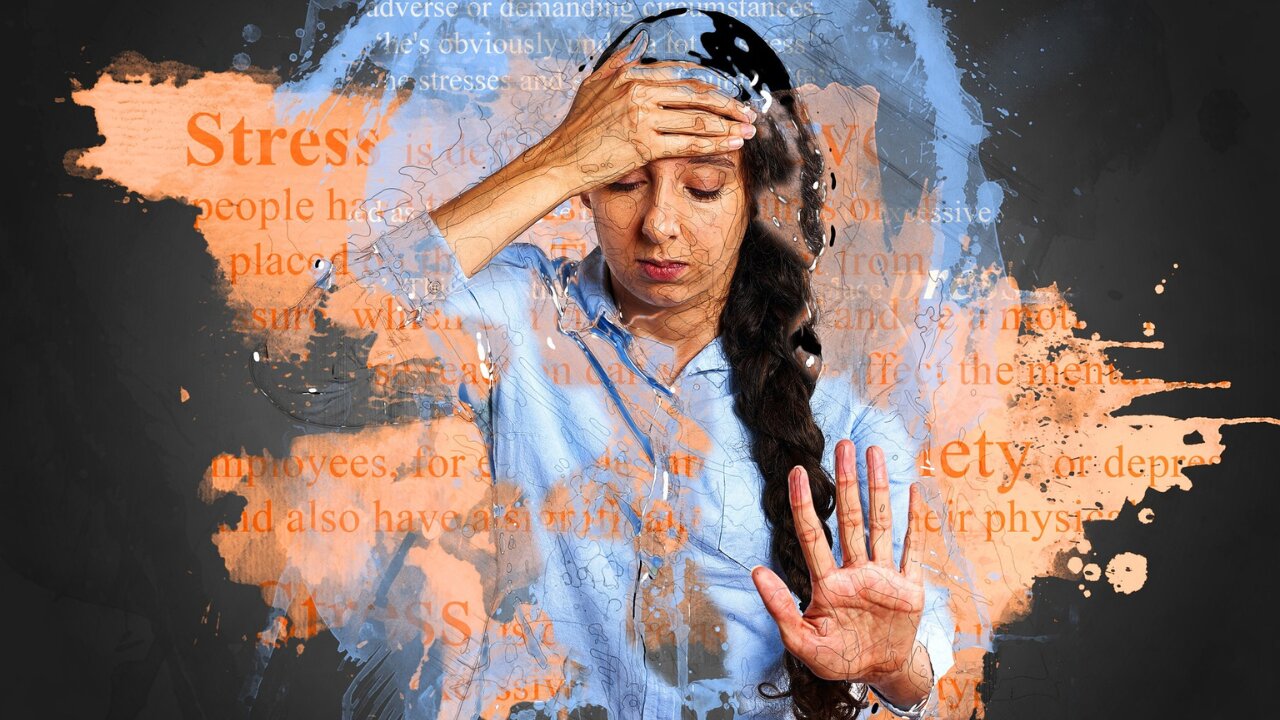
Nobody talks about what anxiety actually does to your sex life. We talk about it in therapy offices and self-help books, sure, but rarely do we get honest about the way anxiety creeps into the bedroom, turns down the lights on desire, and makes the most intimate moments feel like a performance you are not prepared for. So let me be the one to say it: if anxiety has changed the way you and your partner connect physically, you are not broken, and neither is your relationship.
Sexual intimacy requires vulnerability. It asks you to be fully present, fully seen, fully feeling. And anxiety? Anxiety is the opposite of all of that. It pulls you out of your body, into your head, into a spiral of “what if” that has no room for pleasure. According to the American Psychological Association, anxiety disorders are among the most common mental health conditions, and their impact on sexual functioning is well documented but rarely discussed openly. That silence ends here.
How Anxiety Actually Shows Up Between the Sheets
Before we can address what to do, we need to understand what is really happening. Anxiety in the bedroom does not always look like what you might expect. Sometimes it is obvious: your partner freezes up, pulls away, or avoids physical closeness altogether. But often it is more subtle than that.
It might look like your partner going through the motions but clearly being somewhere else mentally. It could be a sudden need to control every detail of the experience, or conversely, a complete inability to express what they want. Some people with anxiety become hyperfocused on their partner’s pleasure as a way to avoid being present in their own body. Others lose desire entirely, not because the attraction is gone, but because their nervous system is stuck in survival mode.
Here is the biology behind it: when the brain perceives threat (even an imagined one), it activates the sympathetic nervous system, flooding the body with cortisol and adrenaline. This is your fight-or-flight response, and it is fundamentally incompatible with sexual arousal, which requires the parasympathetic nervous system (your rest-and-digest mode) to be in charge. Harvard Health explains that this is not a matter of willpower or attraction. It is pure physiology. Your partner’s body is literally choosing survival over pleasure, and that is not something you can override with a sexy outfit or the right mood lighting.
Understanding this changes everything. It shifts the conversation from “why don’t you want me anymore” to “your body is protecting you right now, and I respect that.” That reframe alone can transform your intimate life.
Has anxiety ever made you feel disconnected from your own desire or your partner’s touch?
Drop a comment below and let us know what helped you reconnect. Your honesty might be the permission someone else needs today.
Creating Safety Before Creating Heat
The single most important thing I can tell you about intimacy and anxiety is this: safety comes before desire. Always. You cannot build passion on a foundation of fear, and for someone whose nervous system is already on high alert, the vulnerability of sexual intimacy can feel genuinely threatening.
Redefine What Intimacy Means (at Least for Now)
If penetrative sex or any specific sexual act has become a source of anxiety, take it off the table temporarily. I know that sounds counterintuitive when the goal is to reconnect physically, but removing the pressure is often what allows desire to return naturally.
Instead, expand your definition of intimacy. Skin-to-skin contact without expectation. Long, unhurried kissing. Holding each other in bed with no agenda. Showering together. Giving a massage with no destination in mind. These acts of physical closeness rebuild the nervous system’s association between touch and safety, which is exactly what needs to happen before arousal can show up authentically.
This approach aligns with what sex therapists call “sensate focus,” a technique developed by Masters and Johnson that has been helping couples for decades. The idea is simple: remove the goal, and pleasure finds its way back. When there is nothing to perform, there is nothing to be anxious about.
Use Your Words (Even When It Feels Awkward)
Anxiety thrives in silence. When something goes unspoken in the bedroom, anxiety fills that space with worst-case interpretations. Your partner might assume your decreased initiation means you are no longer attracted to them. You might interpret their pulling away as rejection. Neither of you is right, but without honest conversation, those assumptions calcify into beliefs.
Talk about what is happening outside of the bedroom, when you are both clothed and calm. “I have noticed we have been less physically connected lately, and I want to understand what you are experiencing” opens a door without assigning blame. Learning to navigate these conversations is a skill, and it ties directly into understanding how anxiety affects your relationship on a broader level.
Name your own feelings too. “I miss being close to you, and I want you to know that I am not going anywhere while we figure this out” is powerful. It communicates desire without pressure, commitment without condition.
Finding this helpful?
Share this article with a friend who might need it right now.
Practical Ways to Reconnect Physically When Anxiety Is Present
Let the Anxious Partner Lead the Pace
Control is a common coping mechanism for anxiety, and in the bedroom, giving your partner a sense of control can be deeply healing. Let them decide when, how, and how far things go. This does not mean you become passive or disengaged. It means you become responsive rather than directive.
Try something like: “Tonight is about you. We go wherever you want, and we stop whenever you say.” That single sentence can dissolve layers of anticipatory anxiety because it removes the fear of disappointing you or not being able to follow through.
Bring the Body Back Online
Anxiety lives in the mind, but reconnection happens in the body. Before any sexual encounter, spend time helping your partner (and yourself) arrive in the present moment physically. This might mean practicing grounding techniques together: deep breathing, progressive muscle relaxation, or simply placing a hand on each other’s chest and syncing your breath.
These are not mood killers. In fact, when practiced together, they become a form of foreplay. There is something deeply intimate about breathing in unison with someone, about feeling their heartbeat slow under your palm. You are literally coregulating each other’s nervous systems, and that kind of attunement is the foundation of genuinely connected sex.
Normalize the Nonlinear
Anxious sex is not always a straight line from kissing to climax. There might be pauses. There might be moments where your partner needs to stop, breathe, and come back. There might be evenings where things start beautifully and then anxiety swoops in and everything shifts. This is normal, and how you respond in those moments matters enormously.
If your partner needs to stop, do not sigh. Do not ask “what’s wrong now.” Simply say “okay” and hold them. Or talk. Or laugh. Or get a snack together. The message you want to send is: being with you matters more to me than any specific outcome. That kind of unconditional presence is, ironically, one of the most attractive things a person can offer.
What Your Own Needs Deserve in All of This
Here is the part that often gets lost: your needs matter too. Your desire is valid. Your frustration is understandable. Your longing for physical connection is not selfish. If you are the partner supporting someone through anxiety, you are allowed to have feelings about what this means for your intimate life.
The key is finding space to process those feelings without making them your partner’s responsibility during their vulnerable moments. A therapist, a trusted friend, a journal: these are places to unpack the complicated emotions that come with loving someone whose body sometimes says no when their heart says yes.
Investing in your own self-compassion and inner work is not a detour from fixing your sex life. It is the path. When you are grounded in your own worth and not dependent on sexual validation, you show up differently. You become a safer presence. And safety, as we have established, is the prerequisite for everything else.
The Bigger Picture: Anxiety Can Deepen Intimacy
I want to leave you with something that might surprise you. Couples who navigate anxiety together often report deeper, more meaningful intimate connections than those who never had to work for it. There is a reason for this. When you learn to communicate about something as vulnerable as fear and desire in the same conversation, you develop a level of emotional attunement that most couples never reach.
According to research published by the National Institutes of Health, emotional intimacy is one of the strongest predictors of sexual satisfaction, even more than frequency or technique. The work you are doing right now, the conversations, the patience, the willingness to redefine what intimacy looks like, is building exactly that.
So no, anxiety does not have to be the end of your sex life. It can be the beginning of a more honest one. One where touch means something because it was offered freely. Where desire is real because it was never forced. Where vulnerability is not a weakness but the very thing that makes the connection electric.
Your partner is still the person you are drawn to. They are just learning, with your help, that their body is a safe place to be. And when they get there (and they will), the intimacy you share will be richer for everything you walked through together.
We Want to Hear From You!
Tell us in the comments which tip resonated most with you. Whether you are navigating anxiety in your own intimate life or supporting a partner, your perspective matters here.
Read This From Other Perspectives
Explore this topic through different lenses