Choosing Freedom When Life Feels Heavy
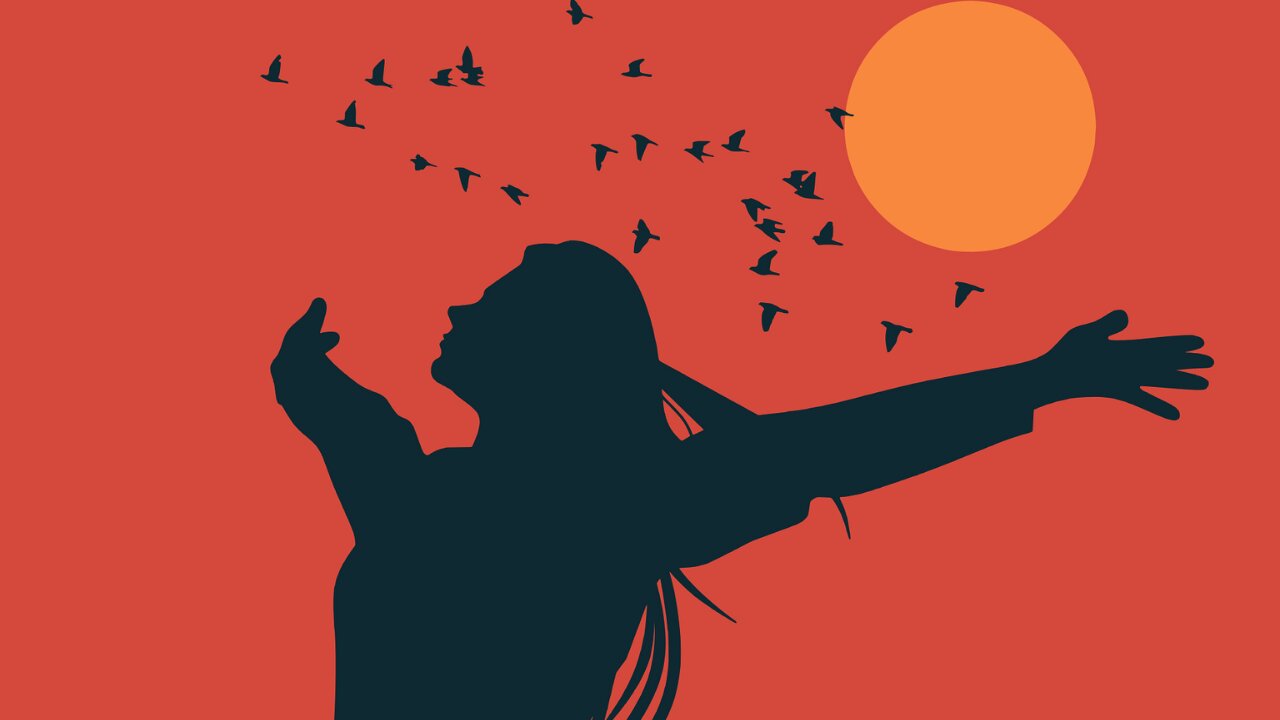
“Now that she had nothing to lose, she was free.” Paulo Coelho wrote those words, and they cut straight to the bone. Freedom does not come from accumulating more. It comes from releasing what no longer serves you. And yet, most of us spend years gripping tightly to the very things that keep us stuck.
There are moments when life feels wide open. Choices stretch out before you like an endless horizon, and your whole body hums with possibility. Those moments are real, and they matter. But so do the other moments. The ones where everything feels impossibly heavy. Where invisible walls press in from every side and you cannot remember the last time you took a full breath.
If you have ever felt trapped in your own life, even when nothing external is technically holding you back, you are not imagining it. That tension between wanting freedom and feeling chained is one of the most universal human experiences. The good news is that freedom is not something you have to wait for. It is something you can choose, starting right now, in the smallest of ways.
What Freedom Actually Looks Like (It Is Not What You Think)
We tend to imagine freedom as dramatic. Quitting the soul-crushing job. Leaving the relationship that has gone cold. Selling everything and boarding a one-way flight. And sometimes freedom does look like that. But more often, it looks quiet. It looks like saying no to a social obligation without guilt. It looks like eating lunch without scrolling through your phone. It looks like letting yourself cry in the shower without judging the tears.
Research from the American Psychological Association has consistently shown that autonomy, the feeling that your actions align with your authentic self, is one of the core pillars of psychological well-being. When we feel like we are living someone else’s life or following a script we never agreed to, our mental health suffers. When we make choices that reflect who we truly are, even small ones, something shifts inside us.
Freedom is not about having no responsibilities. It is about choosing which responsibilities you carry and why. It is the difference between obligation and devotion. Between performing a role and inhabiting your life fully.
The Unlearning That Sets You Free
One of the most disorienting parts of choosing freedom is realizing how much of what you believe was never actually yours to begin with. The ideas about what a “good” life looks like, what success means, what your body should look like, how relationships should function. So much of it was absorbed from family, culture, media, and institutions before you were old enough to question any of it.
Choosing freedom often begins with unlearning. Not rejecting everything outright, but examining each belief with honest curiosity. Does this still feel true to me? Did it ever? Or was I just afraid of what would happen if I let it go?
This process can feel like losing your footing. When you stop measuring yourself against external benchmarks, the ground beneath you temporarily disappears. But what emerges on the other side is something far more solid: a sense of self built on your own intuition rather than borrowed certainty.
Instead of chasing achievements because someone told you they matter, you start asking what actually lights you up. Instead of performing wellness routines that look good on social media, you start listening to what your body genuinely needs. Instead of maintaining relationships out of duty, you invest in connections that nourish you.
When was the last time you did something purely because it felt right, not because it was expected?
Drop a comment below and tell us about a moment you chose yourself over the script.
Making Peace with Your Body as an Act of Liberation
For many women, the body is where unfreedom lives most deeply. Years of being told what to eat, how to move, what size to be, and what “healthy” looks like create a war zone where peace should be. The diet cycles. The mirror anxiety. The way a single comment about your appearance can ruin an entire week.
According to Harvard Health, self-compassion consistently outperforms self-criticism when it comes to both mental and physical health outcomes. People who treat themselves with kindness, rather than punishing themselves into compliance, are more likely to maintain healthy habits over time. Not because they are forcing themselves, but because they actually want to take care of a body they have stopped fighting.
Body freedom does not mean you stop caring about your health. It means you stop weaponizing health against yourself. You eat because food is good and your body deserves fuel, not because you are earning or burning calories. You move because it feels wonderful, not because you are paying penance for last night’s dinner. You rest without calling yourself lazy.
When the stress of self-surveillance dissolves, something remarkable often happens. Your body finds its own rhythm. Weight stabilizes. Sleep improves. The constant background noise of body shame finally goes quiet, and in that silence, you can hear yourself think clearly for the first time in years.
Freedom as a Daily Practice, Not a Destination
Here is the part that nobody warns you about: freedom is not a place you arrive at. There is no finish line where you suddenly feel liberated forever. Freedom is a practice. It is something you choose again and again, in moments both large and small.
Some days, freedom comes easily. You wake up feeling light, make choices that align with your values, and fall asleep satisfied. Other days, old patterns pull hard. The people-pleasing reflex kicks in. The inner critic starts its familiar monologue. The fear of judgment tightens around your chest like a fist.
On those harder days, the practice is simple (though not easy): ask yourself, “What would make me feel even slightly freer right now?” Maybe it is stepping outside for five minutes. Maybe it is letting go of a goal that no longer excites you. Maybe it is just taking one slow, deliberate breath and reminding yourself that you get to choose how you move through this moment.
A study published in Psychology Today connects present-moment awareness with reduced anxiety and greater overall life satisfaction. This makes sense. Freedom lives in the present tense. It is not a memory of how things used to be or a fantasy about how they might become. It is the conscious act of engaging fully with what is happening right now.
Finding this helpful?
Share this article with a friend who might need it right now.
The Real Cost of Choosing Freedom
Wanting freedom is easy. Everyone wants it. But choosing it, genuinely and repeatedly, comes with costs that are worth acknowledging honestly.
When you stop performing the version of yourself that others expect, some people will be confused. Some will be disappointed. A few might even be angry. Relationships that were built on you staying small will feel the strain when you start expanding. Not all of them will survive, and grieving that loss is part of the process.
There is also the loneliness of seeing clearly. Once you start questioning the invisible rules that govern most people’s lives, you cannot unsee what you have seen. Conversations that used to feel normal start feeling hollow. You may go through a period of feeling like you do not quite belong anywhere.
But here is what sits on the other side of that discomfort: a life that is genuinely yours. Relationships built on truth rather than performance. A sense of creative belonging that comes from finding your people, the ones who love the real you, not the curated version. And a deep, quiet confidence that no amount of external validation could ever match.
Practical Ways to Invite More Freedom Into Your Life
Start with one honest conversation
Pick one relationship where you have been holding back what you really think or feel. Say the true thing, gently but clearly. Notice how it feels in your body afterward. Freedom often begins with a single act of honesty.
Audit your obligations
Write down everything you do in a typical week. Circle the things you do because you genuinely want to. Underline the things you do out of guilt, habit, or fear of judgment. You do not have to change anything immediately. Just notice the ratio.
Practice letting go of one thing
Each morning, choose one expectation, belief, or worry to consciously release for the day. It does not have to be permanent. Just for today, let it go. See what opens up in the space it leaves behind.
Listen before you react
When someone asks something of you, pause before answering. Check in with yourself. Does this feel like a yes or a no? Practice honoring that inner response, even when it is inconvenient.
Redefine success on your own terms
Write your own definition of a good life. Not the one you inherited, not the one social media promotes. Yours. Revisit it often. Let it evolve as you do.
Freedom Is Coming Home to Yourself
At its core, choosing freedom is not about doing anything radical. It is about coming home to yourself. It is about trusting that who you are, without the masks and the performance and the constant self-improvement hustle, is enough. More than enough.
You do not need permission to be free. You do not need to earn it or deserve it or wait until conditions are perfect. Freedom is your birthright, and it has been waiting patiently for you to claim it.
Start where you are. Start small. Start today. One honest choice at a time, you will build a life that feels like yours. And that, more than anything, is what freedom really means.
We Want to Hear From You!
What is one thing you are ready to let go of to feel freer? Tell us in the comments. Your honesty might be the encouragement another woman needs today.