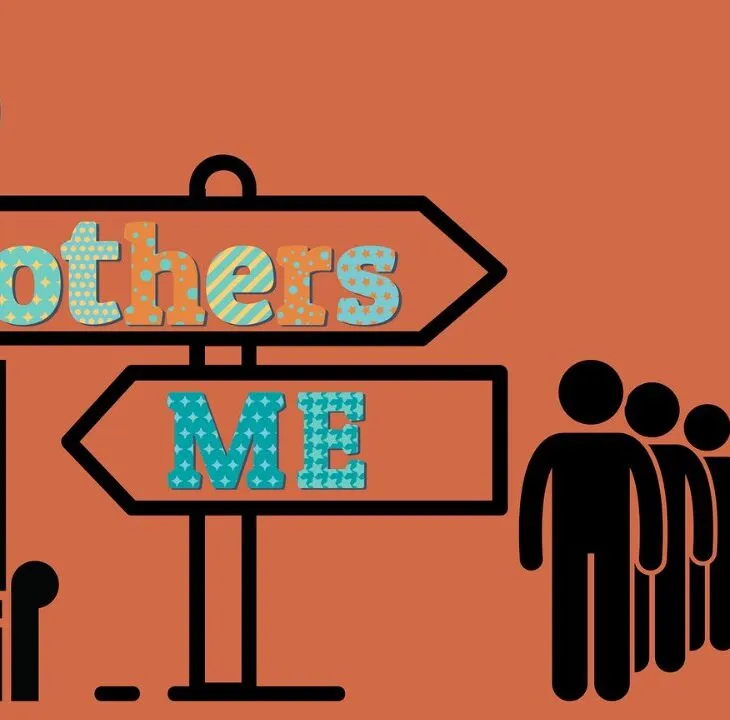
Living Authentically: Questions That Reveal Who You Really Are

Somewhere along the way, many of us stopped being ourselves. We learned to smile when we wanted to scream, to agree when we wanted to push back, and to follow paths that were never ours to begin with. Living authentically sounds simple in theory, but in practice, it requires a kind of courage that most people spend years building up to.
The truth is, authenticity is not a single decision. It is a daily practice of choosing honesty over comfort, self-awareness over autopilot, and your own voice over the noise around you. If you have been feeling disconnected from yourself, restless without knowing why, or exhausted from performing a version of you that does not quite fit, you are not alone. According to research published in the Journal of Research in Personality, people who score higher on measures of authentic living report significantly greater well-being and life satisfaction.
The journey back to yourself begins with honest self-inquiry. Here are the questions that can help you get there.
Are You Expressing What You Actually Feel?
This is the foundation of authentic living, and it is the place where most of us struggle first. Think about your last conversation with someone close to you. Did you say what you actually meant, or did you edit yourself before the words came out? Did you soften your opinion so much that it no longer resembled what you truly felt?
Authentic self-expression is not about being blunt or careless with other people’s feelings. It is about allowing your real thoughts, needs, and desires to have a seat at the table. At work, this might look like speaking up in a meeting when you disagree instead of nodding along. In relationships, it could mean telling your partner what you actually need rather than hoping they will figure it out on their own.
Many people suppress their authentic expression because they were taught, often in childhood, that certain feelings were not acceptable. You might have learned that anger was “bad,” that sadness was “weak,” or that wanting things for yourself was “selfish.” These early lessons become invisible scripts that run in the background of your adult life, shaping how much of yourself you allow the world to see.
Start small. The next time someone asks your opinion, give your real one. Notice how it feels. It might be uncomfortable at first, but that discomfort is the growing edge of authenticity.
When was the last time you said what you really meant, without editing yourself first?
Drop a comment below and let us know how you practice authentic expression in your daily life.
The People-Pleasing Trap: Are You Always Saying Yes?
There is a particular kind of exhaustion that comes from saying yes to everything. It is not physical tiredness, although it often shows up that way. It is the fatigue of constantly abandoning yourself in order to keep everyone else comfortable.
If you find it nearly impossible to say no, even when you are stretched thin, financially tapped out, or emotionally drained, this is worth examining closely. People-pleasing often masquerades as kindness, but at its core, it is driven by fear: fear of rejection, fear of conflict, fear of being seen as difficult or selfish.
The irony is that chronic people-pleasing does not actually make your relationships stronger. It makes them less honest. When you consistently override your own boundaries to accommodate others, resentment builds quietly beneath the surface. Eventually, it leaks out in passive-aggressive comments, emotional withdrawal, or sudden explosive reactions that seem to come out of nowhere.
According to Psychology Today, people-pleasing is often rooted in early attachment patterns where love felt conditional on being “good” or “helpful.” Recognizing this pattern is the first step toward breaking it.
Learning to say no is not about becoming cold or uncaring. It is about releasing the fear of judgment and understanding that a thoughtful no is more respectful than a resentful yes. Your time and energy are finite resources. How you spend them is one of the clearest reflections of how authentically you are living.
Does Your Outer Life Match Your Inner World?
The Clothes You Wear
Fashion might seem like a superficial topic in a conversation about authenticity, but how you present yourself to the world matters more than you might think. Your clothing choices are a form of self-expression, and they can either reflect who you are or who you think you should be.
Ask yourself honestly: if you were in a city where nobody knew you, with zero chance of running into anyone from your regular life, would you still dress the same way? If the answer is no, that gap between your public presentation and your private preference is worth exploring.
This is not about rejecting fashion trends entirely. It is about choosing what resonates with you rather than defaulting to whatever is popular. When you dress in a way that reflects your personality, you carry yourself differently. You stand taller. You feel more at home in your own skin.
The Choices You Make
Beyond clothing, consider the broader choices in your daily life. Do you eat at certain restaurants because you genuinely enjoy them, or because they are the “right” places to be seen? Do you listen to music that moves you, or music that makes you seem interesting at parties? Do you pursue hobbies that light you up, or hobbies that look good on social media?
These might seem like small, inconsequential decisions, but they accumulate. When you consistently choose based on external validation rather than internal alignment, you slowly drift away from yourself. Over months and years, you can end up living a life that looks perfect on the outside but feels hollow on the inside.
Finding this helpful?
Share this article with a friend who might need it right now.
Whose Voice Is Running Your Life?
This is perhaps the most important question on this list, and it is often the hardest to answer honestly. Many of the decisions we believe are our own are actually inherited preferences from our parents, our social circle, or the broader culture we were raised in.
Think about the major decisions in your life: your career, your relationships, your lifestyle. How many of those choices were genuinely yours, and how many were shaped by what your family expected, what your friends approved of, or what society told you was the “right” path?
Our loved ones usually have good intentions. They want to protect us from pain, steer us toward stability, and see us succeed by their definition of success. But their advice is inevitably filtered through their own experiences, fears, and desires. What your mother thinks is the perfect career for you is really the career she would feel most comfortable with you having. What your friends consider the ideal partner is really a reflection of their own values and preferences.
None of this makes their input worthless. But it does mean that you need to develop the ability to separate their voice from yours. Do you know what is really holding you back from pursuing what you want, or have you been so immersed in other people’s opinions that you have lost touch with your own?
Research from the Harvard Business Review shows that people who develop a strong sense of personal authenticity are not only happier but also perform better professionally, because they spend less energy managing a false image and more energy on meaningful work.
How to Start Living More Authentically Today
Recognizing where you have been inauthentic is the first step. But awareness without action just becomes another form of self-judgment. Here are practical ways to begin aligning your outer life with your inner truth.
Create space for self-reflection
You cannot hear your own voice if you never give it room to speak. Set aside even ten minutes a day for quiet reflection, whether that is journaling, sitting in silence, or taking a walk without your phone. The goal is to create enough stillness that your authentic thoughts and feelings can surface without being drowned out by external input.
Practice micro-authenticity
You do not need to overhaul your entire life overnight. Start with small, low-stakes moments of honesty. Order what you actually want at the restaurant instead of what everyone else is having. Tell a friend you would rather stay in than go out. Wear the outfit you love even if it is not trendy. These small acts of alignment build your authenticity muscle over time.
Set one boundary this week
Choose one area of your life where you have been overextending yourself and set a clear boundary. It does not have to be dramatic. It could be as simple as not answering work emails after 7 PM, or telling a friend that you need to reschedule rather than showing up when you are running on empty.
Question inherited beliefs
Take one belief you hold about how life “should” be lived and trace it back to its source. Did you arrive at that belief through your own experience and reflection, or did you absorb it from someone else? You might find that some of your most firmly held convictions are actually borrowed opinions that no longer serve you.
Accept that authenticity will make some people uncomfortable
This is the part nobody wants to hear, but it is essential. When you start being more authentically yourself, some people will not like it. People who benefited from your people-pleasing will push back when you start setting boundaries. Friends who bonded with you over shared complaints might feel threatened when you start making positive changes. This discomfort is not a sign that you are doing something wrong. It is a sign that you are outgrowing patterns that no longer fit.
You Were Never Meant to Be a Copy
If the universe intended for us all to be identical, we would not each carry unique fingerprints, distinct DNA, and personalities shaped by a constellation of experiences that no one else will ever replicate. You are not a rough draft of someone else’s finished product. You are a complete, original work.
It is time to stop hiding the parts of yourself that do not fit neatly into other people’s expectations. It is time to get clear on what you actually want, not what you have been told to want. It is time to let the world see who you really are, because who you really are is more than enough.
The path to a more joyful and fulfilling life does not begin with becoming someone new. It begins with uncovering the person you have always been underneath the layers of expectation, fear, and compromise. And that person is waiting for you to stop performing and start living.
We Want to Hear From You!
Tell us in the comments which question hit closest to home for you.