The 4 Hidden Roles Food Plays in Your Relationship (and Why It Matters More Than You Think)

Your Relationship With Food Is Telling You Something About Your Relationship With Love
Here is something no one really talks about on date night. The way you eat, what you reach for, and how food makes you feel can reveal a shocking amount about what is actually going on in your romantic relationship. And no, this is not about whether you split the check or judge your partner for ordering dessert.
This goes deeper than that.
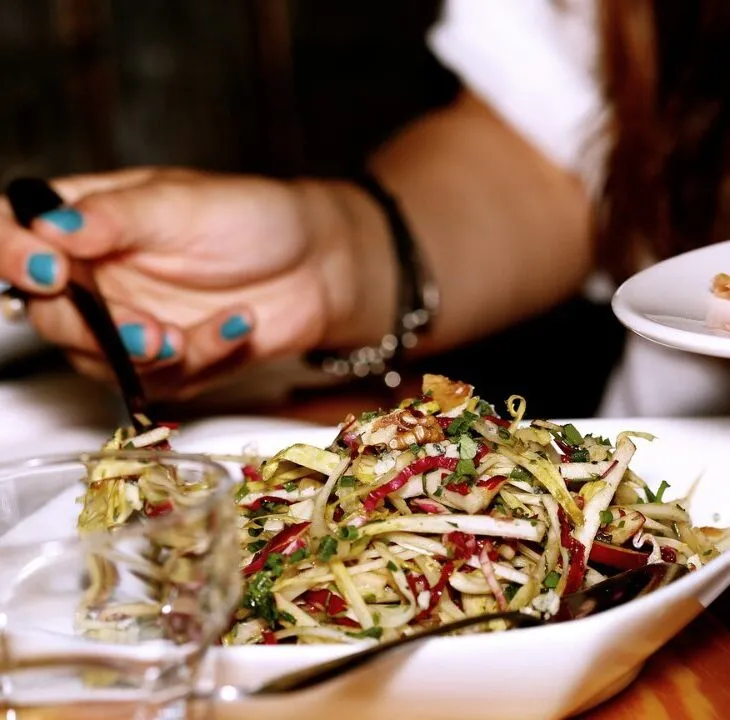
Food is one of the most intimate parts of daily life. You share meals together, cook for each other, celebrate anniversaries over dinner, and argue about what to order on a Friday night when you are both too tired to think. Food sits right at the center of how couples connect, and when something is off in the relationship, it almost always shows up at the table first.
According to research published in the journal Appetite, eating behaviors are significantly influenced by relationship satisfaction and emotional attachment patterns. In other words, the way you eat together (and apart) is a mirror for the health of your bond.
What I find fascinating is that food does not just nourish us physically. It acts as a symbol for things we need emotionally, especially within romantic relationships. Once you can see the role food is playing in your love life, you gain a completely new level of clarity about what your relationship actually needs.
There are four major symbolic roles food takes on in relationships. And once you spot them, you will never look at dinner with your partner the same way again.
Have you ever noticed that the way you eat changes depending on how things are going in your relationship?
Drop a comment below and let us know if food has ever been a stand-in for something deeper between you and your partner.
The 4 Symbolic Roles Food Plays in Your Love Life
1. Food as Caretaker: The Comfort You Are Not Getting From Your Partner
This is the big one, and it shows up in almost every relationship at some point. When you reach for comfort food after a long day, what you are often really craving is not the mac and cheese itself. It is the feeling of being taken care of. Soothed. Held. Seen.
In healthy relationships, partners are supposed to be a source of emotional safety. Attachment theory, developed by John Bowlby and expanded on by researchers like those at The Attachment Project, tells us that we look to our romantic partners to be a secure base. When that base feels shaky, when your partner is emotionally unavailable, dismissive, or just not tuned in, food can quietly step in as a substitute caretaker.
You might not even realize it is happening. You just know that after another night of feeling unheard, a bowl of ice cream feels like the only thing that understands you. That is not weakness. That is your nervous system looking for regulation somewhere, anywhere.
The real question this raises is not “how do I stop emotional eating.” It is “am I getting the emotional nourishment I need from my partner, and if not, what needs to change?” If you find yourself consistently turning to food for comfort instead of your person, that is information worth paying attention to. It does not mean your relationship is broken. But it does mean something important is going unaddressed.
If you are curious about how attachment patterns show up in your dating life, it is worth exploring how your early wiring influences everything, including what you eat and why.
2. Food as Intimacy: When Dinner Replaces What Is Missing in the Bedroom
This one might make you a little uncomfortable, and that is exactly why it matters.
There is a reason food and romance are so deeply linked. Candlelit dinners. Chocolate-covered strawberries. Cooking together on a Sunday afternoon with music playing in the background. Food is sensual. It engages all five senses in a way that very few other daily activities do. And when physical or emotional intimacy starts to fade in a relationship, food can quietly become a replacement for that missing connection.
Think about it. The richness, the pleasure, the indulgence of a really good meal can mimic the satisfaction of deep intimacy. When couples stop being physically affectionate, when sex becomes routine or disappears altogether, when there is a wall of emotional distance that neither person wants to name, food becomes the safe way to experience pleasure without having to be vulnerable with another person.
According to research from The Gottman Institute, couples who maintain regular physical affection and prioritize intimacy report higher overall relationship satisfaction. When that intimacy drops, the need for sensory pleasure does not disappear. It just redirects. Often toward food.
If you notice that you and your partner have replaced pillow talk with takeout orders, or that the most excited you feel together is when you are picking a restaurant, it might be worth asking what else your relationship is hungry for. Sometimes the craving is not for a decadent dessert. It is for your partner’s full attention, their touch, their presence.
Finding this helpful?
Share this article with a friend who might need it right now.
3. Food as Ritual: The Routines That Hold Your Relationship Together (or Keep It Stuck)
Every couple has food rituals, whether they realize it or not. Saturday morning pancakes. The Thai place you always order from when neither of you wants to cook. The specific snack you grab on road trips together. These rituals are not random. They are part of the invisible architecture of your relationship.
Shared rituals create a sense of belonging and stability. They are small, repeated acts that say “we are an us.” Research published in the Journal of Family Issues has shown that couples who maintain meaningful shared rituals report stronger relational bonds and greater satisfaction over time.
But here is where it gets complicated. Some food rituals stop being about connection and start being about control, avoidance, or staying in a comfort zone that has long stopped being comfortable. Maybe you and your partner eat in front of the TV every single night because sitting across from each other in silence feels too exposing. Maybe the weekly dinner date has become a performance you both go through the motions of, with nothing real being said between courses.
When the rituals around food become rigid or empty, they can actually prevent intimacy rather than build it. The invitation here is to look at your shared food routines honestly. Which ones genuinely bring you closer? And which ones are just filler, keeping you busy so you do not have to face what is missing?
Building intentional habits that strengthen your relationship can start with something as simple as how you share a meal. Put the phones away. Sit across from each other. Ask a real question. It sounds small, but the couples who stay connected are the ones who protect their rituals and keep them meaningful.
4. Food as Identity: When What You Eat Becomes Who You Are in the Relationship
This one is sneaky and it causes more tension in relationships than most people want to admit.
We live in a time where food choices have become deeply tied to identity. Vegan, keto, clean eating, intuitive eating, gluten-free, organic only. These are not just dietary preferences anymore. For many people, they are core parts of how they see themselves. And when you bring that into a relationship, things can get messy fast.
Maybe you have been there. You start dating someone and the food differences seem small and kind of charming at first. But over time, those differences become loaded. One partner’s eating habits start feeling like a judgment of the other’s. “You are really going to eat that?” becomes a sentence that carries the weight of something much bigger than a burger.
When food becomes a badge of moral superiority in a relationship, it creates a hierarchy that erodes equality and respect. One person is “good” for their discipline. The other is “bad” for their choices. And suddenly you are not two partners navigating life together. You are a judge and someone being judged.
The deeper issue here is usually about acceptance. Can your partner love you exactly as you are, pizza and all? Can you extend that same grace to them? The couples who navigate food identity differences well are the ones who understand that loving someone means loving the whole person, not just the version that fits neatly into your lifestyle aesthetic.
Your worth in a relationship has nothing to do with what is on your plate. If you are exploring how self-worth and your relationship with food connect on a deeper level, that journey starts with radical honesty about what you are really hungry for.
What Your Eating Patterns Are Really Telling You About Your Relationship
If you made it this far, something in here probably hit close to home. And that is a good thing. Because awareness is always the first step toward something better.
The next time you find yourself reaching for food in a way that feels charged, emotional, or automatic, pause for a moment. Ask yourself: what do I actually need right now? Is it the food? Or is it something from my partner, from my relationship, from myself that I have not been willing to ask for?
Your eating patterns are not flaws to fix. They are signals to listen to. And sometimes they are the most honest part of your relationship, telling you what words have not yet been able to say.
The couples who thrive are the ones who pay attention to all of it, not just the big dramatic moments, but the quiet, everyday ones too. Like what happens at the dinner table. Like what gets said (and unsaid) over a shared meal. Like how food becomes a language for everything else going on beneath the surface.
You deserve a relationship where you feel nourished in every sense of the word. And that starts with being honest about what is really on your plate.
We Want to Hear From You!
Tell us in the comments which of these four roles resonated most with your relationship. Your honesty might be exactly what someone else needs to read today.
Read This From Other Perspectives
Explore this topic through different lenses