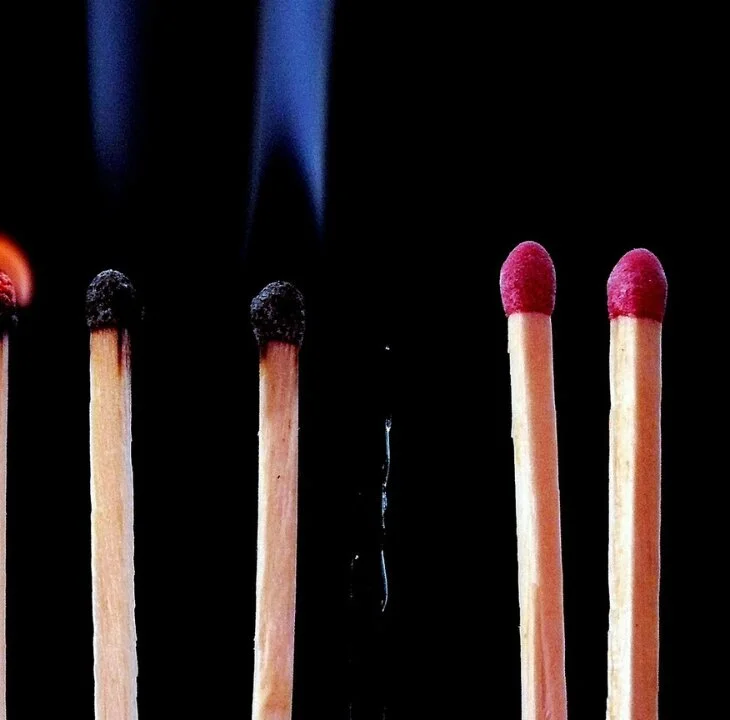
When Love Changes on You: Learning to Let Relationships Evolve (Without Losing Your Mind)
Hey friend! So, I was scrolling through my camera roll the other day (dangerous game, I know) and stumbled across a photo of me and my ex from about three years ago. We were at this little Italian restaurant, candle flickering between us, both grinning like absolute idiots. And you know what hit me? Not sadness, not regret, but this wild realization that the woman sitting in that photo had absolutely no idea what was coming. She thought she had it all figured out. She thought love was something you could lock into place like a seatbelt and just ride out forever.
Spoiler alert: she was wrong. And honestly? Thank God she was.
The Myth of the “Forever Plan” in Relationships
Can we talk about how we’ve been collectively sold this idea that love is supposed to be static? That once you find your person, everything just clicks into place and stays there? Because I bought that story hard, and it cost me years of unnecessary heartbreak.
Here’s what nobody tells you when you’re starry-eyed and picking out couple Halloween costumes: people change. You change. Your partner changes. The relationship itself is a living, breathing thing that will morph whether you give it permission to or not. And according to research from The Gottman Institute, couples who thrive long-term are not the ones who avoid change, but the ones who learn to navigate it together.
I used to think that if a relationship was “meant to be,” it would just work. No turbulence, no growing pains, no awkward conversations where you realize you want completely different things than you did six months ago. I confused stability with stagnation, and commitment with staying exactly the same person I was on the first date.
That’s not love, friend. That’s a hostage situation.
Have you ever caught yourself clinging to a version of your relationship that no longer exists?
Drop a comment below and let us know. No judgment here, only honesty.
Why We White-Knuckle Our Relationships
I think, especially as women, we are conditioned to be the glue. The peacekeeper. The one who holds everything together while simultaneously making it look effortless. So when a relationship starts shifting, our first instinct isn’t curiosity. It’s panic.
I remember the first time a boyfriend told me he was rethinking his career path, which would mean possibly relocating. My immediate thought wasn’t “wow, that’s exciting for him.” It was “but what about OUR plan?” I had this whole timeline mapped out in my head: move in together by 28, engaged by 30, the works. His growth felt like a personal attack on my blueprint.
And that, right there, is where so many of us get it twisted.
We confuse our partner’s evolution with abandonment. We interpret their desire for something new as a rejection of what we’ve built. But Psychology Today points out that this pattern often stems from codependent tendencies, where our sense of security becomes so tangled up in another person that any shift in them feels like the ground crumbling beneath us.
Sound familiar? Yeah. Me too.
The Hardest Relationship Lesson I’ve Ever Learned
There’s this Ethan Hawke quote that absolutely wrecked me when I first read it: “If you really love somebody you want them to grow, but you don’t get to define how that happens. They do.”
Read that again. Let it sit.
Because I spent the better part of my twenties trying to love people into staying the same. I wanted my partners to grow, sure, but only in directions that were convenient for me. Only in ways that didn’t disrupt my comfort zone. Only in ways that kept them fitting neatly into the role I’d assigned them in my life story.
That’s not partnership. That’s casting a movie and getting mad when the actor goes off-script.
The real turning point for me came after a breakup that I genuinely did not see coming. We weren’t fighting. There was no dramatic betrayal. We had simply, quietly, become different people who wanted different lives. And instead of acknowledging that, we’d spent months performing the version of “us” that used to work, like actors in a play that had already ended but nobody wanted to close the curtain on.
To borrow from Oscar Wilde: “We never know when the curtain has fallen. We always want a sixth act.”
If you’ve ever been in a relationship where you both knew it was over but kept showing up anyway, you know exactly what that sixth act feels like. Exhausting. Hollow. A little bit heartbreaking.
Letting Go Doesn’t Mean You Failed
This is the part that took me the longest to internalize. We treat relationship endings like failures on a report card instead of what they often are: natural conclusions to a chapter that served its purpose. If you grew, if you learned, if you loved with your whole chest even when it was messy, that relationship was not a waste. It was a whole education.
I wrote about embracing change as a form of self-love a while back, and so much of that applies here. The same openness we need for personal growth is exactly what healthy relationships demand. You cannot be rigid in love and expect it to survive.
Finding this helpful?
Share this article with a friend who might need it right now.
What Adaptable Love Actually Looks Like
So if we’re not supposed to white-knuckle our relationships into submission, what are we supposed to do?
I’ve been thinking about this a lot, and here’s what I’ve come up with (the hard way, naturally).
1. Stop dating a version of someone.
You fell in love with who they were in a specific moment. But moments pass. The person in front of you today might have new dreams, new boundaries, new needs. Get curious about who they’re becoming instead of mourning who they were. Ask questions. Be genuinely interested. Date them in real time, not in the highlight reel of your memory.
2. Communicate through the uncomfortable middle.
When things shift in a relationship, our instinct is to either pretend everything is fine or blow it all up. But the magic (and I mean the real, unglamorous, sitting-on-the-kitchen-floor-at-midnight magic) happens in the conversations where you say: “I feel different. Do you? What do we do with that?” According to a study published in the Journal of Social and Personal Relationships, couples who engage in open dialogue about relational changes report higher satisfaction and deeper emotional intimacy, even when the changes themselves are difficult.
3. Hold space for two people to grow in different directions.
This one hurts, I’m not going to sugarcoat it. Sometimes you and your partner will grow toward each other. Sometimes you’ll grow apart. And sometimes (this is the tricky one) you’ll grow in parallel, close but not quite aligned. All of these are valid. None of them are failures. The question isn’t whether change will come for your relationship. It will. The question is whether you’ll face it together with honesty, or apart with resentment.
4. Stop using your partner as an anchor.
I have absolutely been guilty of this. When everything else in life felt chaotic (career uncertainty, family drama, existential spiraling at 2 a.m.), I would cling to my relationship like a life raft. But that puts an impossible amount of pressure on another human being. Your partner is not your stability plan. They are a whole, complex person with their own chaos to navigate. If your sense of security collapses the moment they change, that’s not a relationship problem. That’s a you problem. And I say that with all the love in the world, because it was absolutely a me problem first.
Working on building your own inner stability is one of the most romantic things you can do for your relationship. Seriously. When you’re grounded in yourself, you can hold space for your partner’s evolution without it feeling like a personal crisis.
The Beauty on the Other Side
Here’s what I wish I could go back and tell 25-year-old me, the one who was probably ugly crying over some guy who didn’t deserve the mascara sacrifice. The relationships that changed you? They were supposed to. The ones that ended? They completed their assignment. The ones that survived the growing pains? Those are the ones built on something real.
Since I stopped trying to control love and started letting it breathe, I have experienced a depth of connection I didn’t think was available to me. Not because I found the “right person” (though that helps), but because I finally stopped trying to freeze love in time. I let it be messy. I let it evolve. I let it surprise me.
And friend, love is so much better when you stop trying to put it in a box.
I’ve written before about healing after heartbreak, and I truly believe that one of the most healing things we can do is change our relationship with change itself. Stop seeing it as the enemy of love and start seeing it as proof that love is alive.
Because the alternative, two people performing a relationship that stopped growing years ago, is not love. It’s a museum exhibit. And you, my friend, are way too vibrant to live behind glass.
We Want to Hear From You!
Has a relationship ever changed you in ways you didn’t expect? Tell us in the comments which part of this hit home for you. Your story might be exactly what someone else needs to hear today.
Read This From Other Perspectives
Explore this topic through different lenses