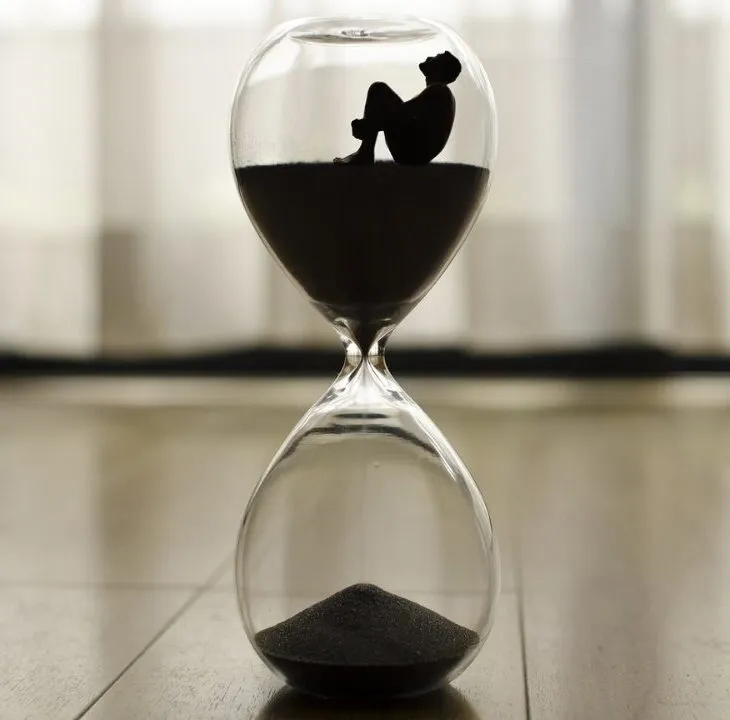
Going Broke as a Single Mom Was Never the Real Financial Crisis
The Financial Rock Bottom Nobody Talks About
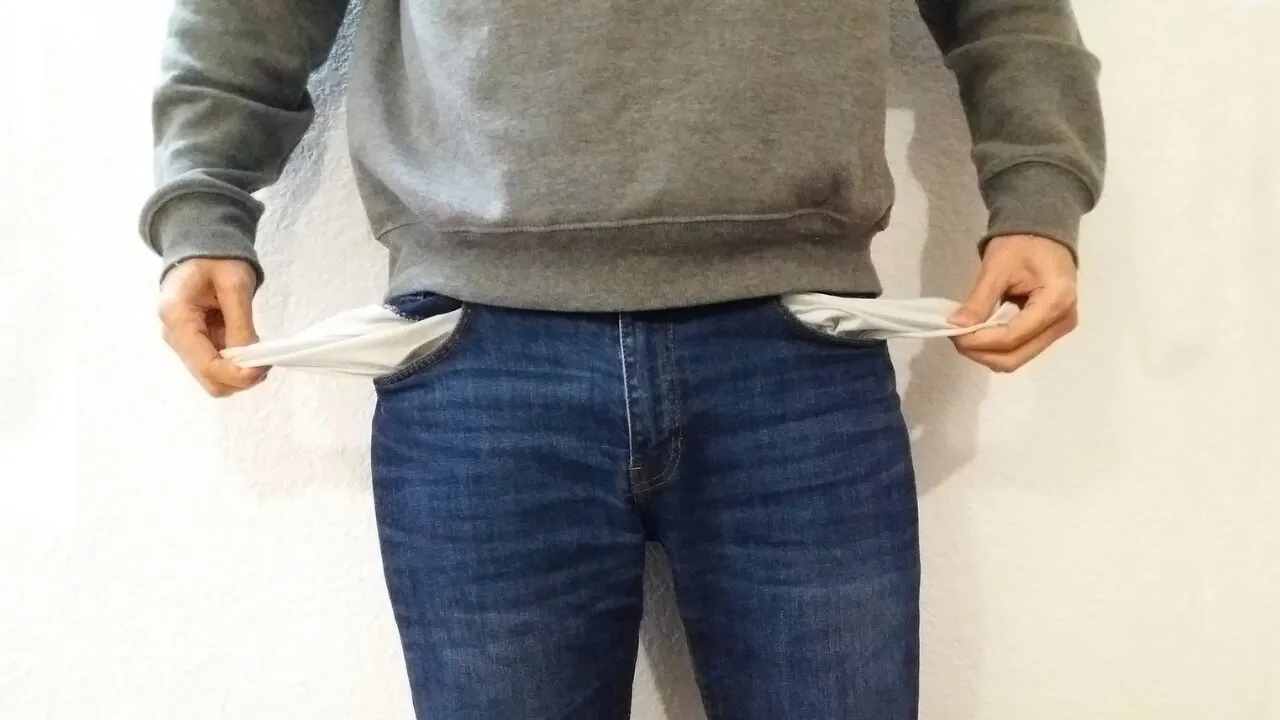
Being flat broke, with lint in my pockets and a negative bank balance, while staring down the reality of raising two boys alone was never my actual financial downfall, love. I know that sounds counterintuitive. How could being penniless not be the crisis? But hear me out.
The real financial crisis had been building long before the money dried up. It started the moment I stopped believing I was capable of earning, building, and creating wealth on my own terms. The broke bank account was just the receipt for a mindset that had already gone bankrupt.
According to a 2022 American Psychological Association survey, money is consistently the top source of stress for Americans, and women report higher financial stress than men. But what that data doesn’t capture is the difference between the stress of not having money and the deeper, quieter crisis of not believing you deserve it or can create it.
That second one? That’s the one that nearly took me out.
Have you ever felt like your bank account was just reflecting what you secretly believed about your own worth?
Drop a comment below and let us know. You might be surprised how many of us have been right there with you.
How I Let “Good Wife” Economics Bankrupt My Ambition
Before the money disappeared, my financial identity had already been erased. I had folded myself into the role of the “good, domestic housewife” so completely that I stopped seeing myself as someone who could generate income, make investments, or build something of her own.
Every financial decision ran through someone else. Every dollar I spent came with an invisible justification attached. I wasn’t a partner in the household economy. I was a dependent. And I had accepted that role because the world around me said that was the deal.
Here’s what nobody told me: financial dependence doesn’t just affect your wallet. It rewires how you think about yourself in relation to money entirely. A National Bureau of Economic Research paper found that women who experience financial dependence in relationships often carry lasting effects on their earning confidence and financial decision-making, even years after gaining independence.
I was living proof. My mind had convinced me that I had failed at the only economic model I’d been given. Good wives managed the home. Good wives didn’t need their own ambitions. Good wives certainly didn’t dream about entrepreneurship or financial independence while folding laundry at midnight.
But I did dream about those things. And the guilt of wanting more than what I had been assigned felt like its own kind of financial failure.
The Hidden Cost of Discounting Your Own Value
When my marriage ended and I found myself truly on my own with two small children, I did what so many women do. I looked at my situation and saw only what was missing. No savings. No career trajectory. No safety net. No plan.
What I completely overlooked was everything I had already built.
I had a degree from a top university, something few people in my family had even attempted. I had traveled and expanded my worldview while many of my peers had never left our home state. I had the sheer nerve to leave a marriage that wasn’t working, which is something plenty of people spend decades unable to do.
But in the language of money and career, none of that registered. I couldn’t put “brave enough to leave” on a resume. My degree felt dusty and irrelevant. My travel experiences weren’t line items on a balance sheet.
So I did what too many women do at their financial low point: I priced myself at zero. I took the first job that would have me. I didn’t negotiate. I didn’t advocate for myself. I accepted whatever was offered because I believed I should be grateful anyone was offering at all.
If you’ve ever caught yourself thinking “I should just be thankful to have a job,” I want you to sit with that for a second. Gratitude is beautiful. But gratitude that keeps you from asking for what you’re worth? That’s not gratitude. That’s a mental block dressed up in nice clothing.
Your net worth is not your self-worth, but when you forget that, they start to mirror each other in the worst way.
The Broke Single Mom Myth
Let me tell you what the world sees when it looks at a young, Latina single mother with no money: a statistic. A cautionary tale. A before photo in someone else’s success story.
And for a while, I believed that narrative too. I saw myself through the lens of every stereotype, every pitying glance, every well-meaning relative who said things like, “At least you have your health.” As if health was a consolation prize for financial ruin.
But here’s what I’ve learned since then. Being broke is a temporary financial state. Believing you are destined to be broke is a permanent financial prison. The difference between the two is not money. It’s mindset. And mindset, unlike a savings account, doesn’t require a minimum deposit to open.
The Forbes Financial Literacy Survey consistently shows that women score lower than men on financial confidence, even when their actual financial knowledge is comparable. We’re not less capable. We’ve just been told we are for so long that we started to believe it.
Getting out of that mental poverty was harder than getting out of actual poverty. And I mean that literally.
Finding this helpful?
Share this article with a friend who might need it right now.
Rebuilding Wealth by Rebuilding the Story
My financial turnaround didn’t start with a budgeting app or a side hustle. It started with a much quieter, much less Instagram-worthy shift: I stopped telling myself the story that I was bad with money.
Because I wasn’t bad with money. I had never been given the chance to be anything with money. There’s a difference between failing at something and never being allowed to try.
Once I separated those two things, everything changed. I started small. I opened my own bank account, just mine, for the first time in years. I tracked every dollar, not out of scarcity, but out of curiosity. Where was my money actually going? What did my spending say about what I valued?
Then I started learning. Not from the “hustle culture” gurus who promise six figures in six weeks, but from women who had walked similar paths. Women who had climbed out of debt one careful decision at a time. Women who understood that financial recovery for a single mother doesn’t look like a straight line. It looks like a zigzag with occasional detours through the drive-through because sometimes dinner is chicken nuggets and that’s fine.
The most important financial decision I ever made wasn’t an investment or a career move. It was deciding that I was allowed to want financial security without guilt. That wanting to build wealth didn’t make me materialistic. That taking care of my money was the same thing as taking care of my kids.
What Financial Freedom Actually Looks Like
I won’t pretend the road from broke to financially stable was smooth. There were months when the math simply did not work. There were moments when I considered going back to the safety of dependence because at least dependence came with a predictable grocery budget.
But every time I sat with that temptation, I remembered what dependence had actually cost me: my confidence, my ambition, my belief that I could build something. The financial security of my marriage had been an illusion. It was someone else’s money, governed by someone else’s rules, and it could disappear the moment that person decided it should.
Real financial freedom, I discovered, isn’t about a number in your account. It’s about knowing you can generate that number yourself. It’s about having the skills, the confidence, and the self-trust to earn, save, and grow money on your own terms.
Today, I manage my own finances. I have savings. I have a career I built from the ground up, not the one that was handed to me as a consolation prize. My boys are watching their mother work, earn, decide, and occasionally mess up financially in ways that are entirely her own. And that, to me, is worth more than any joint checking account ever was.
The broke chapter of my life wasn’t the downfall. It was the forced restart I needed to finally build a financial life that was actually mine.
Having to pick up the financial pieces of my life allowed me to build an economy I actually wanted to participate in.
A Letter to the Woman Checking Her Balance at 2 AM
If you’re reading this at some unreasonable hour, doing mental math about whether you can cover rent and groceries in the same week, I want you to know something. You are not a failure. You are not a statistic. You are not your bank balance.
You are a woman in a temporary financial situation, and temporary is the key word there. The fact that you’re reading an article about money and mindset means you’re already doing the work. You’re already looking for the next step.
Don’t let the world’s narrative about who you are financially become the story you tell yourself. You are allowed to want more. You are allowed to build more. You are allowed to be ambitious about money without apologizing for it.
The dip is not the destination. It never was.
We Want to Hear From You!
Tell us in the comments which part of this story hit home for you. Your experience could be exactly what another woman needs to read today.
Have questions about this article?
Discuss with Your AI Coach
Let's Talk