Four Sentences That Completely Redirected My Purpose
The Words That Pulled Me Back to My Path
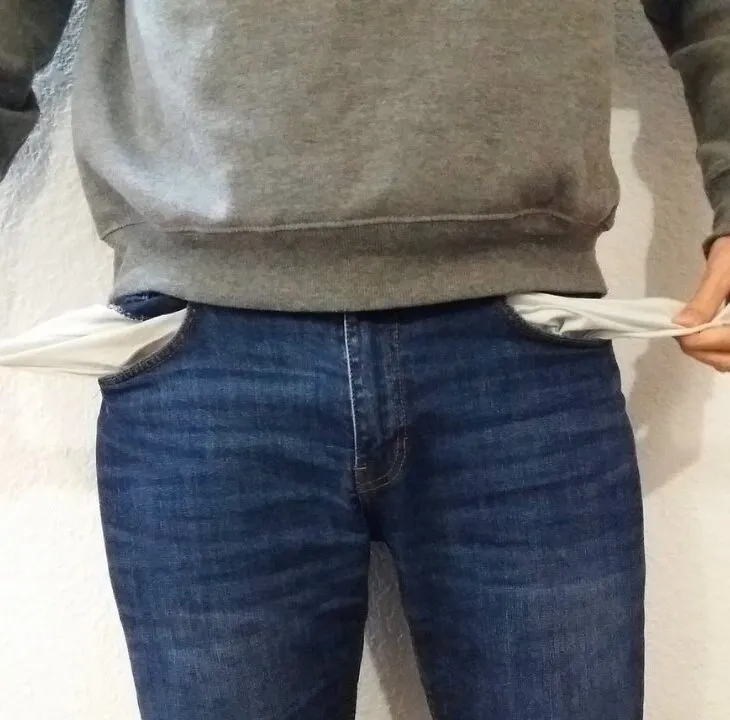
There are moments in life when everything you thought you were building falls apart. Your goals dissolve. Your ambition vanishes. The version of yourself you spent years constructing quietly crumbles, and you are left standing in the rubble wondering what any of it was for.
I have been in that rubble. And what pulled me out was not a five-year plan, a vision board, or a productivity hack. It was four sentences. Four collections of words spoken by different people at different times that fundamentally rewired how I think about purpose, direction, and what it means to build a life that actually matters to you.
Before I share them, I want to be honest about something. The path to finding your purpose is not a straight line. It is not even a winding road with a scenic view. Sometimes it is crawling across the floor of your apartment at 2 AM wondering if you will ever feel driven by anything again. Sometimes passion has to die before it can be reborn into something truer.
I was a summa cum laude graduate from Southern California with a clear trajectory. Two years later, unresolved trauma from childhood surfaced so violently that I was hospitalized. Multiple times. My career stalled. My identity as a driven, accomplished woman shattered. Everything I had used to define my purpose (my grades, my ambition, my plans) meant nothing when I could not even get out of bed.
Three years of difficult, unglamorous work later, I rebuilt. Not just my mental health, but my entire relationship with ambition, creativity, and what I am actually here to do. These four sentences were turning points in that reconstruction.
Have you ever had a moment where everything you were working toward suddenly lost its meaning?
Drop a comment below and tell us what brought you back to yourself.
1. “Never say never.”
This one sounds like something your aunt would needlepoint onto a throw pillow. I know. Stay with me.
When I was in the hospital the first time, I met a man named Darrell. He was fifty, kind, and had voluntarily admitted himself for two months to heal from deep depression. He became my protector in a place that felt terrifying and disorienting. And when I told him I never thought I would lose my drive, never thought I would be someone without a plan, never thought I could feel so untethered from everything I had built, he said three words that cracked something open.
Never say never.
Here is why that mattered for my sense of purpose. I had been operating under a rigid definition of who I was supposed to become. High achiever. Goal crusher. The woman with the color-coded planner and the ten-year timeline. When that identity collapsed, I treated it as a permanent failure. I told myself I would never be that driven person again. I would never find meaningful work. I would never feel passionate about anything.
Darrell’s words did something subtle but profound. They reminded me that the future is not fixed. Research from the American Psychological Association confirms that psychological resilience is not a trait you either have or lack. It is something that develops through behaviors, thoughts, and actions that anyone can cultivate. “Never” closes every door. Removing it reopens the possibility that your purpose might look completely different from what you originally planned, and that is not a failure. That is growth.
I started giving myself permission to not know what was next. To let my ambition reshape itself on its own timeline instead of forcing it into the mold I had built at twenty-two. And slowly, new passions emerged. Writing. Advocacy. Conversations about topics most people refuse to touch. None of it was on my original roadmap. All of it became more meaningful than anything I had planned.
2. “Wanting to give up is part of the process.”
Let me reframe something. In the context of purpose and passion, giving up does not always mean the dramatic, life-or-death version. Sometimes it means quietly abandoning your goals. Deleting the business plan you started. Telling yourself the dream was stupid. Letting months slide by in a fog of scrolling and avoidance because the gap between where you are and where you want to be feels impossibly wide.
A friend who had walked through her own collapse told me something during my darkest stretch. She said that wanting to quit, wanting to abandon everything, was a normal part of the healing and rebuilding process. Not a sign of weakness. Not evidence that you are not cut out for this. A phase.
That reframe changed everything.
So much of the messaging around passion and purpose makes it sound like a light switch. Find your calling! Follow your bliss! Manifest your dream life! But a Harvard Business Review analysis points out that the “follow your passion” advice can actually be counterproductive because it implies passion is something you discover fully formed rather than something you build through effort and iteration.
The desire to quit is not the opposite of passion. It is often the growing pain that comes right before a breakthrough. My friend gave me permission to sit in that uncomfortable middle space without interpreting it as evidence that I had failed. She told me to commit to six more months. Just six months of showing up, even imperfectly, before reassessing.
I did. And those six months became the foundation of everything I have built since.
If you are in that space right now, where every goal feels pointless and the motivation has evaporated, hear this: you are not broken. You are in the process. The wanting to stop is data, not a verdict.
Finding this helpful?
Share this article with a friend who might need it right now.
3. “You are still capable, even when you do not feel capable.”
A guest speaker in one of my college courses once said, “It is okay to not be okay.” That phrase started something important in me. But years later, after clawing my way through trauma recovery and trying to rebuild a sense of professional identity from scratch, I needed an evolved version of that idea.
So I built one: I am still capable, even when I do not feel capable.
This distinction matters enormously when it comes to pursuing your purpose. Feelings of inadequacy will show up at every stage of building something meaningful. When you launch the project. When you pitch the idea. When you sit down to write the first page of the book. When you apply for the role that feels two sizes too big. The feeling of “I cannot do this” will be there, loud and persistent.
But your capability is not determined by your emotional state on a given Tuesday. You have survived things that required extraordinary strength. You have solved problems, adapted to chaos, and figured things out when the odds were against you. That capability does not evaporate because you feel shaky.
The concept of self-efficacy, extensively studied in psychology, tells us that our belief in our ability to succeed directly influences whether we actually do. But here is the catch: self-efficacy is not about feeling confident. It is about recognizing evidence of your own competence, even when your emotions are telling a different story.
I use this sentence like a tool now. When imposter syndrome flares up before a deadline, when I look at what I have built in my career and wonder if it was all luck, I come back to it. Capability is not a feeling. It is a track record. And yours is longer than you think.
4. “You can experience the same depth of fulfillment in which you have felt failure, sometimes more.”
This is the sentence I carry with me every single day.
When you have known real collapse (the kind where your identity, your plans, and your sense of direction all dissolve at once) it is easy to believe that you have used up your capacity for big experiences. That the intensity was reserved for the painful side of life, and the best you can hope for now is something quiet and manageable.
That is a lie.
The depth of pain you have experienced is not a ceiling. It is actually evidence of your capacity. If you can feel that deeply in one direction, you can feel that deeply in the other. The same sensitivity that made you vulnerable to devastation is the exact quality that allows you to experience profound fulfillment, creative flow, and purpose so vivid it makes your chest tight.
I have crawled across the floor in agony. I have also stood barefoot on a stage sharing my words with a room full of people who needed to hear them. I have felt the despair of watching every plan I made crumble. I have also felt the electricity of building something new from the ruins, something I never would have imagined in my former “perfect” life. The fulfillment I experience now is not quieter than the pain was. It is just as loud. Sometimes louder.
Your capacity for purpose is directly proportional to your capacity for feeling. If life has broken you open, it has also made you capable of a richness in your work and your mission that people who have never been cracked apart simply cannot access. That is not a consolation prize. That is your competitive advantage.
Your Purpose Is Not a Destination You Missed
If you have ever felt like you lost your window, like the years spent in survival mode were years wasted, I need you to reconsider that narrative. Those years were not a detour from your purpose. They were building the foundation for it.
Every setback taught you something about resilience. Every moment of wanting to quit taught you something about commitment. Every time you showed up even when you did not feel capable, you were proving to yourself that your drive runs deeper than motivation or mood.
Purpose is not something you find once and hold onto forever. It is something you return to, over and over, in different forms and at different volumes. The version of purpose you build after being broken is sturdier, more honest, and more yours than anything you could have constructed from a place of never having struggled.
So if you are rebuilding right now, keep going. If you are still in the rubble, look around for one sentence, one idea, one small shift in perspective that cracks the light in. It does not have to be dramatic. It just has to be true.
And then build from there.
We Want to Hear From You!
Which of these four sentences hit you the hardest? Or do you have a sentence of your own that redirected your purpose? Tell us in the comments.
Read This From Other Perspectives
Explore this topic through different lenses