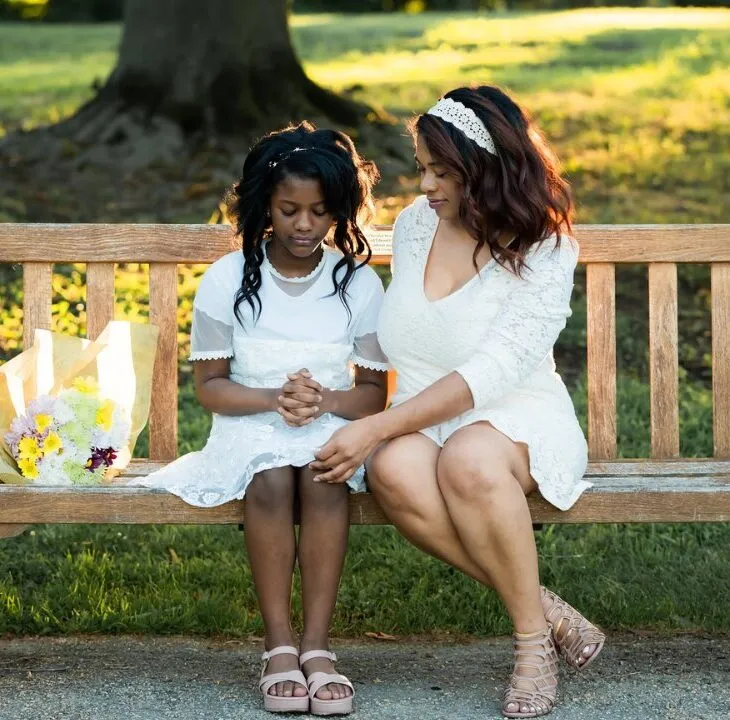
Breaking the Taboos That Keep You From Showing Up Fully in Your Relationships

The Woman You Hide Is the One Your Partner Needs to Meet
There’s a version of you that exists behind closed doors, behind the performance of being “easy to love,” behind the carefully constructed walls you built somewhere between your first heartbreak and your last. She’s the woman who has desires she doesn’t voice, boundaries she doesn’t enforce, and a sensuality she tucks away because somewhere along the line, someone made her believe it was too much.
I know her well. I was her for years.
In my own dating life, and later in my marriage, I spent an embarrassing amount of time trying to be the “perfect” partner. Agreeable. Low-maintenance. Never too demanding, never too emotional, never too sexual, never too anything. And you know what that got me? Relationships where I felt invisible. Partnerships where I was technically present but emotionally checked out, because the real me had never actually been invited to the table.
Here’s what I’ve learned since then: the taboos we carry about our femininity, our bodies, our desires, and our emotional needs don’t just affect us individually. They seep into every romantic relationship we enter. They shape how we communicate (or don’t), how we receive love (or deflect it), and how we show up in intimacy (or hide from it). And until we confront them, we keep recycling the same patterns with different people.
Why We Shrink Ourselves in Relationships
Let’s trace this back to its roots for a moment. Research from the American Psychological Association has consistently shown that women are socialized to prioritize others’ comfort over their own needs. We learn early that being “good” means being accommodating, and that our value in relationships often hinges on how well we serve someone else’s experience.
This conditioning doesn’t vanish when you fall in love. If anything, romantic relationships amplify it. You might recognize these patterns in your own life: saying “I’m fine” when you’re not. Faking enjoyment in the bedroom because you don’t want to hurt his feelings. Suppressing your needs because you’re terrified that expressing them will make you “too much” or, worse, unlovable.
These aren’t personality flaws. They’re survival strategies that made sense once but are now slowly suffocating the very relationships you’re trying to protect.
The irony is almost poetic. The taboos we internalize to keep love close are the exact things pushing it away. When you hide your authentic self from a partner, you deny them the chance to truly know you. And a relationship where you aren’t truly known is a relationship where you can never truly feel loved.
Have you ever held back a part of yourself in a relationship because you were afraid it would be “too much”?
Drop a comment below and let us know. You might be surprised how many of us share the same fear.
The Taboo of Having Needs (Yes, Really)
One of the most damaging taboos women carry into relationships is the belief that having needs makes you needy. I cannot tell you how many conversations I’ve had with brilliant, accomplished women who will negotiate a six-figure salary without blinking but cannot bring themselves to tell their partner they need more affection, more conversation, or more effort.
According to attachment theory, which has been studied extensively by researchers like Dr. Amir Levine and Rachel Heller in their work on adult attachment styles, expressing your needs in a relationship isn’t a sign of weakness. It’s actually a hallmark of secure attachment. People who can clearly communicate what they need, and respond to their partner’s needs in return, tend to build the strongest, most resilient relationships.
But here’s the catch: you can’t communicate needs you haven’t given yourself permission to have.
So many of us were raised with the unspoken rule that a “good woman” doesn’t ask for things. She gives. She nurtures. She makes do. And when she’s unsatisfied, she smiles and pours another glass of wine. Breaking this taboo doesn’t require a dramatic confrontation. It starts quietly. It starts with admitting to yourself, maybe for the first time, that you deserve to receive as much as you give.
The Desire Taboo and What It Does to Your Love Life
Now let’s talk about the one everyone gets uncomfortable about: desire. Specifically, female desire and the centuries-old shame wrapped around it like barbed wire.
A study published in The Journal of Sex Research found that women who feel shame about their sexual desires report significantly lower relationship satisfaction. Not just sexual satisfaction. Overall relationship satisfaction. Because desire isn’t isolated to the bedroom. It’s connected to how freely you express yourself, how present you are in your body, and how vulnerable you allow yourself to be with a partner.
When you carry shame about wanting pleasure, about having a body that responds and craves and feels, that shame doesn’t stay neatly contained. It bleeds into how you receive compliments (deflecting them), how you handle physical affection (tensing up instead of melting in), and how you approach intimacy (performing instead of being present).
I once dated someone who told me I seemed “far away” during intimate moments. At the time, I was offended. Looking back, he was absolutely right. I was far away because I was in my head, monitoring myself, making sure I looked okay, sounded okay, was doing everything “right.” I was so busy performing desire that I forgot to actually feel it.
That’s what unexamined taboos do to your relationships. They put you on autopilot when what you desperately need is to be present.
Finding this helpful?
Share this article with a friend who might need it right now.
How to Start Showing Up Fully With Your Partner
Breaking free from these taboos in your relationships isn’t a one-time event. It’s a practice. Think of it less like flipping a switch and more like learning a new language, one that your body and heart have been wanting to speak for a very long time.
Start With Radical Honesty (With Yourself First)
Before you can be honest with a partner, you need to be honest with yourself. Ask yourself the uncomfortable questions. What do I actually want in this relationship? Where am I performing instead of being authentic? What parts of myself have I been hiding, and why?
This kind of self-inquiry isn’t always comfortable, but it’s the foundation of every meaningful relationship shift. If you’re struggling with where to start, giving yourself permission to prioritize your own needs is often the first breakthrough.
Practice Small Disclosures
You don’t have to bare your entire soul on the first date, or even the fiftieth. Vulnerability is a muscle, and like any muscle, it gets stronger with use. Start small. Tell your partner something you’ve been holding back. Express a preference you’ve been swallowing. Say “actually, I’d rather…” instead of “whatever you want.”
These micro-moments of authenticity build trust incrementally. They teach your nervous system that honesty doesn’t lead to rejection. And they give your partner the gift of actually knowing you.
Reconnect With Your Body Outside of Romantic Context
So much of our physical self-awareness is filtered through the lens of how a partner sees us. We think about our bodies in terms of how they look rather than how they feel. Reclaiming your relationship with your own body, through practices like mindful movement, breathwork, or simply taking time to notice physical sensations without judgment, can radically shift how you show up in intimate relationships.
When you’re connected to your own body, you stop outsourcing your pleasure and your confidence to someone else. You bring something whole to the partnership instead of looking for someone to complete what feels broken.
Have the Conversations You’ve Been Avoiding
Every relationship has topics that feel off-limits. Maybe it’s money, maybe it’s the future, maybe it’s what’s actually happening (or not happening) in your intimate life. These avoided conversations don’t disappear. They calcify into resentment, distance, and eventually, disconnection.
I know these conversations are terrifying. I know because I’ve sat across from a partner with my heart hammering, voice shaking, saying words I’d rehearsed forty times in the shower. But every time I chose honesty over comfort, the relationship either deepened or revealed itself as something I’d outgrown. Both outcomes were gifts.
Sometimes, healing from past hurt is what finally gives you the courage to stop avoiding and start communicating.
The Relationship That Changes When You Do
Here’s what nobody tells you about breaking these taboos in your romantic life: it doesn’t just change your relationship. It changes who you attract and who you’re attracted to.
When you stop performing and start being, the people who were drawn to the performance will fall away. That can hurt. But in their place, you’ll find partners who are drawn to the real you. Partners who aren’t intimidated by your needs, your desires, or your complexity. Partners who see your fullness not as “too much” but as exactly enough.
The woman who hides parts of herself in relationships will always attract partners who are comfortable with a partial version of her. The woman who shows up whole will attract partners capable of meeting her there.
This isn’t about being fearless. It’s about deciding that the risk of being truly seen is worth more than the safety of staying hidden. It’s about recognizing that every taboo you carry is a door you’ve locked between yourself and the love you actually want.
And you, my love, deserve to walk through every single one of them.
We Want to Hear From You!
Which taboo has had the biggest impact on your relationships? Tell us in the comments. Your honesty might be exactly what another woman needs to hear today.
Read This From Other Perspectives
Explore this topic through different lenses