Why You Keep Pouring Your Energy Into Work That Will Never Love You Back

The Pattern That Keeps Stealing Your Best Years
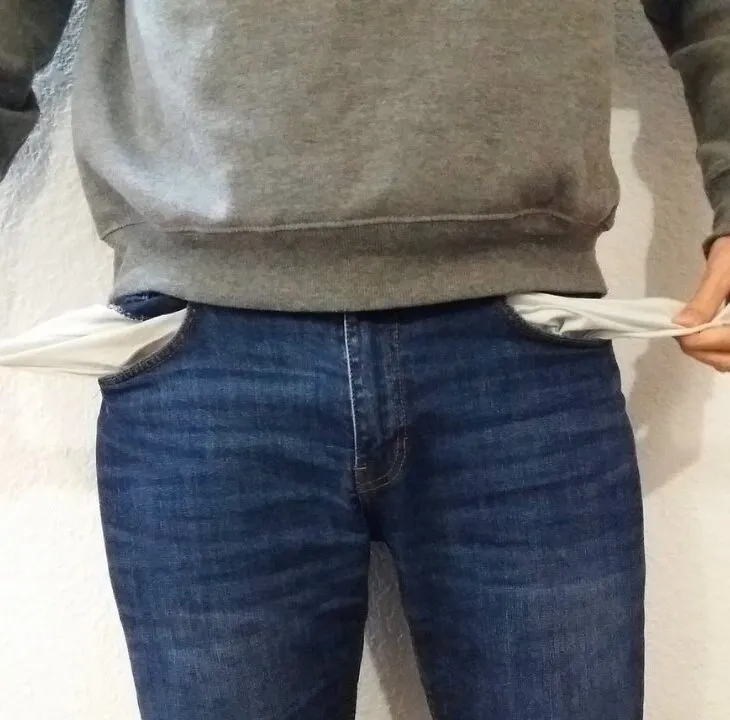
There is a version of this story that almost every ambitious woman knows by heart. You pour yourself into a role, a project, a business idea, or someone else’s vision, and for a while it feels electric. You are needed. You are performing. You are proving something. Then slowly, or sometimes all at once, you realize the thing you have been giving everything to has no intention of giving anything back.
The promotion never materializes. The client keeps moving the goalposts. The creative project you abandoned your own dreams for turns out to serve everyone’s purpose but yours. And you are left sitting in the aftermath wondering why you keep ending up here, depleted and unrecognized, chasing something that was never really available to you in the first place.
For years, I cycled through this exact pattern in my professional life. I would find a new opportunity that seemed full of promise, throw my whole self into it, and then watch as it slowly revealed itself to be another dead end. I told myself I was unlucky, that the right opportunity just had not found me yet. What I did not understand was that I was the common denominator. Not because I was doing something wrong, but because I was operating from a wound I had not yet examined.
The truth is, the work you keep choosing and the way you keep choosing it is rarely about the work itself. It is about what you believe you deserve.
Have you ever given your absolute best to something that gave you almost nothing in return?
Drop a comment below and tell us about it. Sometimes naming the pattern is the first step toward breaking it.
Why Ambitious Women Keep Choosing Work That Withholds
There is a concept in psychology called attachment theory, and while it is most often discussed in the context of romantic relationships, its fingerprints are all over our professional lives too. Developed by psychologist John Bowlby, attachment theory suggests that our earliest experiences of connection shape how we pursue and receive recognition, safety, and belonging in every area of life, including our careers.
If you grew up in an environment where love or approval felt conditional, where you had to perform or produce in order to be seen, your nervous system learned a very specific lesson: your value is not inherent. It must be earned. And it must be earned constantly, because it can be revoked at any time.
Carry that programming into your professional life and something predictable happens. You are drawn to opportunities that require you to prove yourself endlessly. The unavailable boss who dangles praise just out of reach feels strangely familiar. The job that demands everything and acknowledges nothing mirrors an old dynamic your body recognizes as normal. It is not that you are making bad choices. It is that your system is selecting for what it already knows.
Something I come back to often is the idea that our external circumstances are reflections of our internal landscape. The projects, roles, and professional relationships we keep gravitating toward are showing us something about what we believe we are worth. When a work situation triggers that familiar sting of not being valued, it is not creating the feeling from scratch. It is activating something that has been living inside you for a long time.
The Root of It: A Worthiness Problem Disguised as a Career Problem
When you trace this pattern back far enough, you almost always arrive at the same core belief: “I am not enough as I am. I have to do more, give more, be more in order to deserve good things.” Research published in the Journal of Personality and Social Psychology has consistently linked low self-worth to patterns of self-sabotage and tolerance of poor treatment, not just in love, but across every domain where we seek connection and validation.
As women, we absorb this messaging from every angle. We are told to lean in but not too far. To be ambitious but not aggressive. To ask for what we want but not seem difficult. These impossible contradictions create a quiet but corrosive belief that no matter what we do, we will fall short. And so we overcompensate. We over-deliver. We say yes to projects that drain us because at least being useful feels close to being valued.
The career you keep building from this place will always look a certain way. It will be impressive on the outside and hollow on the inside, because you built it to prove something rather than to express something. And there is a world of difference between those two motivations.
Finding this helpful?
Share this article with a friend who might need it right now.
How the Cycle Feeds Itself
Here is what makes this pattern so persistent. When you do not believe your work, your creativity, or your vision has inherent value, you unconsciously seek environments that confirm that belief. You take the underpaying contract. You stay in the role where your contributions are credited to someone else. You build someone else’s dream while yours collects dust in a notebook you have not opened in months.
Each time, the outcome reinforces the story. “See? My ideas are not good enough. My work is not valued. I should just keep my head down and be grateful for what I have.” According to research from Harvard Business Review, women are disproportionately affected by environments that systematically undervalue their contributions, which means the feedback loop is not entirely internal. But the part that is internal, the part where you agree with the devaluation, that is the piece you have the power to change.
You might also notice that when a genuinely fulfilling opportunity presents itself, one where you are respected, compensated fairly, and given creative freedom, something in you recoils. It feels “too easy” or “too good to be true.” That resistance is not intuition. It is your nervous system flagging unfamiliar territory as unsafe. The struggle and the striving have become so synonymous with work that ease feels suspicious.
Redirecting Your Energy Toward What Actually Deserves It
The good news is that this cycle breaks the same way it was built: from the inside out. It does not start with finding the perfect job or the ideal business model. It starts with you deciding, probably before you fully believe it, that your energy is valuable and that where you place it matters.
1. Get Honest About What You Are Actually Chasing
The next time you feel that pull toward a new project, opportunity, or professional relationship, pause long enough to ask yourself a real question. Are you drawn to this because it aligns with what you want to build, or because it gives you a chance to prove yourself to someone? There is a subtle but critical difference between pursuing your purpose and performing for approval. Learning to align your actions with genuine intention rather than unconscious need is one of the most important professional skills you will ever develop.
2. Rebuild Your Relationship with Your Own Worth
This is not soft advice. This is the foundation everything else rests on. If you do not believe your ideas, your time, and your creative energy have value, you will continue to place them in environments that agree with you. Start paying attention to where you shrink. Notice the moments when you downplay your contributions, discount your rates, or swallow your real opinion to keep things smooth. Each of those moments is data, showing you exactly where the wound still runs the show.
3. Set the Standard Before Anyone Else Can Set It for You
When you are grounded in your own value, you carry yourself differently in professional spaces. You communicate your boundaries clearly. You do not over-explain or over-justify your decisions. You do not chase clients, opportunities, or recognition that requires you to diminish yourself to receive it. This energy does something powerful. It either draws people and opportunities that can meet you at that level, or it causes the ones that cannot to fall away naturally. Both outcomes serve you.
4. Bring Your Body Into the Process
Because these patterns are not just mental, they live in your body too, in the tightness in your chest before a negotiation, in the way your voice gets smaller when you are about to state your price. Practices like breathwork and mindfulness can help you build a new baseline of safety within yourself. Over time, your system begins to recognize that you do not need external validation to feel secure. That security becomes something you generate from within.
5. Let the Transition Be Uncomfortable
Rewriting your professional identity is not a weekend project. There will be moments when the old pattern feels magnetic, when the familiar chaos of an undervaluing environment pulls at you simply because it is what you know. You might turn down something that looks impressive but feels wrong in your gut, and then spend a week wondering if you made a mistake. That discomfort is not a sign you are on the wrong path. It is a sign you are building a new one. Every time you choose differently, you are teaching your nervous system that safety and fulfillment can coexist.
What Shifted for Me
It was not until I stopped trying to earn my place at every table and started asking whether the table even deserved my presence that things genuinely changed. I stopped building from a place of “let me show you what I can do” and started building from “this is what I am here to create.” The difference sounds subtle. It was not. It restructured everything, from the projects I said yes to, to the way I priced my work, to the kind of collaborators who started showing up in my life.
But the most significant shift was not the external success. It was the quiet confidence that came from finally treating my own vision as something worth protecting. It is easy now to walk away from opportunities that require me to shrink. Not because I am rigid, but because I know what my energy is worth. And I know that pouring it into something that will never reciprocate is not dedication. It is a pattern I have outgrown.
That same clarity is available to you. Not someday, not when you have the perfect plan, but right now, in the next choice you make about where your energy goes.
We Want to Hear From You!
Tell us in the comments which part of this hit home for you, or share what helped you start redirecting your energy toward work that truly fulfills you.
Read This From Other Perspectives
Explore this topic through different lenses