When Unhealed Pain Shows Up at the Family Table (And What to Do About It)
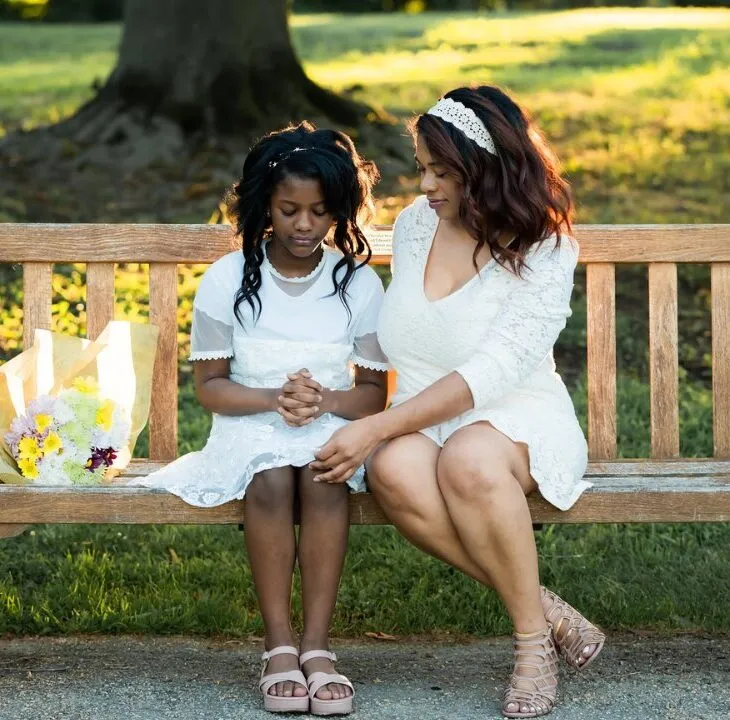
There is a moment most of us recognize but rarely talk about. You are sitting at a family dinner, catching up with old friends, or helping your kid with homework, and something small happens. A comment, a tone of voice, a look. And suddenly you are not a grown woman anymore. You are that little girl who felt unseen, unheard, or not quite enough. The reaction feels disproportionate, confusing, maybe even embarrassing. But here is what I want you to know: that reaction is not random. It is a messenger.
The people closest to us, our parents, siblings, childhood friends, our own children, have a remarkable ability to activate emotional pain we thought we had moved past. That is not because these people are toxic or because something is wrong with your family. It is because our deepest relationships are mirrors, and mirrors do not lie. According to research published in the Journal of Family Psychology, family-of-origin experiences significantly shape our emotional responses in adult relationships, often in ways we do not consciously recognize.
So if your closest bonds sometimes feel harder than they should, you are not failing at love. You might just be carrying something that needs your attention.
Why Family and Old Friends Trigger Us Like No One Else Can
Your coworker can annoy you and you move on. A stranger’s rude comment stings for an hour. But when your mother says something dismissive about your parenting, or your oldest friend cancels plans for the third time, the hurt lands differently. It lands deeper. It echoes.
This is because our nervous systems are wired to care most about the opinions and behaviors of the people in our inner circle. These are the relationships where we first learned what love looks like, what safety feels like, and what we need to do (or be) to belong. When something in those dynamics feels threatening, our bodies respond with the urgency of a child who depends on connection for survival.
The patterns often look like this:
- You fall back into a childhood role every time you visit your parents, the peacekeeper, the overachiever, the quiet one
- You overextend yourself for friends because saying no feels like risking the entire friendship
- You react to your sibling’s criticism with a level of defensiveness that surprises even you
- You struggle to set boundaries with family members because guilt immediately follows
- You notice yourself parenting in ways you swore you never would, echoing the very patterns you grew up resenting
None of this means you are broken. It means you are human, carrying old emotional weight into present-day connections.
Which family role did you grow up playing, and do you still slip into it as an adult?
Drop a comment below and let us know. You might be surprised how many women share your exact experience.
The Emotional Inheritance We Carry Into Every Relationship
Here is something that shifted everything for me: realizing that not all of the pain I carry is mine alone. So much of how we relate to family and friends is inherited. Not through genetics (though that plays a role too), but through learned patterns of communication, conflict, and emotional expression passed down through generations.
Maybe your mother never learned to express anger, so you grew up believing anger was dangerous. Maybe your father showed love through fixing problems rather than listening, so now you feel dismissed when a friend just wants to vent. Maybe affection was conditional in your household, so you unconsciously keep score in your friendships.
Research from the National Institutes of Health shows that adverse childhood experiences (ACEs) create lasting changes in how we process stress and form attachments. But the research also confirms something hopeful: these patterns are not permanent. With awareness and intentional practice, we can rewrite the emotional scripts we inherited.
This is not about blaming your parents or holding grudges against family members who did their best with what they had. It is about honestly seeing the patterns so you can choose which ones to carry forward and which ones to gently put down.
Learning to Feel It Without Becoming It
When old pain surfaces in our family relationships and friendships, most of us default to one of two modes: we either explode (saying things we regret, shutting people out, picking fights) or we implode (swallowing everything, performing fine, slowly building resentment). Neither approach actually moves the pain through.
A Different Way to Process Family Triggers
The next time a family interaction or friendship conflict activates something big in you, try this before responding:
- Name what you are feeling out loud, even if just to yourself: “I feel dismissed right now” or “This is bringing up old sadness”
- Notice where the feeling lives in your body. Tightness in your chest, heat in your face, a knot in your stomach
- Ask yourself honestly: is my reaction proportional to what just happened, or is something older being activated?
- Give yourself permission to pause. “I need a moment” is a complete sentence, and a powerful one
- Move the energy physically if you can. A walk around the block, deep breathing in the bathroom, even clenching and releasing your fists under the table
This is not about suppressing your reaction or pretending everything is fine. It is about creating a small gap between the trigger and your response so you can choose how to show up rather than being hijacked by a pain that predates the current moment. Learning to confront your inner challenges with this kind of honesty takes real courage, but it changes everything about how your closest relationships feel.
Finding this helpful?
Share this article with a friend who might need it right now.
Having the Conversations That Actually Heal
Processing your own emotions is essential, but at some point, healing within family and friendships requires communication. And not the kind where you rehearse a monologue about everything they have done wrong. The kind where you show up vulnerable and honest, with the goal of connection rather than being right.
What Healing Conversations Sound Like
A few shifts that make all the difference:
- Lead with your experience, not their behavior. “I felt hurt when…” lands differently than “You always…”
- Be specific rather than sweeping. Address one moment, one pattern, one feeling at a time
- Make room for their experience too. They likely have their own unhealed pain influencing how they show up
- Accept that understanding does not require agreement. You can feel heard without the other person seeing it exactly your way
- Know when to stop. Not every conversation will reach resolution in one sitting, and that is okay
Sometimes the most healing thing you can do is let go of the fantasy that a single conversation will fix years of accumulated hurt. Real repair in families and long friendships happens slowly, through repeated small moments of showing up differently. It is less dramatic than a movie scene confrontation and far more effective.
Boundaries Are Not Walls (Even When Family Treats Them That Way)
I want to be honest about something: setting boundaries with family and close friends is harder than setting them with anyone else on the planet. With a colleague or acquaintance, a boundary feels professional, reasonable, mature. With your mother, your sister, or your best friend since high school, a boundary can feel like betrayal.
But boundaries are not about pushing people away. They are about defining the terms under which you can stay close. According to Psychology Today, healthy boundaries in family relationships are one of the strongest predictors of long-term relationship satisfaction and individual mental health.
Some boundaries that can transform family dynamics:
- Limiting the topics you are willing to discuss (politics, weight, relationship status) during family gatherings
- Deciding how much emotional labor you are willing to carry for others and communicating that kindly
- Choosing when to engage and when to let a comment pass without taking the bait
- Protecting your healing journey from family members who are not yet ready for their own
The people who love you will adjust to your boundaries over time, even if their initial reaction is resistance. The people who consistently refuse to respect your limits are showing you important information about the relationship. Either way, the boundary is doing its job.
Reparenting Yourself So You Can Show Up Differently
One of the most transformative things I have seen women do for their family relationships is learn to give themselves what they are still hoping to receive from others. That approval from your father. That unconditional acceptance from your mother. That feeling of being chosen by your friend group.
When we stop outsourcing our emotional needs to people who may not have the capacity to meet them, something shifts. We stop approaching family gatherings with a hidden agenda (“Maybe this time Mom will finally say she is proud of me”). We stop keeping mental tallies of who called first in our friendships. We stop abandonment-driven behaviors that quietly erode the connections we care about most.
Practical ways to practice this:
- Before a family visit, check in with yourself. What are you hoping to get from this interaction? Can you give some of that to yourself first?
- After a difficult conversation with a friend, resist the urge to immediately seek reassurance from someone else. Sit with yourself. Offer yourself compassion
- When you notice the old roles creeping in (people-pleasing, overperforming, shrinking), gently remind yourself: “I do not have to earn my place here”
This is not about becoming emotionally self-sufficient to the point of isolation. It is about filling your own cup enough that you can engage with family and friends from a place of wholeness rather than hunger. The difference is everything. It is what allows your closest relationships to thrive rather than just survive.
The Ripple Effect of One Person Healing
Here is what no one tells you about doing this work: when you heal, you quietly give everyone around you permission to do the same. Your kids notice when you pause instead of yelling. Your sister notices when you respond with honesty instead of sarcasm. Your friend notices when you show up without the armor.
You will not transform your entire family system overnight. Some relationships may need to change shape. Some may grow closer than you ever imagined possible. But every time you choose to feel your pain rather than project it, set a boundary rather than build a wall, or show up as your real self rather than the role you were assigned, you are doing something revolutionary. You are breaking a cycle.
And that, more than any single conversation or confrontation, is how emotional healing transforms the people and relationships you love most.
We Want to Hear From You!
Tell us in the comments which tip resonated most with you, or share one family pattern you are working on changing.
Read This From Other Perspectives
Explore this topic through different lenses